

My main two hobbies are gaming and reading. My third hobby is turning those other two hobbies into homework. That is not sarcasm; I love managing wishlists, surfing recommendations, and visualizing my stats with sortable spreadsheets and colorful pie charts. With gaming, it’s easy. I dabble in spreadsheet logs occasionally, but I mainly lean on Steam to manage my gaming library and wishlist. Hobbyist reading apps, however, still leave a lot to be desired. Honestly, they could all learn a thing or twenty from Steam.

Reading for fun, especially fiction, has experienced a significant boom in the past five years. For some, it was a pandemic hobby; others were drawn in by BookTok, while many embraced the rise of the romantasy subgenre. This surge of new enthusiasts fueled an explosion of companion apps. As a tech enthusiast always exploring digital innovations, I’ve tried quite a few: from the long-standing Goodreads (which was once virtually the only option) to stats-focused StoryGraph, social media platform Fable, and habit trackers like Bookly and Bookmory. The more I engage with these upstart book apps, the more I realize how truly exceptional the user experience is with Steam. Its library redesign, complete with dynamic collections, transformed how I browse my digital game shelf. The recommendations queue, though I don’t always use it personally, masterfully leverages vast datasets to connect players with games they’ll love. Even the granular, user-applied tags for deep searching specific niches consistently yield better results than I anticipate.
Why Reading Apps Fall Short: Lessons from Steam
Goodreads currently stands as the closest analogy to a ‘Steam for readers.’ It’s a massive, legacy database with a user-review-centric platform, owned by a giant digital distribution retailer (Amazon), and faces insufficient competition to truly incentivize interface improvements. The parallel extends further, as the Kindle reading app, also an Amazon property, functions as a launcher for digital books, much like Steam for games. Yet, Amazon fails to leverage Goodreads’ extensive database entries and user reviews to their full potential for readers. Why, for instance, can I click on a genre like “fantasy” only to be presented with a broad list of new releases or user-curated lists, instead of being able to filter by multiple tags simultaneously, such as “fantasy” and “historical fiction”? Why is its book recommendation feature tucked away in a dropdown menu? And why does the main Goodreads dashboard prioritize social media-style updates from other users over personalized browsing or discovery features?
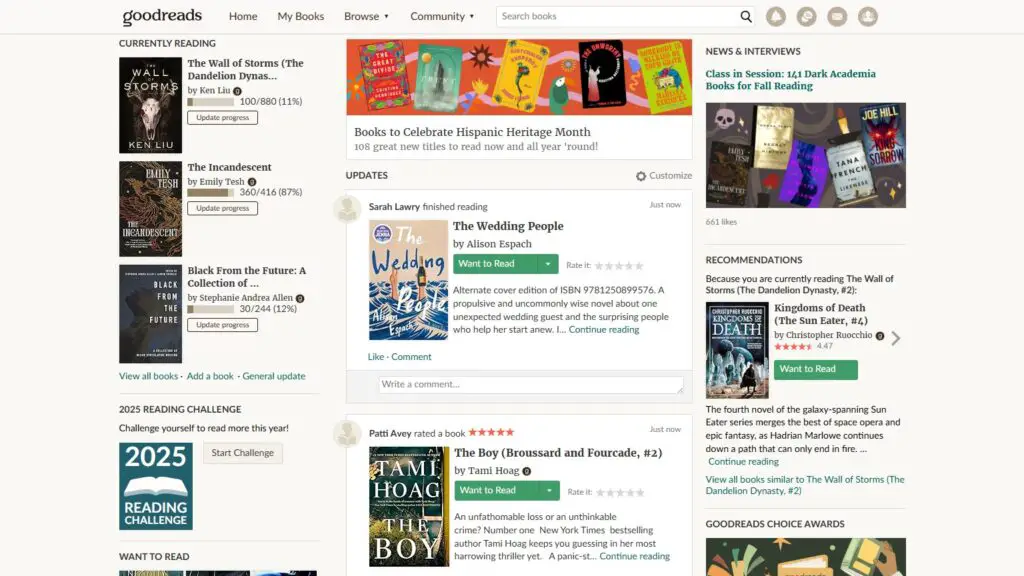
If Goodreads were to adopt even a few key principles from Steam’s successful playbook, the user experience would vastly improve. Imagine a dashboard that prominently features your current reads, while simultaneously promoting significant new releases in your favorite genres, or suggesting books by highly-rated authors you’ve yet to explore. Picture the power to genuinely browse and search all those invaluable user-applied tags, just as Steam empowers its users. Even simply implementing Steam’s dynamic collections feature for personal libraries would be a game-changer for many. Instead, Amazon’s primary investment in Goodreads this year amounted to little more than a logo change.
Unlike Steam, Goodreads faces a burgeoning landscape of niche apps vying for the attention of new readers. StoryGraph offers solid stats visualization and a recommendation algorithm, but its minimalist interface lacks the immersive feel of a true destination; for me, it’s primarily a utility for tracking daily page counts. Fable, on the other hand, leans too heavily into social media, an area most of us already have saturated. Other apps are overly focused on gamifying reading habits, which I, as an established reader, don’t require. Steam has elegantly integrated these diverse use cases into an almost ideal platform. It fully embraces the power of its database, granting unparalleled browsing capabilities to players, and has cultivated an ecosystem that truly feels like the central hub for my gaming PC. Here at Digital Tech Explorer, we understand that the hobbyist readers of the post-pandemic boom are a stats-loving, recommendation-hungry demographic, eager for intuitive ways to manage their literary libraries. We deserve a sleek, comprehensive app that serves as a genuine digital destination, not just a bare-bones utility. In essence, we deserve the “Steam for books” experience.