
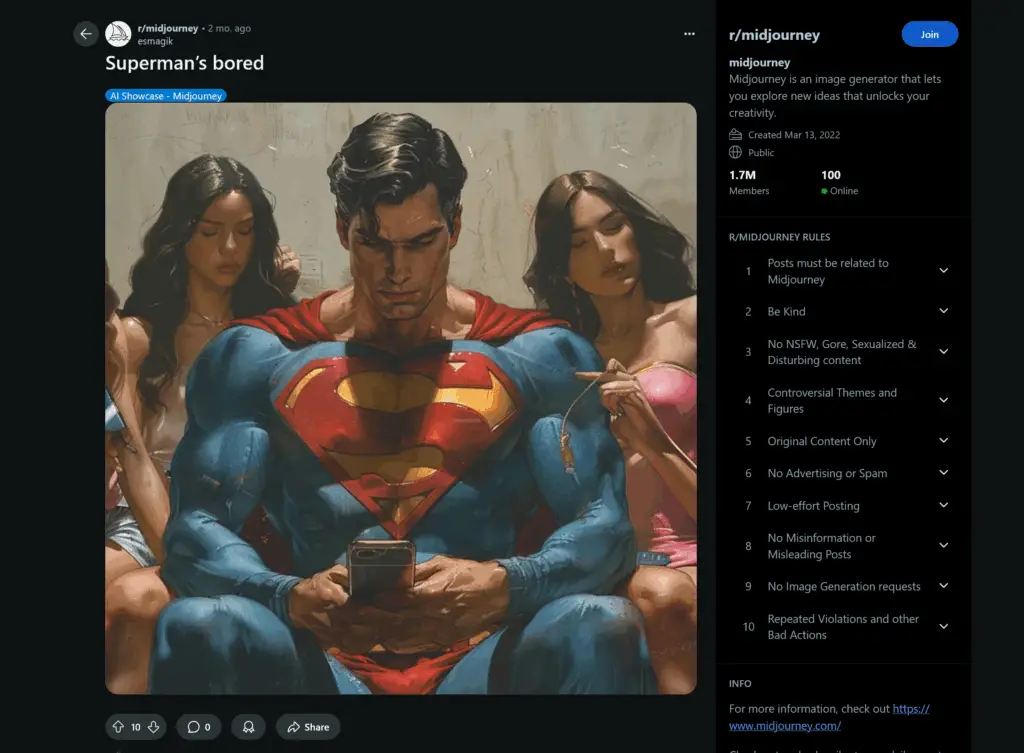
The legal battle against the generative AI image generator, Midjourney, has escalated as Warner Bros Discovery joins Disney and Universal in their lawsuit for copyright infringement. The media giant accuses the AI company of “brazenly dispens[ing] Warner Bros Discovery’s intellectual property as if it were its own.” For our readers at Digital Tech Explorer, this case highlights a critical intersection of emerging technology and established legal frameworks. Midjourney is an AI service that creates images from user-submitted text prompts. The core of this legal challenge centers on the platform’s alleged lack of **copyright safeguards**, which purportedly allows users to generate direct copies of protected material. Users, for instance, can readily generate images of iconic characters like Woody from Toy Story or Superman, despite Midjourney having no legal right to reproduce them.
Midjourney’s Alleged Refusal to Implement Copyright Protection
The lawsuit’s heart lies in the accusation that Midjourney made a “calculated and profit-driven decision to offer zero protection for **copyright owners**.” Evidence cited in the legal filing comes directly from Midjourney’s own platforms, including its Discord server and Subreddit, showcasing numerous public examples of infringing content. This clear visibility suggests the company possesses actual knowledge of the infringement occurring on its service. Adding to these claims, the suit alleges Midjourney previously implemented “technology protection measures” for a video service it offered, only to later remove them. This stance starkly contrasts with many competitors, who have reportedly integrated technological safeguards to prevent the generation of **copyright-infringing outputs**.
While legal challenges surrounding generative AI are not new, this unified front from media behemoths like Disney, Universal, and now Warner Bros Discovery carries immense weight. The outcome of this combined legal action could profoundly impact the entire **AI industry**, a key area of interest for **Digital Tech Explorer**. It could compel Midjourney to make substantial **copyright concessions** and implement robust protective technological measures. Such a precedent-setting result would undeniably shape the legal and operational landscape for all **generative AI** services, redefining how they must ethically and legally handle **copyrighted material** moving forward. This development is crucial for developers and tech enthusiasts alike, as it will likely influence future digital innovation and content creation standards.