

 Early this week, a seismic shift in the gaming industry sent ripples across the tech world: Electronic Arts (EA), one of the globe’s largest publicly-traded game publishers, is slated to go private in a staggering $55 billion leveraged buyout. This monumental deal involves a consortium of investors, notably Jared Kushner’s Affinity Partners private equity firm and Saudi Arabia’s powerful Public Investment Fund (PIF).
Should this acquisition secure shareholder and regulatory approval, it will stand as the largest leveraged buyout in history—a development that has already sparked widespread apprehension among fans and EA developers alike.
To truly grasp the implications of this monumental shift, it’s essential to first unpack the concepts of private equity and the mechanics of a leveraged buyout. Saudi Arabia’s Public Investment Fund, or PIF, introduces its own unique and troubling dimension to this equation.
Since 1990, EA has operated as a public company. Similar to other publicly traded entities, its ownership—or equity—has been distributed via shares of capital stock bought and sold on exchanges. While this structure offers the clear advantage of raising capital through stock sales, it also comes with inherent pressures.
However, operating publicly also carries significant drawbacks, especially for consumers within creative and entertainment sectors. The prevailing economic philosophy of our era, shareholder primacy, dictates that maximizing value for shareholders should be the sole principle guiding corporate strategy.
That relentless pursuit of profit maximization, unfortunately, frequently prioritizes short-term returns above product quality, creative innovation, and worker security. In the video game industry, this often manifests as risk-averse release strategies, predatory monetization schemes, and devastating waves of layoffs and studio closures—all unfortunate hallmarks of EA’s controversial past. 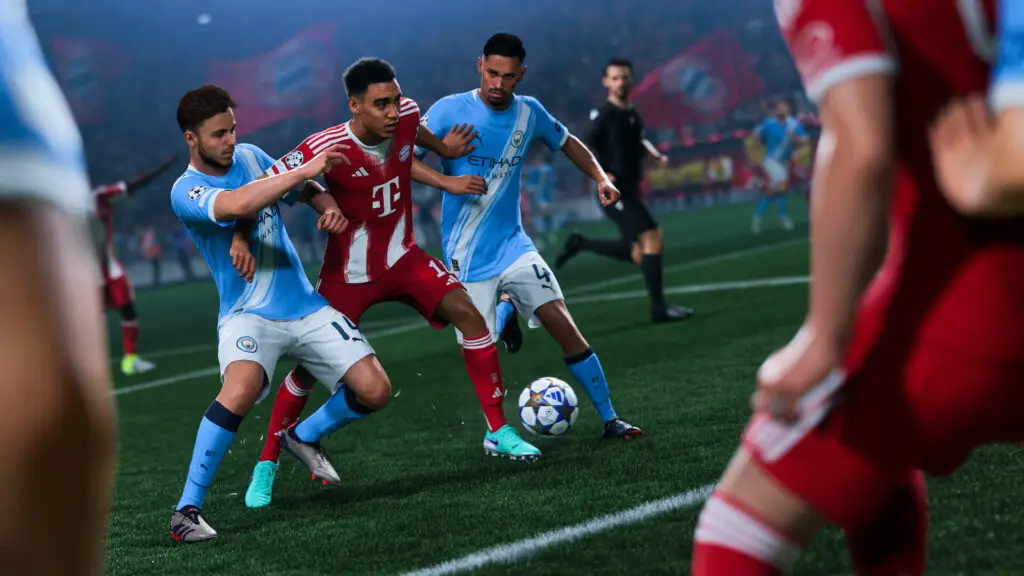
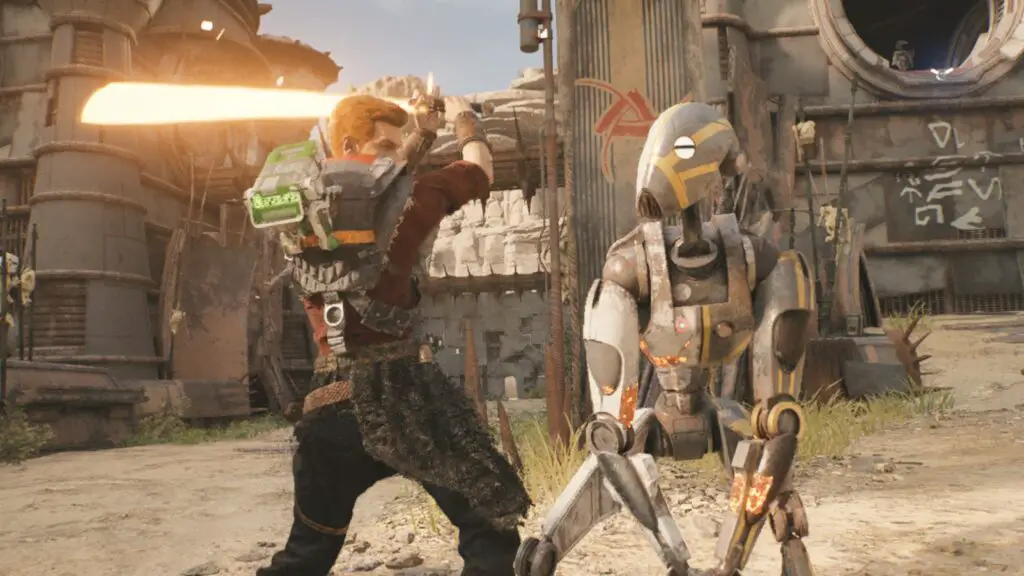
Given this context, it’s understandable how the prospect of EA transitioning to private ownership might initially appeal to some. Yet, while shedding the direct pressures of the stock market, private equity ownership introduces a new set of complex challenges and potential pitfalls.
As Kiplinger senior investing editor Karee Venema explained to PC Gamer, “At the most basic level, a private equity firm is an investment management firm that raises money from different sources and uses the combined capital to buy companies.” She further clarified, “Most of the time, they buy privately held companies. But sometimes, as is the case with Electronic Arts, they purchase public companies and take them private.”
Venema noted that private equity firms typically target “established” companies possessing “strong long-term growth potential, but have areas that can be improved to create value for the investors.” For EA, specifically, “some Wall Street analysts identify mobile revenue as an area where the company has room to grow,” she added.
Applying Leverage
 Ostensibly, the core objective of a private equity acquisition is to optimize the acquired company’s performance, leveraging underutilized potential—such as EA’s mobile business—to drive long-term returns and increased profits. However, private equity firms have also earned a sinister reputation due to a counter-intuitive strategy: cannibalizing their own acquisitions, extracting profits often at the dire expense of the company itself and its workforce.
This unsettling process frequently begins with the leveraged buyout, which stands as the most common form of private equity acquisition.
Karee Venema elaborated on this, explaining, “A leveraged buyout just means the company is bought using a combination of borrowed money, or debt, and private equity.” She emphasized a critical point: “The purchased company’s balance sheet is used as collateral against the loans taken out to purchase it.”
To be clear, the “leverage” in a leveraged buyout is precisely this debt. Crucially, the collateral for this debt is the assets of the acquired company itself, not those of the private equity firm. This structure allows investors to significantly limit the capital they must personally supply for the buyout, while simultaneously reducing their financial risk should the loan—like EA’s reported $20 billion loan from JP Morgan—become insurmountable.
Reading this might stir a faint, dissonant tingle in the back of your mind. You might be wondering: “If private equity firms can secure loans for which only their acquired companies are responsible, could they potentially extract more value from a company than they initially invested, and then avoid consequences if that company ultimately faces bankruptcy?”
And your intuition would be correct; this is precisely the playbook some private equity firms employ.
Indeed, for firms less concerned with a company’s long-term survival, numerous strategies exist to extract maximum value. As The Guardian highlighted last year, private equity firms have historically hollowed out workforces and inflated prices to generate unsustainable profits, with the goal of divesting before product quality declines and tanks sales. Other common tactics include liquidating company assets, thereby enriching investors through the sale of real estate, subsidiaries, and crucial intellectual property.
These sold assets sometimes drive the company deeper into debt through “sale-leaseback agreements.” Here, the firm arranges for the company to sell its real estate, pocketing the profits, while the company is then forced to pay rent to continue using its own business space. Concurrently, the private equity firm often extracts additional “management fees”: standard “2-and-20” terms mean firms taking an annual 2% of a managed company’s assets and 20% carried interest on all profits above a certain margin, alongside potential monitoring fees, transaction fees, and more.
The track record of private equity’s “slash and burn” approach is stark. It has crippled retail franchises like Party City, brutalized digital media outlets such as the Gizmodo Media Group, and devastated local news across the US. Its impact has even been linked to dire consequences in critical sectors, from hospitals riddled with bats to increased mortality rates in retirement homes. A 2024 report leveraging S&P data revealed that private equity-backed companies were responsible for over 10% of all corporate bankruptcies and a staggering 50% of bankruptcies exceeding $500 million in liabilities. Disturbingly, the report noted that “despite their role in precipitating bankruptcies, private equity firms often emerge financially unscathed.”
Acknowledging this grim reality, Venema conceded, “There have certainly been instances of this—the 2017 bankruptcy of Toys ‘R’ Us is top of mind for me.” However, she also offered a crucial counterpoint: “But there have been successful private equity buyouts, too.”
Indeed, companies like Hilton exemplify positive outcomes, arguably faring better in 2018 after Blackstone divested its remaining stake from its 2007 LBO—an event often dubbed “the best LBO ever” in financial circles. Similarly, Dell, as Venema pointed out, transformed from a $25 billion buyout in 2013 to a valuation nearing $100 billion after relisting publicly in 2018.
Despite these contrasting outcomes, investors and analysts appear largely unconcerned about EA potentially suffering the “deathtouch” of aggressive private equity strategies. This optimism stems, in part, from the significant investment by Saudi Arabia’s Public Investment Fund, which is not expected to operate with the same short-term, asset-stripping playbook as traditional private equity firms.
“Wall Street seems generally upbeat about the EA buyout, expecting PIF to draw from its vast resources and drive meaningful value from the transaction,” Venema confirmed.
The PIF, which already held a significant 9.9% equity stake in EA, was established in 1971 with the broad mission of diversifying Saudi Arabia’s economic interests through global investment. In recent years, the PIF has funneled billions into high-profile ventures, including sports team takeovers, massive esports tournaments, film partnerships, and substantial ownership stakes in major video game companies such as Take-Two, Nexon, Capcom, and Nintendo. These extensive financial maneuvers have drawn criticism, widely seen as attempts to “sportswash” or “artwash” the country’s infamous human rights record as it endeavors to reduce its reliance on oil.
At the helm of the PIF is Saudi Arabia’s crown prince, prime minister, and de facto ruler, Mohammed bin Salman. It’s a critical detail that the CIA concluded he ordered the assassination and dismemberment of Washington Post journalist Jamal Khashoggi. Furthermore, a 2024 US Department of State report revealed “no significant changes in the human rights situation in Saudi Arabia” under bin Salman’s rule, citing credible reports of extrajudicial killings, arbitrary arrests, torture, pervasive press censorship, and severe restrictions on freedom of expression.
The influence of Saudi investment in video games is already evident, having notably placed the royal family’s favored soccer player into Fatal Fury and spurred a PIF-funded DLC venture for Assassin’s Creed. The revelation of the PIF’s deep involvement in the EA buyout has understandably intensified concerns: will Saudi ownership mean that EA games, particularly titles like The Sims—a cherished haven for representation and diversity among fans—become subject to the editorial oversight of a regime with a documented history of women’s rights violations and suppression of LGBTQ+ rights?
Recent events this month offer stark proof of the conditional nature of Saudi investment. Prominent comedians such as Dave Chappelle, Bill Burr, and Aziz Ansari faced significant backlash from both fans and peers for accepting exorbitant payments to perform at a Saudi Arabian comedy festival in Riyadh. The case of comedian Tim Dillon is particularly telling: he was reportedly fired from the festival after attempting to rationalize his attendance with a joke acknowledging Saudi Arabia’s estimated 750,000 individuals living in modern slavery.
In a blunt 2023 interview with Fox News, Crown Prince bin Salman openly dismissed accusations of “sportswashing,” stating unequivocally, “If sportswashing going to increase my GDP by way of one percent, then I will continue doing sportwashing. I don’t care.”
In an internal email circulated to employees earlier this week, EA CEO Andrew Wilson offered a reasssuring message, stating that the company’s “values and our commitment to players and fans around the world remain unchanged.” As Digital Tech Explorer, we believe that understanding the full scope of such powerful financial maneuvers is crucial for developers and tech enthusiasts alike to make informed decisions and stay ahead of trends in this rapidly evolving landscape.