

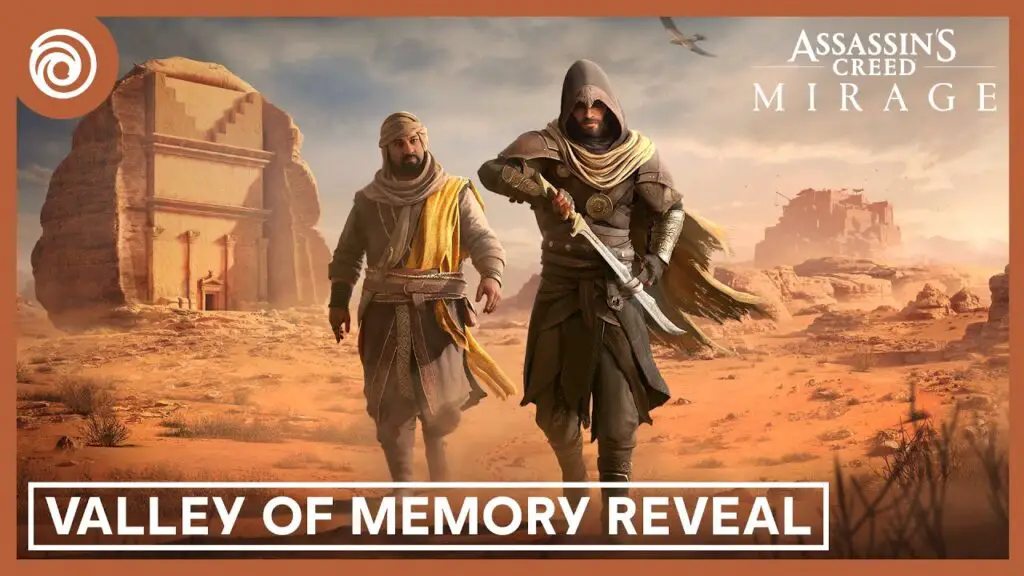
Welcome, tech enthusiasts and developers, to an insightful update from Digital Tech Explorer. Ubisoft has unveiled a surprise free DLC for Assassin’s Creed Mirage, titled ‘Valley of Memory,’ slated for release on November 18. This significant expansion promises to enrich the gameplay experience by introducing a new main quest, various sidequests, and additional assassination targets. TechTalesLeo is here to dive into not just the game content, but also the intriguing backstory behind this unexpected release.
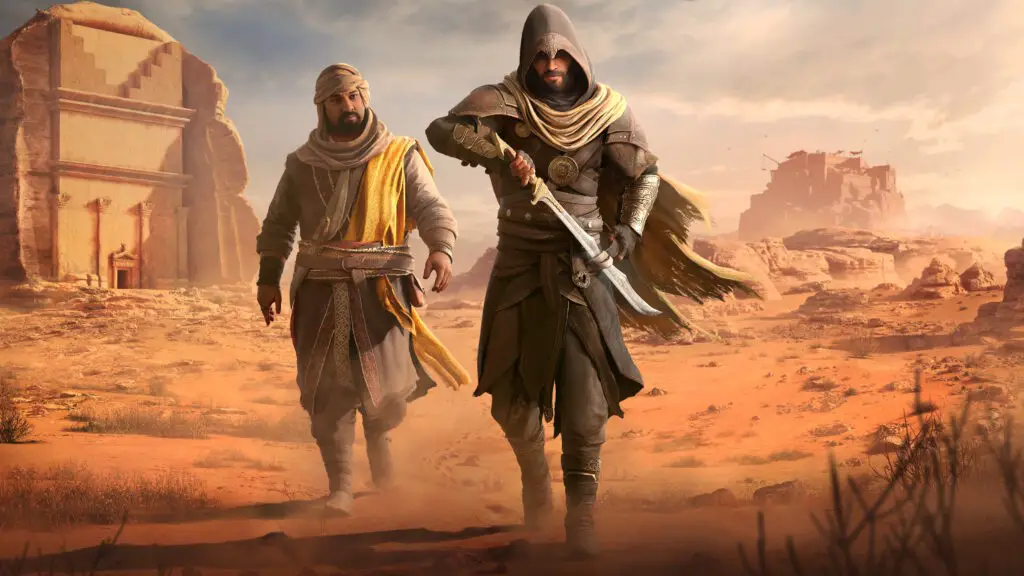
The ‘Valley of Memory’ DLC, as detailed by PC Gamer, is set in the ancient valley of AlUla, a location Ubisoft describes as “charged with history and home to stunning and diverse landscapes.” Players can anticipate approximately six hours of additional gameplay as they embark on Basim’s quest, which takes place prior to the core game’s finale. His journey revolves around the revelation that his long-lost father may still be alive in AlUla. Basim’s mission to rescue his father quickly escalates as he discovers the valley is under threat from a dangerous band of robbers, with his father also missing. Exploration will include significant points of interest such as the Old Town of AlUla, the Musa Ibn Musayr fortress, the Valley of the Stones, and the impressive necropolis of Hegra, all while navigating ambushes across the desert.
Initial discussions surrounding this DLC have pointed to potential funding from Saudi Arabia’s Public Investment Fund (PIF), believed to be the reason for its free release two years post-game launch. This rumored funding source reportedly led to staff unrest at Ubisoft, largely due to Saudi Arabia’s documented human rights abuses, including the murder of journalist Jamal Khashoggi. While Ubisoft has not officially confirmed the PIF’s full funding, the recent reveal stream prominently featured Dr. Abdulrahman Alsuhaibani, the VP of culture at the Royal Commission for AlUla, hinting at a significant connection to the region’s broader development goals.
AlUla’s Vision: Heritage as an Economic Powerhouse
Dr. Abdulrahman Alsuhaibani, a key figure in the DLC’s reveal, has articulated a clear vision for AlUla’s future. His perspective emphasizes heritage not merely as a preserved past but as a “living asset” and a powerful driver of economic, social, and cultural value. He highlighted how AlUla is practically demonstrating this philosophy through several key development projects. These include the extensive regeneration of its Old Town and various adaptive reuse initiatives, such as the transformation of Chedi Hegra. These projects are strategically designed to stimulate the creative economy, draw global visitors, encourage cultural dialogue, and create meaningful livelihoods for local communities.
Further solidifying AlUla’s developmental ambitions, Dr. Alsuhaibani announced a new agreement with Saudi Arabia’s Ministry of Culture during the Cultural Investment Conference. This partnership aims to significantly expand AlUla’s creative economy by establishing it as a global film hub. It will also provide essential support and enabling solutions for cultural entrepreneurs and small to medium-sized enterprises (SMEs), while simultaneously broadening opportunities for the skilled artisans trained at Madrasat Addeera, the first school for girls in AlUla. For tech enthusiasts and developers, this paints a picture of a region actively investing in digital and creative infrastructure, making its integration into a global gaming franchise particularly relevant.
The Subtle Art of ‘Gameswashing’ and Saudi Influence
The utilization of popular media to disseminate cultural influence is not a novel concept, with numerous countries engaging in such practices for generations. However, Dr. Alsuhaibani’s messaging undeniably establishes a direct link between the development efforts in AlUla and Prince Mohammed bin Salman. Dr. Alsuhaibani participated in a panel titled “Capitalizing on Heritage—Turning Cultural Icons into Economic Powerhouses” at Saudi Arabia’s inaugural Cultural Investment Conference. Notably, the principal partner of this conference is Saudi Arabia’s Cultural Development Fund, which is part of the National Development Fund, an entity chaired by bin Salman.
This context brings to light the emerging concept of “gameswashing,” drawing clear parallels with the more established term “sportswashing.” Saudi Arabia has frequently faced accusations of “sportswashing”—the practice of using popular sports leagues and cultural events to divert attention from allegations of human rights abuses. The country has not refuted these claims, with Prince Mohammed bin Salman explicitly stating in 2023, “if sportswashing is going to increase my GDP by way of one percent, then I will continue doing sportswashing. I don’t care.” Previous instances of this strategy have been overt, exemplified by the Public Investment Fund’s (PIF) substantial investments in, or acquisitions of, major game studios, including the notable reported $55 billion takeover bid for Electronic Arts.
However, the funding structure behind the ‘Valley of Memory’ DLC presents a more subtle form of influence. Developed and released entirely by Ubisoft, there are no officially confirmed connections to any Saudi government agency for its direct funding. Yet, this expansion significantly features AlUla, a location Saudi Arabia is actively promoting as a major economic and cultural destination. This nuanced approach raises critical questions for the tech and gaming community about the implications of such partnerships and the motivations behind projects that appear to offer substantial benefits to consumers, like a free DLC, while subtly serving broader geopolitical objectives. It highlights a sophisticated shift in how cultural soft power is being wielded within the global entertainment industry.
As TechTalesLeo for Digital Tech Explorer, we recognize that the funding and development of projects like the ‘Valley of Memory’ DLC underscore the increasing prevalence of “gameswashing” as a subtle influence within the video game industry. For developers and tech enthusiasts keen on understanding industry trends and their wider impact, it becomes imperative to critically question the underlying motivations driving such projects and their broader cultural and economic implications. Staying informed is key to navigating our rapidly evolving digital landscape.