
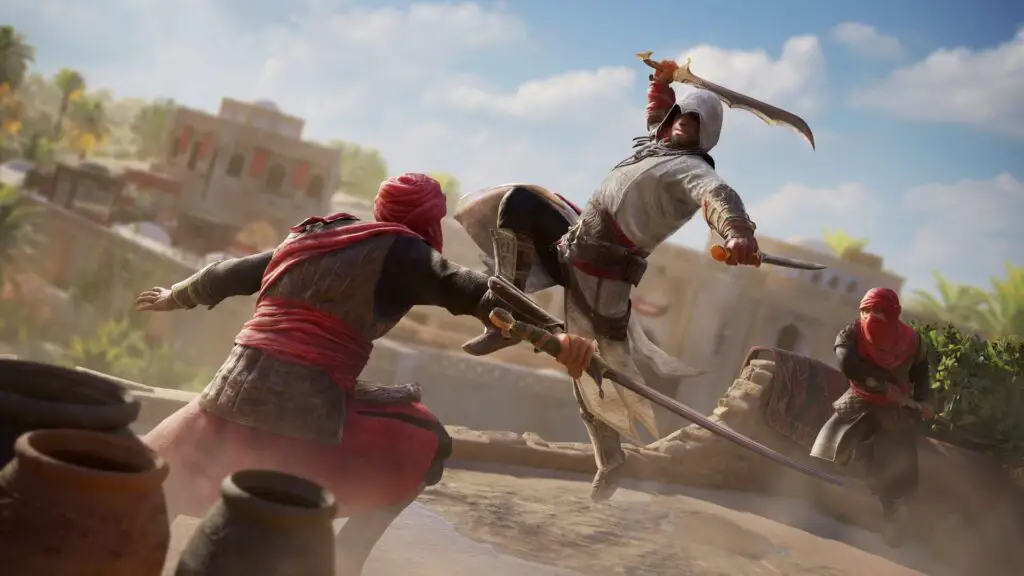
In a development that has captured significant attention within the gaming world, Ubisoft recently announced a substantial free DLC for its 2023 title Assassin’s Creed Mirage. This generous addition of a new map and quests is reportedly enabled by investment from Saudi Arabia’s Public Investment Fund (PIF), which has been strategically expanding its presence in the gaming sector. The upcoming DLC promises to transport protagonist Basim to AlUla, an ancient city steeped in Saudi Arabian culture. Ubisoft president Yves Guillemot made the announcement in Riyadh during the New Global Sport Conference, an event held concurrently with the Saudi-funded Esports World Cup. When pressed on whether the PIF was solely funding the DLC, Ubisoft opted for discretion, stating they “do not comment on rumours.”
Internal Concerns and Ubisoft’s Response
The partnership, as uncovered by internal reports, has reportedly stirred discomfort among Ubisoft staff. During an internal Q&A session, an employee directly challenged the company’s leadership on whether aligning with Saudi Arabia was justifiable, given potential reputational damage, pointedly referencing the murder of journalist Jamal Khashoggi. Ubisoft defended its position by framing CEO Yves Guillemot’s visit as part of an official French delegation, describing it as a “classic diplomatic tool for expanding France’s influence and reach around the world” and a means to help propagate its values globally.
Analyzing Ubisoft’s Shifting Explanations
Ubisoft’s subsequent attempts to clarify its stance have been met with considerable skepticism and scrutiny, particularly here at Digital Tech Explorer where we value transparency and in-depth analysis. Initially, the publisher tried to draw an unconvincing distinction between the PIF and Saudi Crown Prince Mohammed Bin Salman (MBS), asserting, “The latter’s money is not MBS’s, and talking with partners who do not share our democratic values does not mean abandoning them.” This assertion quickly faced challenges, as the PIF is widely acknowledged to be under the direct control of the crown prince. Following this, Ubisoft pivoted its narrative, now emphasizing its retention of full “creative control” over the project. The company highlighted that the DLC’s development was “made possible thanks to the support of local and international organisations […] through access to experts, historians and resources to ensure the creation of an authentic and accurate setting.” As TechTalesLeo, I find this evolution in justification intriguing, underscoring the complexities companies face when navigating global partnerships with significant geopolitical implications, especially when balancing creative integrity with external funding. It’s an insightful look into how tech companies operate within a rapidly evolving global landscape.