
At Digital Tech Explorer, we often highlight how digital environments offer unique avenues for creativity. In the realm of cozy games, few elements rival the profound satisfaction of personalizing your own digital domain. Whether you’re furnishing a quaint home, designing a bustling shopfront, or orchestrating an entire virtual town, the act of customization is intrinsically relaxing. It’s a canvas for self-expression, where the probability of any two players crafting identical spaces is remarkably low, fostering a deeply personal experience devoid of competitive pressures. It’s simply you, your chosen furniture, and the unique ambiance you create.
Twinkleby masterfully captures this joy of bringing life to empty digital canvases, transforming it into the core of its gameplay. Initially, as a storyteller exploring various tech experiences, I sometimes found myself battling a subtle pressure to achieve “picture-perfect” designs in decorating games, which could lead to exhaustion. However, after dedicating hours to the full release of Twinkleby, it became clear that this feeling never takes hold here. The game gently reminds you that the visual appeal, while pleasing, is secondary to the sheer enjoyment of the creative process.
Core Gameplay Loop
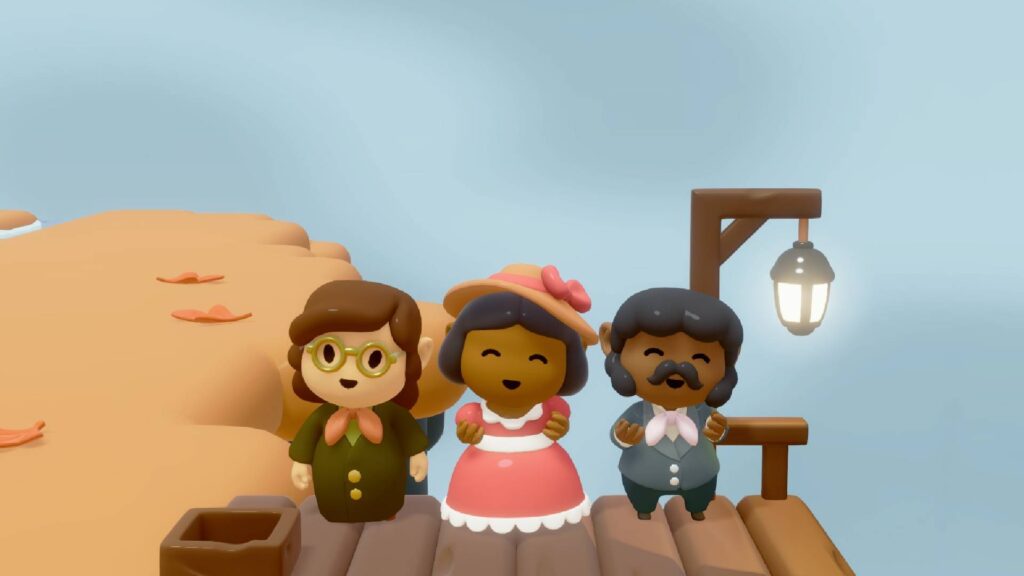
The entire premise of the game is incredibly straightforward, a testament to effective, accessible design. You’re granted a floating island canvas where you can strategically place houses and adorn them as you see fit. Soon after, charming villagers arrive at your dock via a flying boat, eager to move in. Your task is to collect their bags and assign them to any suitable house. Initially, these characters are content with simple housing, but as you expand across more islands and unlock a broader array of items, they begin to develop specific preferences and needs, adding a delightful layer of challenge to your island management.
These requirements are intuitively conveyed; a small icon beneath a villager’s name clearly indicates their desires, perhaps a potted plant for more greenery or a knife and fork symbolizing a need for sustenance. Fulfilling these individual needs collectively contributes to the island’s overall happiness bar. Once this bar reaches its maximum level, your islanders will gather to serenade you with a joyful song and present you with a map fragment, your key to unlocking and exploring more challenging islands.
Structured Progression vs. Open-Ended Decoration
For many tech enthusiasts and casual players alike, this guided approach is precisely what elevates Twinkleby beyond other cozy games heavily centered on customization. While many titles offer boundless creative freedom, which is certainly appreciated, Twinkleby introduces a purposeful structure. You’re presented with a limited space and specific villager requirements to fulfill, yet this never hinders your sense of discovery; the freedom to sail to other islands remains. This innovative design choice, as we often analyze at Digital Tech Explorer, offers a compelling balance.
Only the most challenging islands are gated behind these map fragments, ensuring that the game’s signature laid-back atmosphere is largely preserved. It’s this thoughtful integration of structure that prevents the potential exhaustion sometimes found in purely open-ended decoration games. While creative liberty is a cherished aspect of digital experiences, sometimes the subtle nudge of clear, if vague, objectives provides a more engaging and less daunting path forward.
Island Design and Puzzle Elements
Each island presents a unique topographical challenge, effectively weaving a delightful puzzle-solving element into the game. If the villager count in the bottom-left corner indicates four prospective residents, you know four houses are a priority. However, islands may feature intricate terraforming, requiring you to construct bridges over rivers for villagers to access their homes or navigate particularly tight landmasses that barely accommodate a structure. Discovering elegant solutions for these more complex islands delivers a profound sense of accomplishment once villagers start moving in, even before you begin catering to their specific needs.
Villager Management and Eviction
Should a villager not align with your island’s vibe, or if their demands prove too complex for your current setup, the process of their departure is remarkably straightforward and refreshingly guilt-free. Simply pick up their initial bag, left at the dock, and toss it gently off the island’s edge. Taking this as their cue, they’ll promptly deploy an umbrella and serenely float away, making room for the next eager islander. This mechanic offers a considerate alternative to the often morally ambiguous methods of encouraging departures in games like Animal Crossing. It’s a design choice that, as TechTalesLeo, I find makes the experience that much more relaxing, allowing players to manage challenges on their own terms, even if saying goodbye never feels entirely pleasant.
While Twinkleby foregoes traditional narrative arcs or dialogue, it demonstrates that sophisticated storytelling isn’t always paramount for an engaging experience. As we often explore at Digital Tech Explorer, innovative game design can leverage simpler mechanics to profound effect. The sheer joy of meticulously crafting miniature digital dollhouses for delightful villagers, culminating in their harmonious serenades of gratitude, provides more than ample motivation to continue playing. It’s an experience that truly resonates, leaving a lasting impression. Indeed, as TechTalesLeo, I can attest that after Twinkleby, tackling other customization-heavy games or digital projects just won’t feel complete until that same sense of earned appreciation — perhaps not a song, but an equivalent acknowledgment of a job well done — is achieved.