
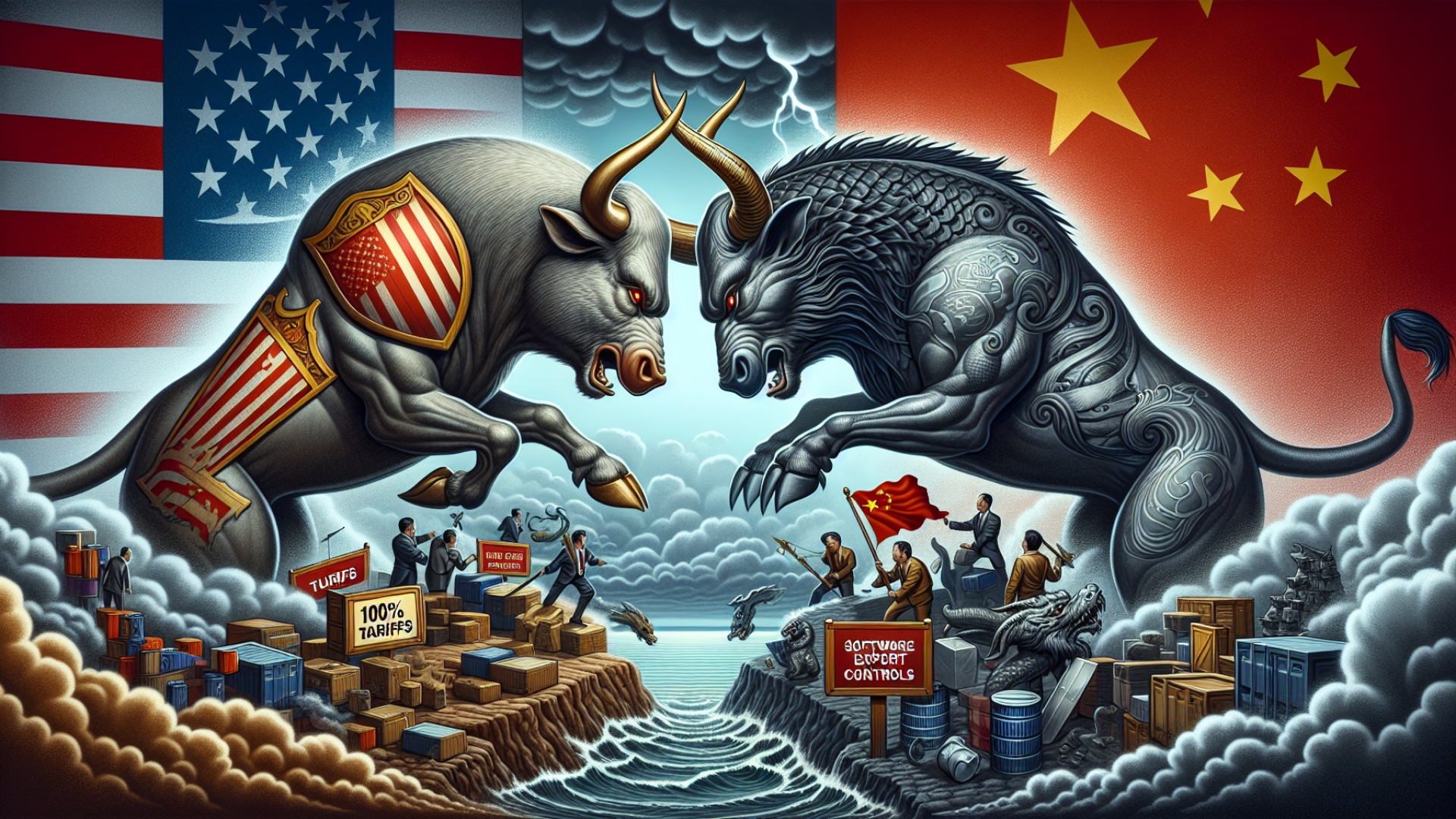
In a development poised to send ripples across the global tech supply chain, former US president Donald Trump recently announced a sweeping 100% tariff on Chinese goods, in addition to existing levies. This declaration is coupled with stringent new export controls targeting “any and all critical software,” a decision that immediately impacts the tech industry.
These measures follow closely on the heels of China’s own strategic counter-move: new rare earth export controls announced by the Chinese Ministry of Commerce earlier in the week. These controls mandate special government approval for foreign companies exporting products containing these precious materials, or the rare earths themselves – vital components for advanced electronics and hardware manufacturing.
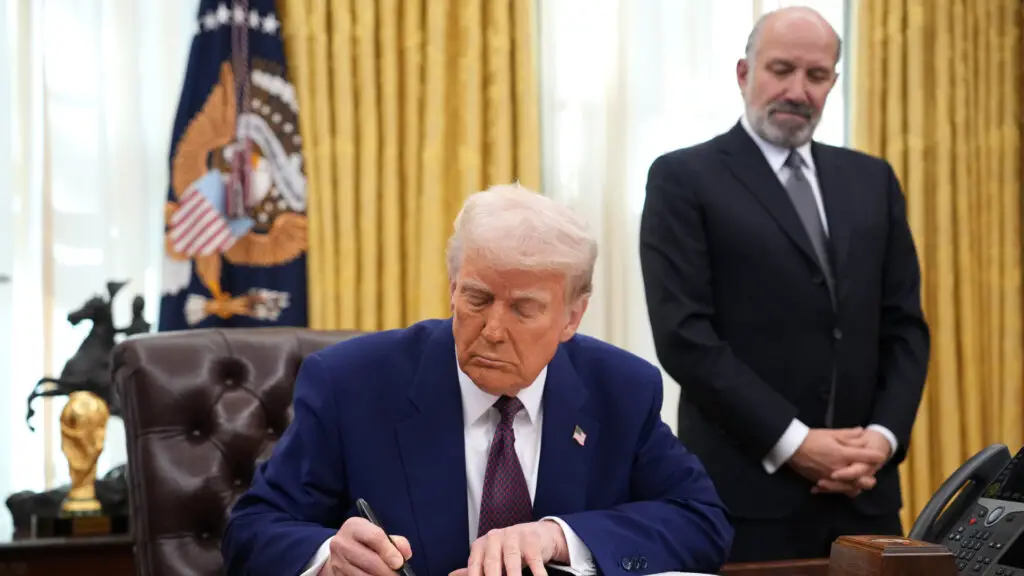
Taking to his social media platform, Truth Social, on Friday, Trump detailed the impending restrictions. He stated, “It has just been learned that China has taken an extraordinarily aggressive position on trade in sending an extremely hostile letter to the world. This affects all countries, without exception, and was obviously a plan devised by them years ago. It is absolutely unheard of in international trade, and a moral disgrace in dealing with other nations.”
He further elaborated on the timeline and specifics: “Starting November 1st, 2025 (or sooner, depending on any further actions or changes taken by China), the United States of America will impose a tariff of 100% on China, over and above any tariff that they are currently paying. Also on November 1st, we will impose Export Controls on any and all critical software.”
The former president concluded his initial announcement with a resolute, “It is impossible to believe that China would have taken such an action, but they have, and the rest is history.”
A spokesperson for the Chinese Commerce Ministry responded to Trump’s announcement with a firm stance: “If the US persists in acting unilaterally, China will resolutely take corresponding measures to safeguard its legitimate rights and interests. Our position on a tariff war remains consistent—we do not want one, but we are not afraid of one.”
Rare Earths, Semiconductors, and the Future of Tech
As , I’ve closely followed how China’s new rare earth restrictions appear to contradict a trade deal made earlier this year. In that agreement, Trump had claimed Beijing agreed to resume exports of “any necessary rare earths” to the United States after previous tariff disputes. These rare earth materials are indispensable to the chip fabrication and electronics manufacturing processes. While the US possesses a relatively small domestic supply (primarily from a single operational mine and processing facility in Mountain Pass, California), it remains heavily reliant on Chinese exports for the majority of its critical supply.
The Trump administration has consistently prioritized boosting the US semiconductor industry, aiming to bolster domestic production of chips to reduce reliance on foreign manufacturers like TSMC. Given that US AI chip manufacturers are reliant on China’s rare earth supply, these new restrictions represent a significant blow to those ambitious goals. This is merely the latest in a series of back-and-forth trade moves that continuously reshape the global tech landscape.
As for the new 100% tariff on Chinese goods bound for the US? Digital Tech Explorer has observed various tariffs being implemented and modified by the US government throughout the year, often based on new agreements. Whether this latest, dramatic tariff sticks in its current form remains a subject of intense speculation within the tech and economic communities, but Trump has indicated there might be room for negotiation. “Don’t worry China, it will all be fine,” the US president posted on Sunday:
“Highly respected President Xi just had a bad moment. He doesn’t want depression for his country, and neither do I. The USA wants to help China, not hurt it.”