This RTX 5070 Ti with a Hole Was Resurrected Using Parts From an AMD RX 580

In the high-stakes world of cutting-edge computing, where every component is precision-engineered, the sight of a modern graphics card with a literal hole in its PCB is nothing short of a tech nightmare. Such was the severe challenge that recently landed at a Brazilian workshop: a critically damaged Nvidia RTX 5070 Ti. A significant portion of its Voltage Regulator Modules (VRMs) were utterly missing, severing the vital power supply to the GPU chip itself. For most, this would spell the irreversible demise of an expensive piece of high-performance hardware.

However, true digital innovation often emerges from extreme circumstances. Enter YouTuber Paulo Gomes, an electronics expert renowned for his audacious GPU repair projects. Instead of conceding defeat, Gomes proposed an extraordinary and unconventional solution: repurposing the VRMs from an entirely different graphics card as a donor. His chosen candidate for this radical heart transplant? An AMD Radeon RX 580. This bold move aimed to meticulously wire the functional power delivery components of the AMD card into the stricken RTX 5070 Ti, breathing new life into what seemed like a lost cause and offering a captivating tech story, as explored here on Digital Tech Explorer.
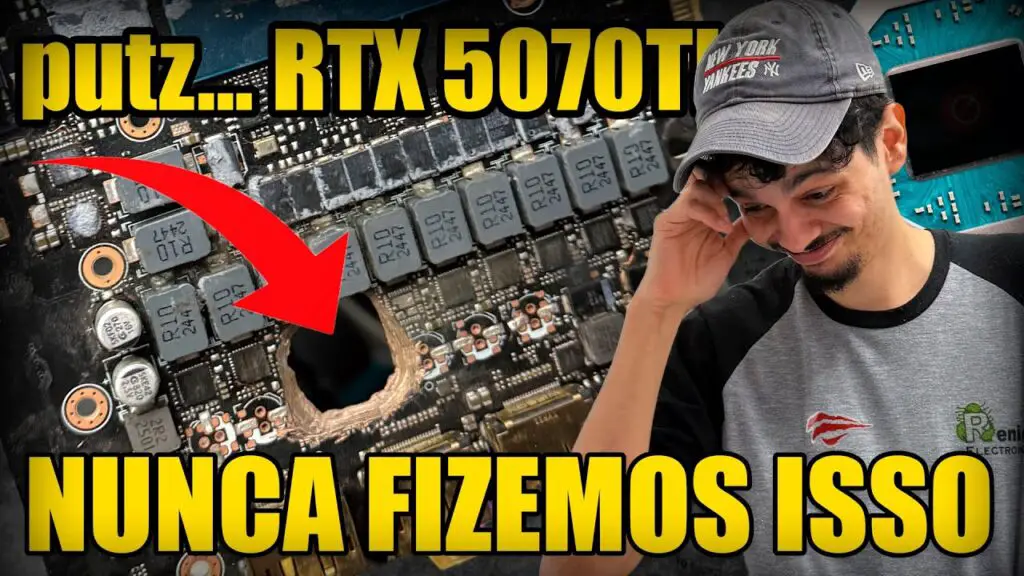
RTX 5070TI COM BURACO - EXPERIENCIA MALUCA DO CANAL. - YouTube

A Frankenstein Revival: The Audacious Wiring

Against all conventional wisdom, this intricate repair achieved a remarkable initial triumph. The AMD Radeon RX 580 was expertly wired to the Nvidia RTX 5070 Ti with a series of electrical connections, effectively bypassing the severe damage on the latter’s PCB. This delicate network of wires gave the setup a striking, almost “medical” aesthetic, as if the RX 580 was an external life-support system for its high-performance counterpart. Despite its bizarre and unprecedented configuration, the experimental method proved successful: the RTX 5070 Ti astonishingly managed to provide an output signal once more, marking a significant milestone in this truly unique project. It’s a testament to the ingenuity that can emerge when pushing the boundaries of electronics repair, bringing the kind of engaging and insightful content TechTalesLeo strives to deliver.
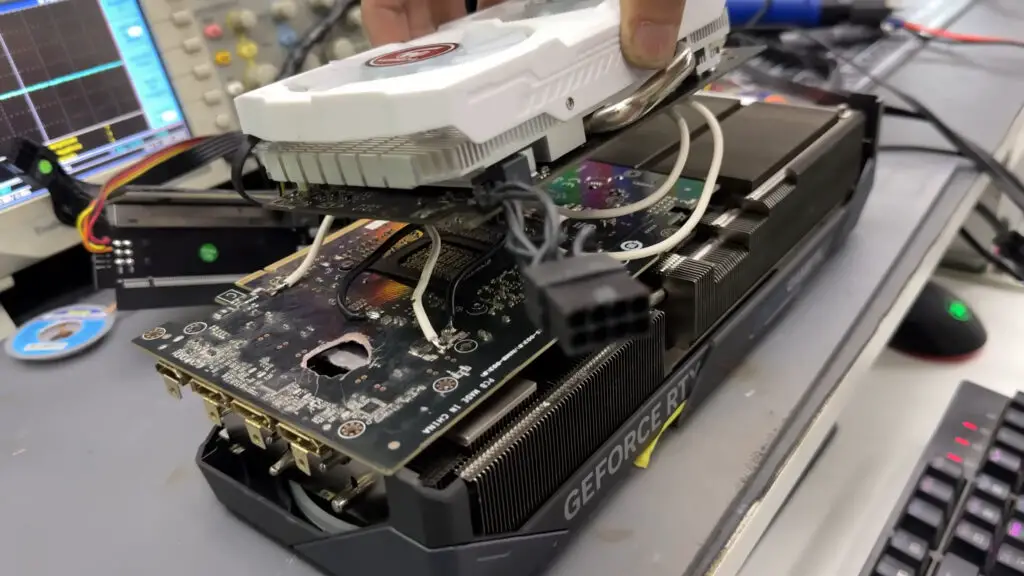
An RX 580 wired into the back of an RTX 5070 Ti

Navigating the Challenges of Cross-Platform Power

While the initial success was undeniably promising, the experimental GPU revival presented inherent technical challenges that demand careful consideration. A primary hurdle stemmed from the fundamental differences in power management architectures between AMD and Nvidia graphics cards. Splicing these distinct ecosystems required meticulous attention to electrical flow and precise voltage regulation. Constant monitoring of the current and the integrity of the connection wires became paramount to prevent potential damage from the inevitable heat generated. Furthermore, the newly “resurrected” graphics card has yet to be thoroughly benchmarked under heavy computational loads. Paulo Gomes candidly acknowledges that extensive ongoing work is required to ensure the card’s long-term stability and optimal performance, underscoring the truly pioneering spirit of this project reported by TechTalesLeo for Digital Tech Explorer.

The Ultimate Warning: Do Not Attempt This At Home

The physical manifestation of this extraordinary repair is a sight to behold—a genuine “Frankenstein GPU.” With the smaller, white, RGB-emblazoned RX 580 now literally riding piggyback on the more austere Gigabyte RTX 5070 Ti, the combined unit boasts five cooling fans and two entirely separate heatsinks facing back-to-back. The contrasting aesthetics further amplify its unique, almost defiant, appearance. While the RTX 5070 Ti lives on, its life-support system makes for an unforgettable visual. This incredible feat of electronics expertise, while captivating for Digital Tech Explorer’s audience interested in digital innovation, comes with a strong, unequivocal warning: do not try this at home. Such intricate, high-voltage, and potentially hazardous GPU repair should be left exclusively to highly trained electronics experts or those with advanced electrical engineering knowledge. The potential for significant heat buildup, short circuits, and even fire if not handled with extreme precision makes this a demonstration of unparalleled skill, not a casual DIY project.