
As TechTalesLeo, a dedicated tech enthusiast always exploring the unexpected, I certainly didn’t anticipate discussing PhysX in 2025. This technology emerged when I was still in school, and its active relevance had seemingly faded into tech history – or so I, and many others, thought.
Earlier this year, Nvidia’s decision to pull support for 32-bit CUDA applications with its newest generation graphics cards, the RTX 50 series, made headlines. This move meant that natively running 32-bit games with hardware-accelerated PhysX effects was no longer possible. For those unfamiliar, PhysX fundamentally offloads in-game physics calculations to a dedicated GPU. This not only frees up the CPU for other tasks but also empowers developers to integrate significantly more physics-based effects into their games, leading to a much richer and more dynamic visual experience.
The absence of hardware acceleration for PhysX forces all physics calculations onto the CPU. Even with today’s powerful multi-core processors, the sheer volume of these effects can severely bottleneck frame rates. The choice was often stark: endure a significantly limited frame rate or simply turn PhysX off.
Honestly, PhysX hadn’t crossed my mind for a considerable time, let alone for retesting. However, a recent development changed that. Just this week, Nvidia made a surprise announcement, re-introducing support for select PhysX titles on RTX 50-series cards. This news, shared on Digital Tech Explorer, immediately piqued my curiosity, compelling me to dive back into these classic games and assess the impact firsthand.
The Enduring Visual Impact of PhysX on Classic Games
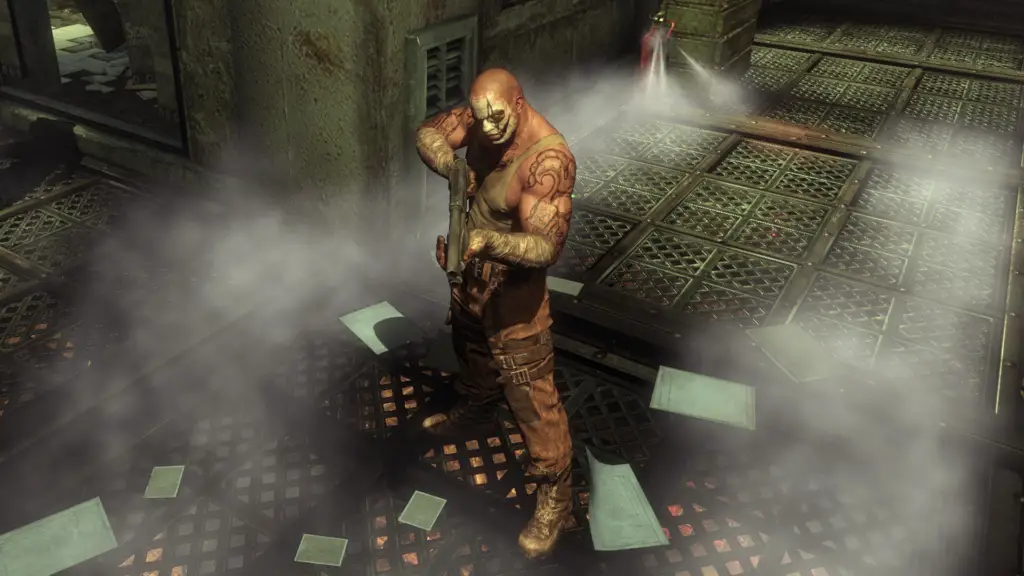
My initial assumption was that disabling PhysX would be a straightforward solution, a minor compromise for playability. Yet, after rigorous testing of classics like Batman: Arkham Asylum and Batman: Arkham City, I quickly understood why many players vehemently refused to turn it off. The visual difference with PhysX enabled versus disabled is genuinely stark. Disabling it strips away a surprising amount of environmental detail and dynamic effects. Objects, fog, smoke, flags, and an array of particle effects simply vanish. Even character models can appear less dynamic, contributing to a noticeably flatter, almost two-dimensional aesthetic within the game world. It genuinely makes the games feel significantly less immersive and visually rich.
Our Test System Specifications and Methodology
The performance figures shared below provide a clear insight into the impact of lacking PhysX acceleration in these older titles. Our test system remained consistent across all runs; only the graphics card was swapped. To ensure accurate benchmarking, we also unlocked the frame rate via the game’s configuration files.
Digital Tech Explorer Test Platform
System components supplied by Cyberpower | MSI
- CPU: AMD Ryzen 7 9800X3D
- Motherboard: MSI MPG X870E Edge Ti WiFi
- RAM: Kingston Fury Beast RGB 32 GB (2 x 16 GB) @ 6,000 MT/s
- Cooler: MAG CoreLiquid i360 White
- SSD: Spatium M480 Pro 2 TB
- PSU: MPG A1000GS PCIe 5
- Case: MAG Pano 100R White
Performance in Batman: Arkham Asylum (Unsupported)
In Batman: Arkham Asylum, we observed a significant performance reduction when enabling PhysX on an RTX 50-series card, roughly double the impact seen on the RTX 40 series. As of now, Arkham Asylum has not been included in the initial wave of titles to receive specific per-game driver support from Nvidia, though plans for its inclusion in the new year have been mentioned. For the time being, disabling PhysX remains the most practical solution for optimal performance on newer graphics cards.
Batman: Arkham City Performance (Pre-Driver Support)
Batman: Arkham City proved to be an excellent test subject due to its rich PhysX features and its inclusion in Nvidia’s latest driver package, 591.44. Prior to the introduction of per-game PhysX support (tested with driver 581.29), there was a substantial performance disparity between the RTX 5080 and RTX 4080 Super systems when PhysX was enabled.
During some scenes, the RTX 5080 system would outperform the RTX 4080 Super. However, this advantage quickly vanished when the CPU became the bottleneck during demanding PhysX sequences. The most telling example was a late-game scene where the RTX 5080 system plummeted to an average of 41 fps, while the RTX 4080 Super system comfortably maintained over 100 fps.
Batman: Arkham City Performance (Post-Driver Support)
With the release of driver package 591.44, specifically designed to address PhysX performance, the RTX 5080 was able to narrow the performance gap, showing a notable 14% improvement.
Interestingly, we observed a peculiar dip in performance during the very first scene with the new drivers, where it performed worse than with the previous version. However, this scene appeared to have fewer PhysX effects compared to later segments, where performance nearly doubled with the latest drivers. While the new drivers brought significant improvements, the RTX 5080 still didn’t quite match the RTX 4080 Super in Arkham City, despite the explicit driver support. This might suggest some inherent overhead in the translation process, or perhaps performance varies depending on the specific game and its PhysX implementation—as Arkham Asylum appears to be a more challenging case.
Nevertheless, the new drivers successfully elevated performance, with even the 1% lows now consistently above 60 fps, making the game significantly smoother and more enjoyable to play.
Optimizing PhysX with a Dedicated Card
My curiosity naturally led me to conduct additional tests on the same system, this time with both the RTX 5080 and RTX 4080 Super installed. I had initially hoped to use my dusty old GTX 1080 for this, but my test bench’s PSU, with its dual 12V-2×6 connectors, lacked the necessary 8-pin PCIe cables. So, a dual Ada Lovelace/Blackwell setup it was!
Combining two large graphics cards in a confined “fish tank” style case with minimal direct airflow is, admittedly, far from ideal for thermals. However, by designating the RTX 4080 Super as a dedicated PhysX card via the Nvidia Control Panel, it fortunately didn’t generate much heat. The primary RTX 5080 did run a bit toastier due to restricted airflow from the card below, but it proved resilient. This dual-GPU configuration delivered the best performance by a significant margin.
I must confess, I’ve genuinely surprised myself with how much I’ve come to appreciate PhysX in these games. Going into this, I expected to be underwhelmed and ultimately agree with the “just turn it off” sentiment. However, the difference it makes is substantial.
While the argument for discontinuing 32-bit support is understandable, given its long tenure, maintaining some form of support for these PhysX-enabled games feels like the right decision. If the PC isn’t the platform to keep classic games alive and thriving, where else is?
— TechTalesLeo
***
Disclaimer: All content on Digital Tech Explorer is for informational and entertainment purposes only. We do not provide financial or legal advice. Some of the links on Digital Tech Explorer are affiliate links. This means we may earn a commission if you click through and make a purchase, at no additional cost to you. Our recommendations are based on thorough research and personal experience, aligning with Digital Tech Explorer’s mission to provide transparent and high-quality content.