
Even the most groundbreaking technology has its quirky moments, and few games showcase this better than Valve’s legendary Half-Life 2. Renowned for its revolutionary physics engine, this narrative shooter proved that even best-in-class tech can hide the most baffling bugs. Here at Digital Tech Explorer, we love uncovering these fascinating stories, and this one comes courtesy of former Valve developer Tom Forsyth, who recently shared a mind-bending tale on Mastodon.
Back in 2013, as Valve explored the burgeoning landscape of virtual reality, a VR version of Half-Life 2 seemed like a natural fit. It was a relatively recent release, unlike Portal whose perspective-bending tricks proved a “nauseating disaster” in VR. Yet, mere minutes into this promising VR build, players encountered a bizarre softlock. This isn’t just a nostalgic anecdote; it’s a brilliant illustration of the subtle complexities developers grapple with, making it a perfect piece of insightful tech storytelling for our readers.
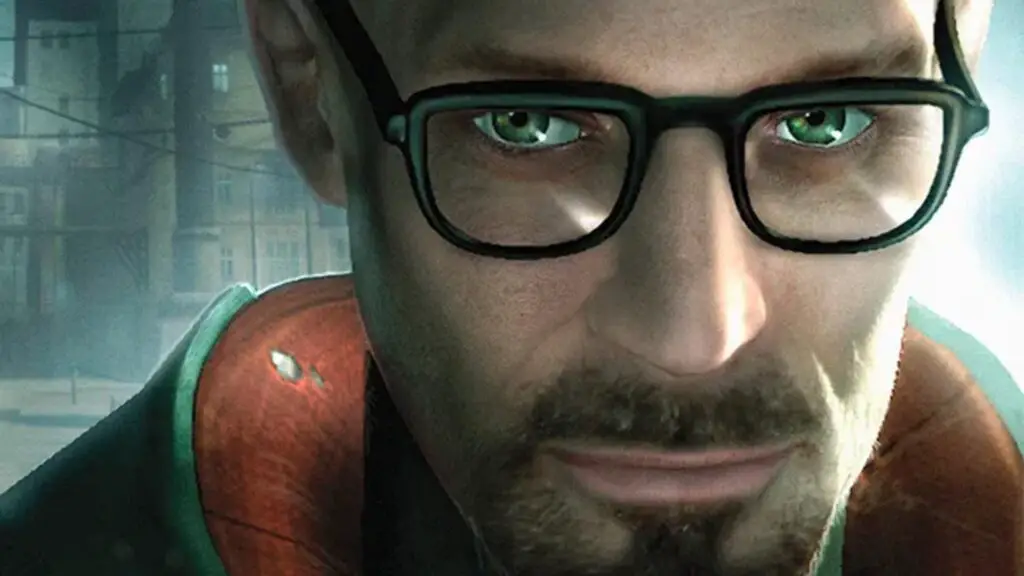
The Enigma of the Unyielding Door in Half-Life 2 VR
The scene was the iconic opening of Half-Life 2: a metro cop was supposed to usher the player through a door, a critical story beat. But in the VR build, the door remained stubbornly shut. Players were frozen, trapped in an endless wait for an event that simply wouldn’t trigger. Forsyth’s team, including original HL2 developers, were baffled. “Oh dear,” he recalled, “We can’t ship this.” The puzzle deepened when they realized the bug wasn’t exclusive to VR; it had somehow appeared in the standard build too, despite no relevant code changes. This was a true head-scratcher for even seasoned software engineers.
The First Clue: A Guard’s Unintended Interference
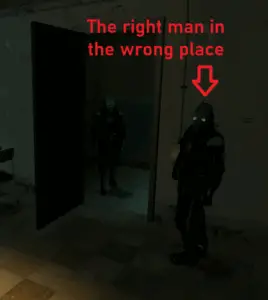
Through meticulous debugging, the team eventually found the culprit: a guard positioned just behind the door. “Very slightly too close,” Forsyth noted. The corner of his bounding box, an invisible perimeter around the character, would intersect the door’s path as it attempted to open. The sequence was precise: the door would begin to open, gently nudge the guard’s toe, bounce back, close, and then lock itself. A temporary fix involved simply moving the NPC. However, the true mystery remained: why was this happening now? The VR build hadn’t altered the NPC’s position, and stranger still, recompiling the original Half-Life 2 build revealed the bug had “traveled through time,” appearing there as well. This wasn’t a new bug; it was an old one, subtly awakened by a change no one could immediately pinpoint.
Unraveling the Root Cause: The Ghost in the Machine, Floating-Point Precision
The deep dive led to an elegant, yet maddeningly subtle, answer: “Good old floating point.” The culprit wasn’t a line of code changed by a developer, but a fundamental shift in how the machine interpreted numbers. The new compilers used for the VR and recompiled original builds defaulted to the SSE (Streaming SIMD Extensions) instruction set. This differed from the x87 instruction set, which the original Half-Life 2 would have used for CPUs of its era—a set known for its “wacky grab-bag of precisions.” Despite working with identical old code, the change in compiler and instruction set meant the game was calculating physics with microscopic differences, enough to throw off a delicate balance.
The Butterfly Effect: How Microscopic Differences Lead to Macro Glitches
Forsyth’s explanation paints a vivid picture of this digital butterfly effect. In both versions of the game, the door’s momentum was just enough to impart a tiny rotation on the guard. The floor’s friction wasn’t quite enough to completely resist this, causing a minuscule rotation. Here’s where the precision differences diverged:
- On the x87 version: That tiny rotation was just sufficient to shift the guard’s toe clear of the door’s path. The collision resolved, the door continued its swing, and the game progressed flawlessly.
- On the SSE version: A multitude of these “tiny precisions” were subtly different. The interplay of floor friction and object mass meant the guard still rotated from the collision, but now, he rotated imperceptibly less. Consequently, on the very next frame of simulation, his toe remained an obstruction. Since the door couldn’t simply phase through the guard, it executed its only other programmed response: it bounced back, closed, and locked. The player, once again, found themselves stuck.
This saga of a silent guard and a stubborn door isn’t just a bizarre bug; it’s a profound “head trip” into the granular world of game physics and compiler intricacies. It serves as a powerful reminder for developers and tech enthusiasts alike: what appears to be a simple glitch can hide layers of complex, interconnected systems, where even microscopic changes can trigger macroscopic failures. As we at Digital Tech Explorer continually strive to make technology both educational and entertaining, this story perfectly illustrates the invisible engineering challenges that shape our digital experiences. The next time you encounter a seemingly trivial in-game physics quirk, spare a thought for the elegant, yet fragile, mathematical dance happening beneath the surface.