

Unpacking The Outer Worlds’ Social Commentary: A TechTalesLeo Deep Dive
In the expansive cosmos of gaming, few titles paint a picture of corporate dystopia as vividly as The Outer Worlds. Set in a segment of the universe where the relentless pursuit of profit has reshaped society into a vast, dehumanizing mechanism, players navigate a world governed by corporate titans and their unyielding rationale. For many tech enthusiasts and keen observers of game narratives, the satirical critique of what appears to be unbridled capitalism seems undeniable.
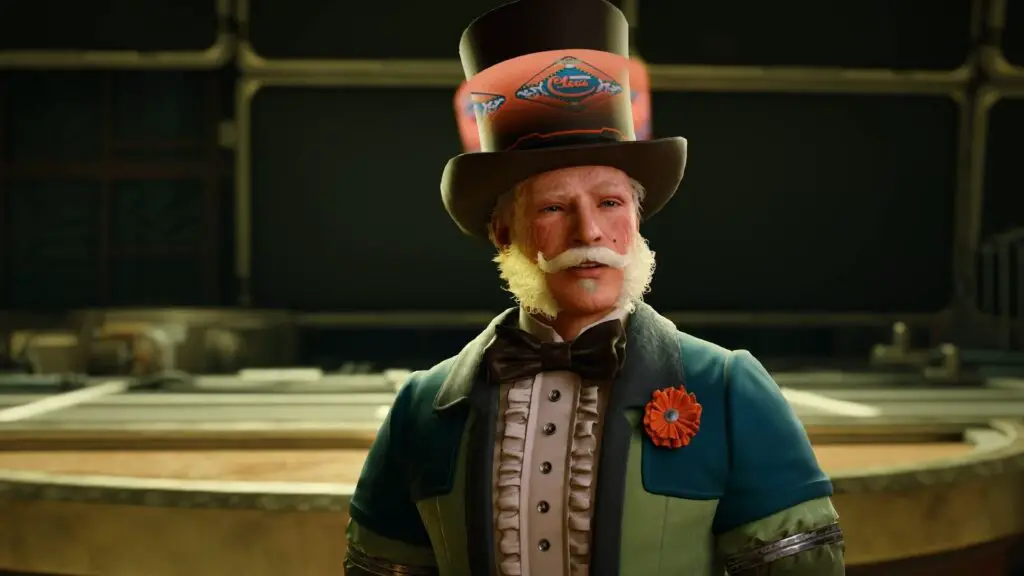
However, the director of the anticipated The Outer Worlds 2 (TOW2), Brandon Adler, presents a different perspective. In a recent discussion on the My Perfect Console podcast, Adler clarified the studio’s intent, stating, “We’re not going out of our way and saying ‘Let’s do a critique of capitalism as we currently see it.’” He elaborated that the core objective, particularly evident in the first installment of The Outer Worlds, is to scrutinize broader power structures—specifically, the exploitation of the powerless by those in authority.
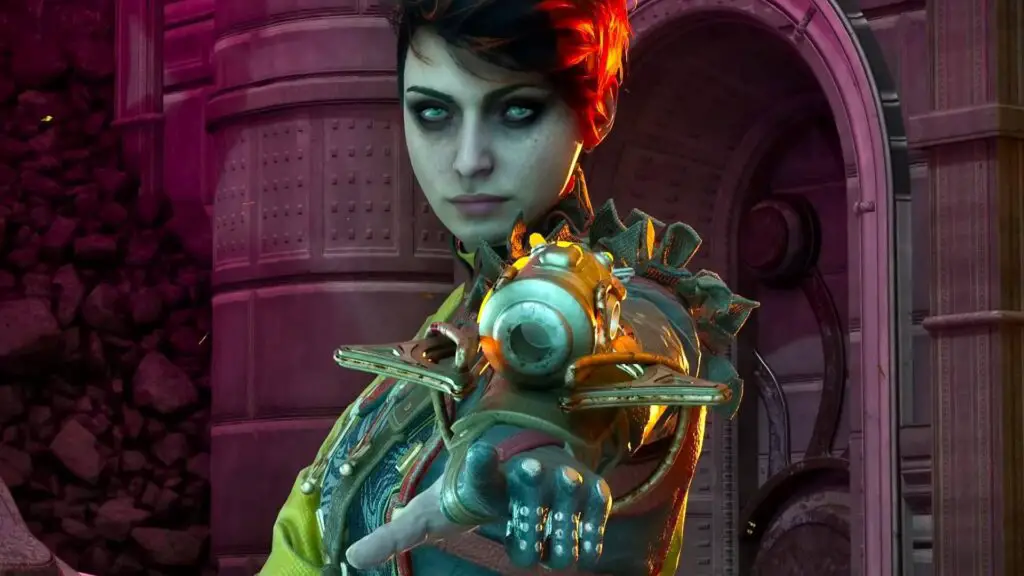
Adler cited The Outer Worlds 2’s fictional “Order of the Ascendant” as a prime example. This faction, obsessed with “perfecting humanity,” is depicted taking extreme measures, even poisoning its own populace to advance its agenda. Adler emphasized that this commentary isn’t aimed at contemporary issues but rather at “problems that have existed forever.” He noted that regardless of when such narratives are created, they often resonate with current events simply because “this damn thing happens all the time.” This viewpoint echoes that of Fallout co-creator Tim Cain, who maintained that the original games were not a deliberate critique of capitalism but a broader commentary on the inevitability of war stemming from basic human nature.
TechTalesLeo’s Take: The Imperative of Specificity in Social Critique
As TechTalesLeo, a dynamic storyteller passionate about unraveling the intricacies of digital innovation and game narratives, I find this generalized approach to social commentary, particularly concerning The Outer Worlds, to be a rather curious piece of misdirection. To frame the discussion purely around an ahistorical “human nature” or generic “power structures” risks rendering any critique so vague and diffuse that it fundamentally loses its punch. What are the specific origins of this “nature”? What tangible forces give rise to these “power structures”? In our current reality, and indeed, within the satirical framework of TOW2, these forces are undeniably shaped by the wage relation and the stark division of humanity into a vast working class and a small, capital-controlling elite—an elite whose power is often defended by force and the state.
While the timeless presence of “war” and “abuse of power” is an undeniable historical truth, their underlying drivers and logical frameworks have consistently evolved. The exploitation experienced by a medieval peasant under a feudal lord, for instance, bears significant historical and social differences from that of an overworked laborer in a modern mega-corporation’s warehouse. Both are undesirable, certainly, but their contexts, mechanisms, and potential solutions diverge profoundly.
The struggle between exploiter and exploited manifests in ever-new forms across different epochs, giving birth to novel classes, unique conditions of oppression, and innovative methods of resistance. Given Obsidian’s well-established reputation for crafting deeply intelligent and nuanced narratives, I believe their writers possess the intellectual capacity to grasp this fundamental concept. This makes their apparent reluctance to directly engage with a specific historical moment—one that could offer a penetrating, timely, and potentially transformative critique—somewhat disappointing. Instead, they appear to opt for a more generalized and intractable human ailment, presented as having endured throughout history and destined to persist indefinitely.
While this generalized approach might be perceived as “safer,” steering clear of direct opposition against concrete issues like private property in favor of abstract concepts, it ultimately proves less compelling. Its vagueness, from an analytical perspective, strips it of its true meaning and potential for impact. As Digital Tech Explorer aims to provide insightful content for tech enthusiasts, understanding these narrative choices helps us better appreciate game development and its broader implications.
Furthermore, Adler addressed any lingering suspicion that Obsidian might be too cautious of its multi-trillion-dollar parent company, Microsoft, to explicitly use terms like “capitalism” in The Outer Worlds 2. He affirmed, “I’ll say, to Microsoft’s benefit, or to kind of put them in a good light here, they didn’t ever say anything to us. They never once said, ‘you can’t say that.’” While acknowledging, “Maybe if we went too far later on, they would have said something,” he indicated that such a risk was minimal, adding, “I don’t like, necessarily, for video games to come off as preachy.”
As we continue to explore the dynamic intersection of technology, storytelling, and gaming on Digital Tech Explorer, these discussions are vital for understanding the depth and reach of digital innovation. Whether you’re a developer or a tech enthusiast, staying informed about these narrative nuances enhances your appreciation of the craft and helps you make informed decisions about the games you engage with.
***
Disclaimer: All content on Digital Tech Explorer is for informational and entertainment purposes only. We do not provide financial or legal advice. Some of the links on Digital Tech Explorer are affiliate links. This means we may earn a commission if you click through and make a purchase, at no additional cost to you. Our recommendations are based on thorough research and personal experience.