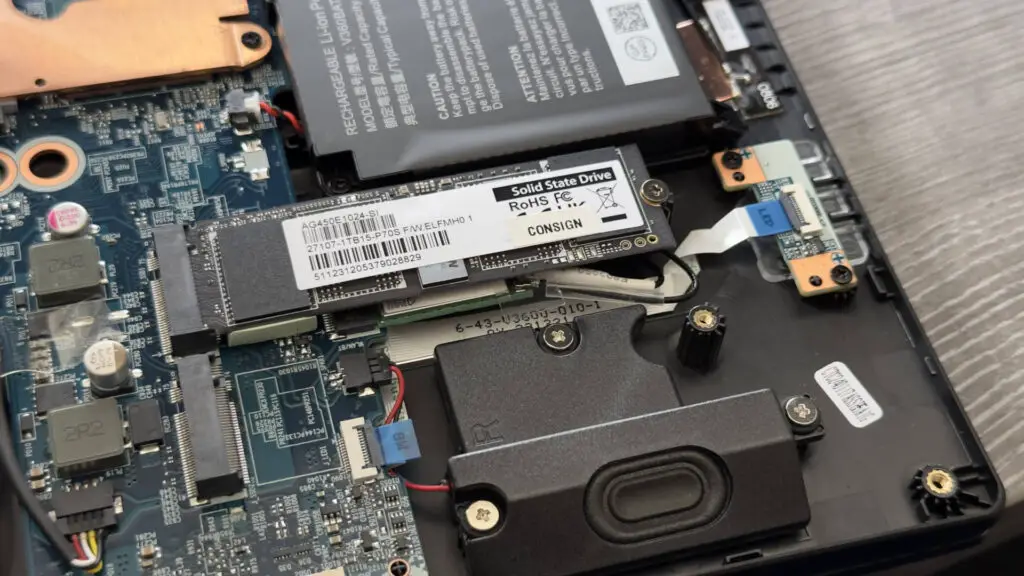
For many tech enthusiasts, the idea of upgrading storage in a gaming laptop involves little more than a screwdriver and a spare M.2 slot. Yet, when we shift our focus to the tightly integrated world of smartphones, particularly an Apple iPhone, the narrative changes dramatically. What might seem like a simple expansion becomes a testament to highly-skilled engineering. Here at Digital Tech Explorer, we’re always fascinated by those who push tech boundaries, and one modder has brilliantly showcased this with an iPhone 17 Pro Max.
Apple’s flagship phones, including the latest iPhone 17 Pro Max, come with distinct storage tiers: 256 GB, 512 GB, 1 TB, and 2 TB, each carrying a significant price premium for increased capacity. Without the luxury of an SD card slot, users are typically locked into their chosen storage at the point of purchase. Or so it seems. YouTuber DirectorFeng, a true digital innovator, challenges this notion, revealing an iPhone storage upgrade path that is anything but conventional.
![[ASMR] Can iPhone 17 Pro Max be successfully upgraded from 256GB to 2TB? - YouTube](https://digitaltechexplorer.com/wp-content/uploads/2025/10/maxresdefault-86-1024x576.jpg)
The Highly Complex iPhone Storage Upgrade Process
With immaculate presentation and an almost obsessive attention to detail, DirectorFeng’s video meticulously walks us through every daunting step involved in replacing the 256 GB SSD module in an iPhone 17 Pro Max with a larger 1 TB one. The immediate takeaway for any tech enthusiast is the sheer number of minuscule screws and delicate ribbon cables packed inside the phone. Just gaining access to the SSD module itself proves an almighty task, certainly not for anyone with jittery hands.
Even for those with exceptional dexterity, a monumental hurdle arises: Apple’s integrated SoC (system on chip) design. Here, the SSD module isn’t merely plugged in; it’s meticulously bonded atop a DRAM module, which itself sits directly on the processor. This deep integration is a hallmark of modern smartphone engineering, making traditional upgrades impossible. DirectorFeng’s audacious solution is both ingeniously precise and frankly alarming: employing a CNC milling machine to meticulously grind away every trace of the old SSD from the package. This leaves behind only the bare pins on the DRAM layer – a process the video captions aptly call “Flash chip formatting ‘physically.’” It’s an extreme measure, ensuring arguably the most data-secure method of replacing a storage drive.
With the old NAND flash chip physically removed, the modder carefully extracted all the old solder balls (each chip is mounted via a BGA, or ball grid array), then neatly applied a fresh layer of them to precisely mount the new 1 TB SSD module. Once that critical stage is complete, it’s ‘simply’ a case of reversing the intricate disassembly process, loading iOS onto the newly installed drive, and voilà – an iPhone boasting four times its original storage capacity.
Realistically, considering the specialized equipment, significant training, and immense skill demonstrated, upgrading your iPhone’s storage this way would likely far exceed the initial price difference of simply purchasing a higher-capacity model. This incredible feat, while mesmerizing to observe, truly highlights the stark contrast between the repairability and upgradeability of smartphones versus traditional desktop and laptop PCs. For those of us who regularly explore hardware on Digital Tech Explorer, the accessibility of affordable 1 TB SSDs and spacious interiors for PC builds feels like a breath of fresh air. While a laptop SSD upgrade might not offer the same nail-biting drama, it serves as a powerful reminder of how different design philosophies impact practical user upgrades and long-term device usability. It’s a fascinating look into the extremes of tech customization, helping tech enthusiasts like us make more informed decisions.