
Few pieces of technology have achieved the iconic status of the IBM Model M. This legendary keyboard, with its quintessential 100% form factor and classic buckling spring mechanical keys, has graced the desks of countless PC users and even made appearances in film. As this enduring legend approaches its fifth decade, it’s the perfect time for us at Digital Tech Explorer to delve into its origins and enduring influence, offering a deep dive for tech enthusiasts and professionals alike.
The Genesis of a Legend: The Model M’s Defining Features
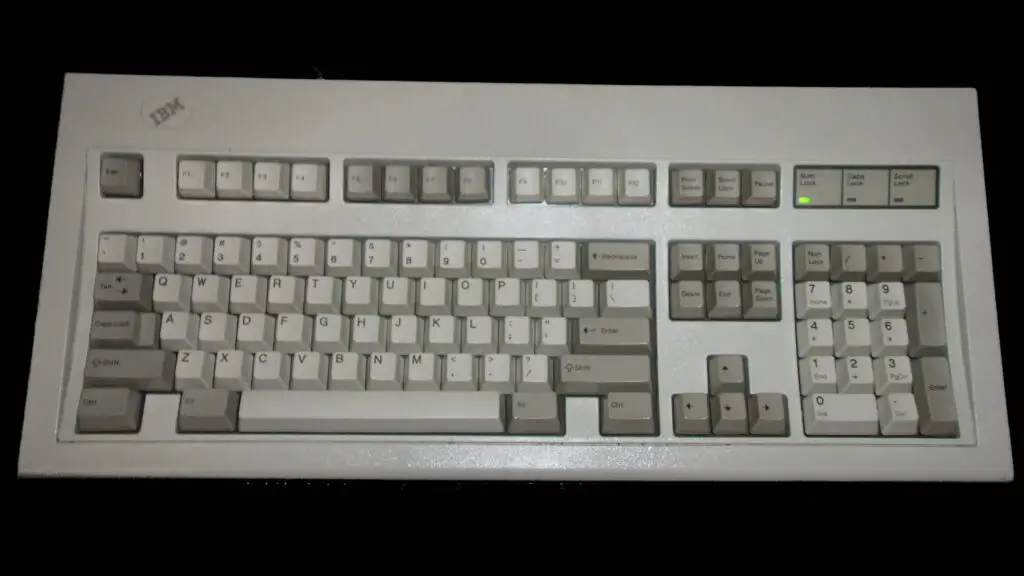
The Model M was born out of a practical necessity: to replace IBM’s Model F keyboard, which had become prohibitively expensive to manufacture. IBM envisioned a “low cost, high volume” alternative, a challenge that led to the innovative design of the Model M. The first iteration, known as the IBM Enhanced Keyboard, debuted bundled with the IBM 3161 model terminal. This design established many features that are now ubiquitous, most notably the ergonomic placement of the Control key and the intuitive ‘inverted T’ arrow keys.
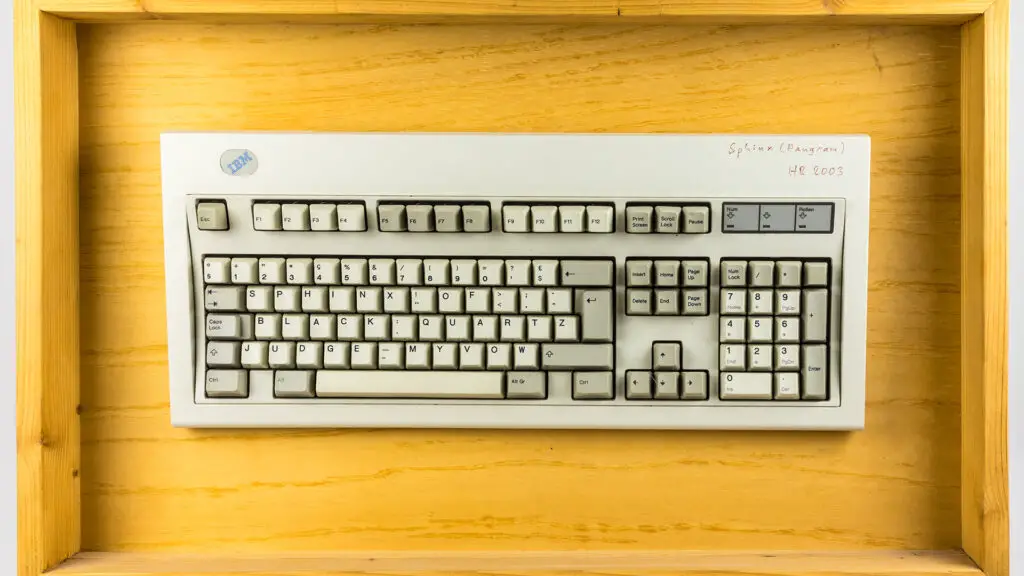
IBM’s Human Factors Research Groups played a pivotal role in these design decisions. Their involvement allowed for flexibility, reportedly enabling typists to adjust, enlarge, or duplicate keys to optimize for efficiency. The culmination of this research is essentially the full-size keyboard layout we rely on today. Both the ISO and ANSI standard layouts, finalized years after the Model M’s debut, introduced only minor modifications, such as the addition of the Windows and Menu keys.
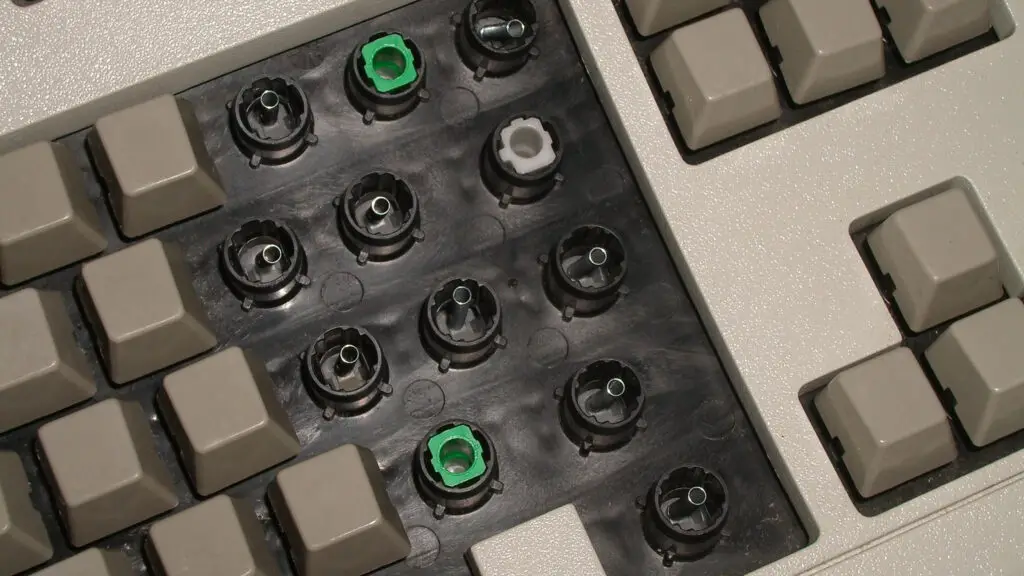
To achieve its cost-saving goal while preserving the keyboard’s renowned tactile feedback, IBM ingeniously integrated individual buckling spring switch assemblies into a single frame, drastically reducing the part count. Furthermore, the sensing mechanism transitioned from the Model F’s capacitive pad card to a simpler membrane assembly. This single change alone slashed manufacturing costs by half, proving to be a significant financial boon for IBM. When the keyboard was subsequently packaged with IBM’s popular Personal System/2 (PS/2) computers, the Model M swiftly captured the hearts of users, solidifying its place in computing history.
The Model M’s appeal is multifaceted. For many, it evokes a wave of nostalgia, a tangible link to their first computer experiences. For others, it’s the undeniable quality of its buckling spring switches. These switches deliver a truly unique and powerful feel, distinct from modern mechanical alternatives. Their characteristically loud and tactile feedback stems from a literal spring buckling under the keycap’s pressure, which then drives down onto contact pads on a plastic membrane to register the keypress. This mechanism provides a heavier, more resonant typing experience that many users find incredibly satisfying and rhythmic, fostering a focused workflow. The Model M stands as the pinnacle of an engineering lineage, tracing its roots from IBM’s 1930s typewriters through keypunch machines and early terminals, all the way to contemporary PCs.
The Model M’s Evolution and Unicomp’s Enduring Legacy
Throughout its active production, the Model M underwent several evolutionary changes. In 1991, IBM divested a portion of its keyboard division to Lexmark. In a drive for further cost reduction, some Lexmark-produced Model Ms featured thinner backplates and more economical plastic shells. Certain models even transitioned away from the iconic buckling springs to rubber domes, reflecting a broader industry trend towards lower-cost keyboard manufacturing.
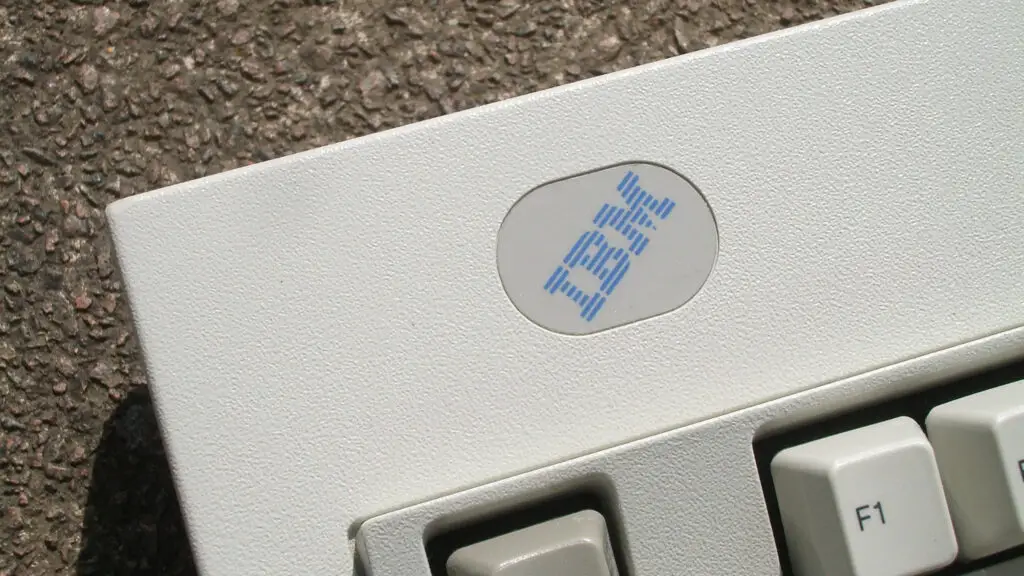
By March 1996, Lexmark decided to exit the keyboard business entirely, putting its assets up for sale. When no buyer emerged, Neil Muyskens, the keyboard business’s product manager, stepped forward to acquire the operation himself. Thus, Unicomp was founded, inheriting the critical tooling, designs, and patent portfolio to diligently carry forward the Model M’s storied legacy.
Remarkably, Unicomp continues to manufacture Model Ms today, offering them in various modern iterations. Their catalog includes contemporary twists on the classic design, such as Mac-compatible variants, models featuring a built-in trackball, and even a faithful reproduction of the old 122-key terminal keyboard. A recent introduction, the Mini M model, pays homage to the rare Space Saving Keyboard (SSK) variant of the original M, a product whose concept took nearly two decades to truly materialize.
The new Unicomp Model M is a truly commendable product, maintaining its status as a standout in any rotation of mechanical keyboards. With its buckling springs, robust plastic frame, and stunning two-tone dye-sublimated keycaps, it honorably perpetuates the tradition of its predecessor. However, manufacturing these keyboards in the current era presents its own set of challenges. Don Bowman, Vice President of Development at Unicomp, highlights cost as a significant factor, noting that assembly remains in the USA with many parts requiring manual installation, making them comparatively expensive in today’s market.
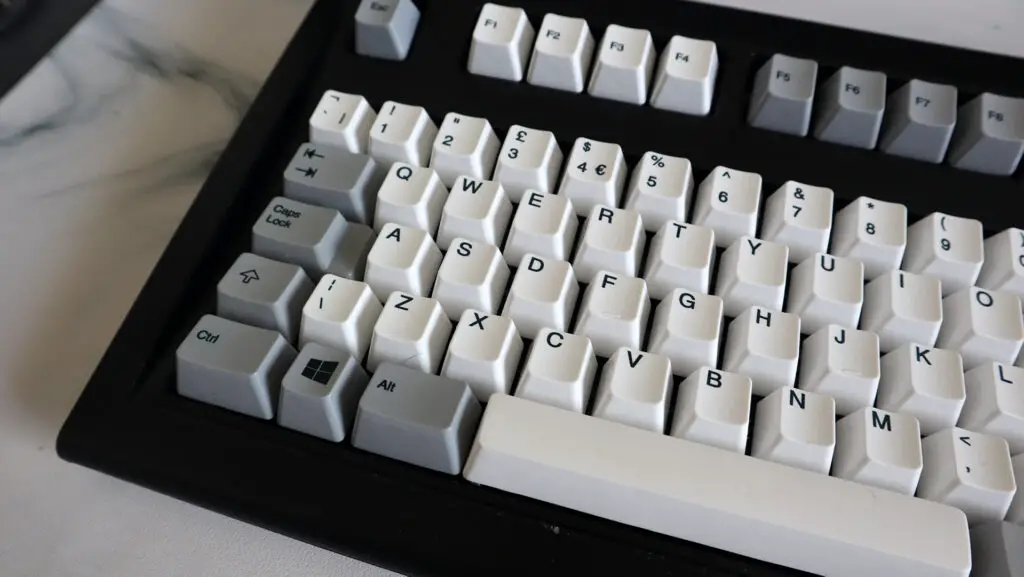
Despite the premium price point, a substantial number of corporate clients still opt for the Model M, a testament to its unparalleled reputation for quality, reliability, and durability. These keyboards can still be found thriving on factory floors, powering medical workstations, and enabling efficient retail operations. Unicomp’s unique ability to customize keyboards in-house for specific requirements also attracts specialized customers, including military organizations.
The persistent demand for Model M-style buckling spring keyboards clearly underscores their enduring value, driven by their distinctive tactile feel and satisfying acoustic feedback. From our perspective at Digital Tech Explorer, the Model M is arguably one of the most important, yet often underrated, innovations of the twentieth century. Without its groundbreaking inception, the standard keyboard layout that defines our digital interactions today would likely not exist. So, let us raise a glass to the IBM Model M in all its forms—a true testament to lasting design and engineering. Its legacy, it seems, is poised to continue inspiring tech enthusiasts for the foreseeable future, which can only be a good thing for the world of hardware.