
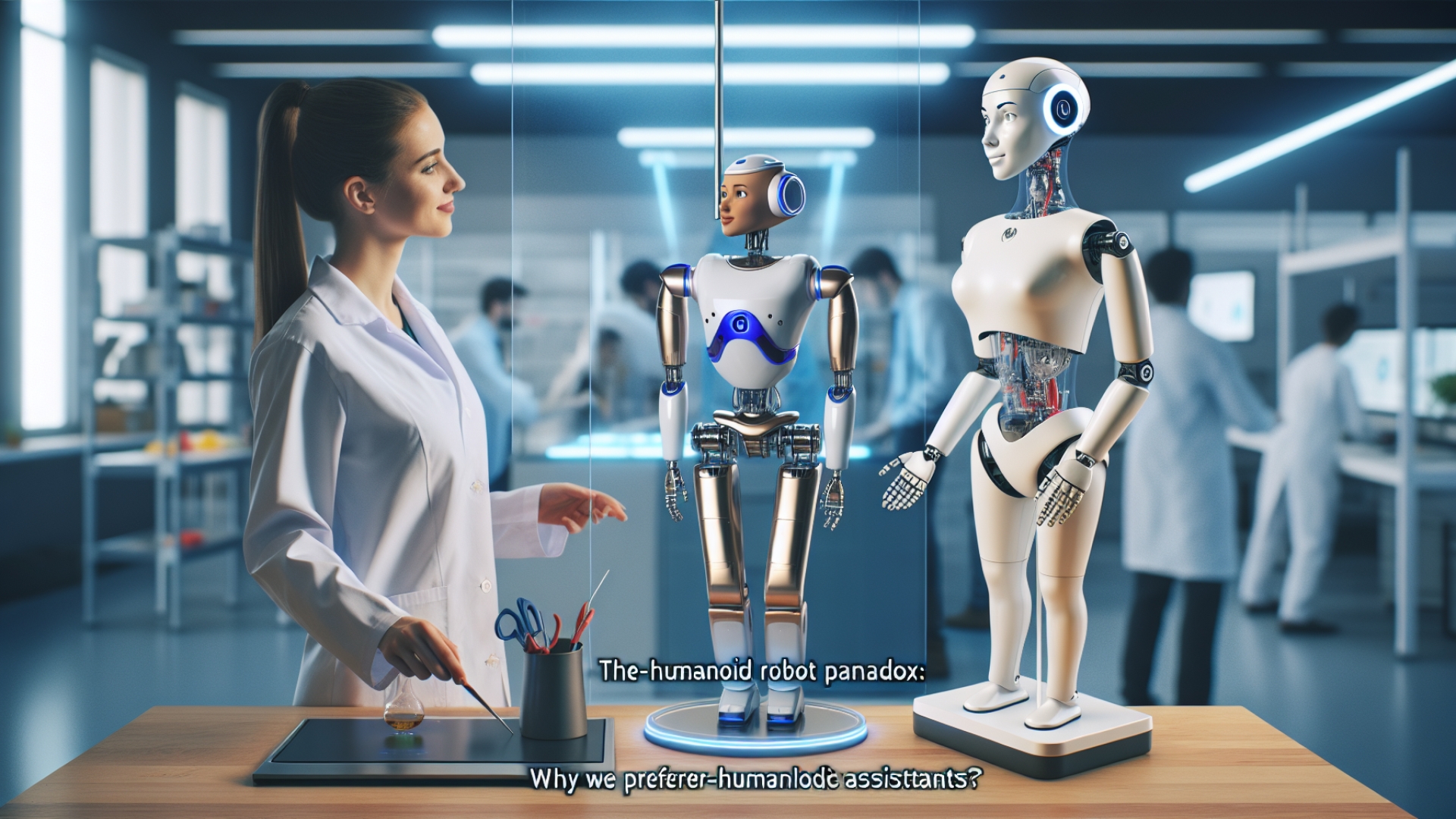
As tech enthusiasts, many of us at Digital Tech Explorer—and myself, TechTalesLeo—have witnessed the rise of viral videos showcasing humanoid robots over the last decade. These machines, whether performing intricate tasks or executing a surprising dance routine, often leave us with a perplexing mix of awe, confusion, and sometimes, a subtle sense of dread. It’s the classic “uncanny valley” in full effect. Yet, contrastingly, the sight of a purpose-built bot like Scrubby, the charming whiteboard cleaner, typically brings nothing but ease and even a smile.
This apparent dichotomy in our perception of robots is, it turns out, quite widespread. Many find the concept of these human-like machines unsettling, particularly when considering them for domestic roles. Curiously, despite this public apprehension and the often-demonstrated superior efficiency of specialized, non-humanoid robots, the robotics industry continues to heavily invest in developing human-shaped counterparts. This fundamental contradiction in the evolution of modern robotics piqued the interest of University of Washington robotics professor, Maya Cakmak, who set out to investigate.
Unpacking Public Discomfort with Humanoid Robots
Professor Cakmak, collaborating with her students and fellow researchers, delved into this phenomenon, detailing their findings on IEEE Spectrum. Their extensive studies surveyed individuals—many already familiar with robotic assistance in their homes—on their comfort levels with humanoid robots compared to other robotic forms for various tasks. Consistently, the research revealed a clear preference: people felt significantly more at ease with robots that bore less resemblance to humans.
Reflecting on her interactions with a panel of individuals experienced with in-home robotic assistance, Cakmak noted, “Not one of them wanted a humanoid.” She elaborates on the wide array of concerns expressed: “Their concerns ranged from ‘it’s creepy’ to ‘it has to be 100 percent safe because I cannot escape it.’ One panelist summed it up perfectly: ‘Trying to make assistive robots with humanoids would be like trying to make autonomous cars by putting humanoids in the driver’s seat and asking them to drive like a human.’”
Purpose-Built Robots vs. Humanoids: Efficiency and Safety Concerns
As Professor Cakmak elucidates, the theoretical advantages of humanoid robots are compelling. A sufficiently advanced humanoid could seamlessly integrate into any human-centric task, serving as a versatile, multipurpose solution. However, the current reality falls far short of this ideal, often showcasing robots struggling with even basic functions, such as attempting to play sports. This raises a pertinent question for Digital Tech Explorer readers: would you genuinely trust these somewhat clumsy machines with your household chores?
This area of domestic robotics is one where Cakmak possesses considerable expertise, stemming from her extensive history with purpose-built robots designed for in-home assistance. Unlike their humanoid counterparts, these specialized bots excel at discrete tasks and often feature a more functional, perhaps “Lost in Space”-esque, aesthetic with boxy forms and articulated grabber arms. Some are even ingeniously designed to deploy from the ceiling, acknowledging the practical challenge of limited living space and the potential clumsiness of human-sized, general-purpose robots.
However, public skepticism isn’t solely rooted in concerns about robot inefficiency; a deeper worry emerges if these machines become *too* capable. A Roomba, for instance, poses no threat of pursuing a human like a machine with full human-like mobility might. Regardless of their operational proficiency, the inherent safety implications of robots capable of performing functions far beyond their intended scope are considerable. This critical point was frequently raised by study participants, even when instructed to assume perfect safety protocols. Cakmak highlights this paradox: “Even with our reassurances about safety, people readily imagined hazards: humanoids could trip, stumble, or tip over; they might glitch, run out of battery, or malfunction.”
Ultimately, these extensive studies appear to have solidified Professor Cakmak’s uncertainty regarding the substantial, billion-dollar investment currently flowing into humanoid robotics. The core questions for tech innovators and enthusiasts alike remain: If purpose-built robots consistently demonstrate superior efficiency, and public sentiment clearly leans towards apprehension, why does the prevailing vision for future robotics remain so stubbornly human-shaped? Is this persistent drive merely fueled by the allure of viral content and shareable spectacle, or do industry leaders genuinely believe navigating this “uncanny valley” is the definitive path forward for personal and industrial automation? At Digital Tech Explorer, we believe understanding these societal perceptions is crucial for shaping a truly beneficial and accepted robotic future.