
Saying Goodbye to Windows 10: The Rise of ‘The Gloop’ and Why Our PCs Feel Less Like Our Own
The scythe is poised before Windows 10 as the operating system approaches its official end of support. While you’ll still be able to receive Extended Security Updates (ESUs) for a year for a fee, or even for free if you reside in the European Economic Area (EEA), these are merely security patches. Feature updates will cease, and developer support for apps will gradually fade. In essence, Windows 10 is effectively reaching its twilight.
And that fact has made me, TechTalesLeo, a little sadder than I initially thought. Not profoundly sad—after all, it’s just an operating system—but a distinct pang. I’ve been pondering why, especially since I’ve largely adapted to Windows 11 since its release. I believe it’s because of what Windows 10 represents. As my chosen headline suggests, it marks the sound of doors closing on the last era where my PC truly felt like my own, a sentiment many tech enthusiasts on Digital Tech Explorer might share.
There are numerous specific aspects I dislike about Windows 11 compared to its predecessor—the subtler taskbar icons, the simplified context menu, the strong-arming into an online Microsoft account, and so forth. However, it’s not any single one of these annoyances that truly bothers me. To be fair, there are aspects of Windows 11 I appreciate, like the centered taskbar (blasphemy, I know) and the virtual desktops I genuinely intend to start using soon.
Beyond Specific Grievances: The Bigger Picture
No, the real concern—and who’da thought it, from a tech storyteller like myself—is the bigger picture. It’s about where we’ve ended up in the broader operating system and general software landscape, and where we seem to be heading. It’s a stark reminder of a previous on-screen existence we’ve all but left behind, with no clear path to reclaim it. Without waxing too poetically, the Windows 10 era was arguably the last time my computer and the internet truly felt like a cohesive, user-controlled home.
I can already hear the response: ‘The internet and your operating system are not the same thing.’ And therein lies one of the few cruxes of the issue (and no, it’s not solely about AI, though that plays a part); the two are becoming increasingly intertwined.
The Blurring Lines: OS, Internet, and Web-First Apps
A significant shift between the Windows 10 era (starting 2015) and the current Windows 11 one has been the massive acceleration in the blurring of lines between native software and web applications. This trend became particularly prominent when users discovered the Copilot app was initially running as essentially a wrapped Microsoft Edge instance. It’s part of a broader industry move towards hybrid or web-first apps, a key area of digital innovation Digital Tech Explorer closely monitors.
Modern computers are rife with Progressive Web Apps (PWAs) that leverage WebView. This technology essentially wraps web-based code to mimic a native desktop application. In reality, it’s often just a web app running on your desktop. While some level of hybridity is present, these new PWAs are a far cry from the bona fide native applications of yesteryear.
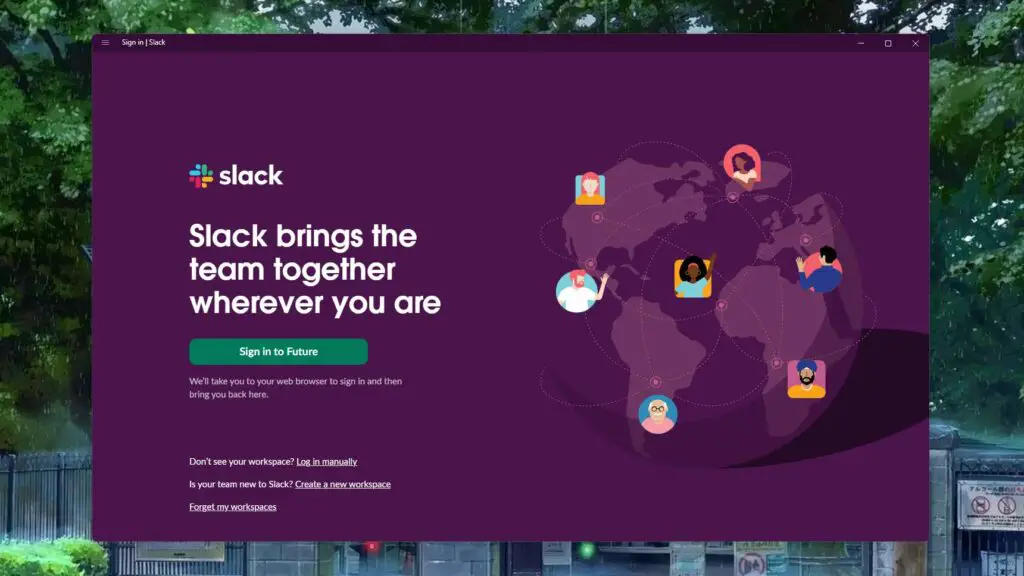
This isn’t a blanket condemnation of PWAs. They offer benefits, such as simplified porting for developers across systems and easier updates. However, in my experience, I’ve yet to encounter a PWA that feels as snappy and bug-free as a well-engineered native app. Take Slack, for instance, which I use daily. It’s a hybrid web-native concoction, and I frequently encounter minor bugs and quirks that bear the telltale signs of a browser wrapper bottleneck.
The end result … is the attempt to be comfortable for everyone which is the failure to be exceptional for anyone.
This inherent limitation is perhaps the nature of such apps. Web apps disguised as desktop ones often can’t communicate directly with certain hardware components or specific operating system functions. There will always be that intermediary wrapper, potentially imposing restrictions and affecting performance.
Introducing ‘The Gloop’: Homogenous Software Experiences
As Windows 10 fades, I can’t help but ponder where this new kind of hybridity might lead. One concerning direction it could trend towards is a giant, cohesive blob of homogenous software experiences. I’ve coined a term for this phenomenon: The Gloop.
I first described The Gloop a few weeks ago when Microsoft began rolling out multiple-storefront game library aggregation. It felt like “a globby mass of various features and services all schlopped together into an increasingly large ball of putty.” With almost everything becoming consumed under the Xbox moniker—even game streaming inside cars—Xbox, as a distinct entity, seems to be losing its identity.
If services and platforms continue to converge using similar web-based wrappers and become increasingly all-encompassing, it’s not improbable that our entire software experience could devolve into some form of The Gloop. We’ve already observed a pronounced shift towards all-encompassing online platforms and accounts, exemplified by companies like Google. As the lines between local and web functionalities blur (just look at Windows Search), it’s logical to expect this trend to extend to our local machine experience, impacting how tech enthusiasts interact with their hardware.
Consequences of The Gloop: Loss of Granularity and Specialization
The inherent problem with this “Gloop” approach, despite its perceived benefits, is the almost inevitable loss of granularity. When everything is designed for everyone, achieving excellence for anyone becomes an impossible task. This drives software towards becoming a Jack of all trades but master of none—or more accurately, a Jack of all systems and use cases but master of none.
This path also risks leading to over-simplification. If the goal is to capture audiences across web, desktop, and mobile platforms, software must be universally easy to use. This often means making apps as functionally and aesthetically similar as possible, sacrificing bespoke features that cater to specific user needs or power users.
The underlying software stacks and development mindsets that enable these multiplatform, all-encompassing projects naturally encourage maintaining similarity across different applications. On the back-end, cross-compatible code is prioritized. On the front-end UX side, the desire is to avoid alienating users with distinct designs or specialized features. This pursuit of mass appeal and simplified onboarding often comes at the cost of innovation and depth.
The end result is, I fear, The Gloop: a homogenous and uninteresting mass of hybrid web/local applications and integrated operating system features. It’s an attempt to be comfortable for everyone, which paradoxically leads to a failure to be exceptional for anyone, whether in terms of usability or performance. Such mass appeal, expansion, and centralization invariably tend towards mediocrity in the pursuit of broad adoption.
Of course, this trend isn’t unique to Windows 11; it’s a broader phenomenon in the world of software. We’ve arguably seen it more prominently in the strictly online space with websites and platforms. However, the increasing intermingling of local and web experiences—both in underlying technologies and design philosophies—is concerning for those who value distinct, powerful applications. It likely makes perfect business sense, but as TechTalesLeo often highlights, not everything that makes business sense is exciting for the end-user.
As I mentioned at the start of this reflection for Digital Tech Explorer, none of this is truly devastating. After all, operating systems and software are ultimately tools. But seeing the doors close on Windows 10 profoundly reminds me that we are at the end of the non-gloopy era. It underscores that where we are now and where we are heading, despite the hype around sparkling new technologies like AI, isn’t quite as engaging or user-centric as what came before. What are your thoughts on ‘The Gloop’ and the evolving tech landscape? Share your insights below!