

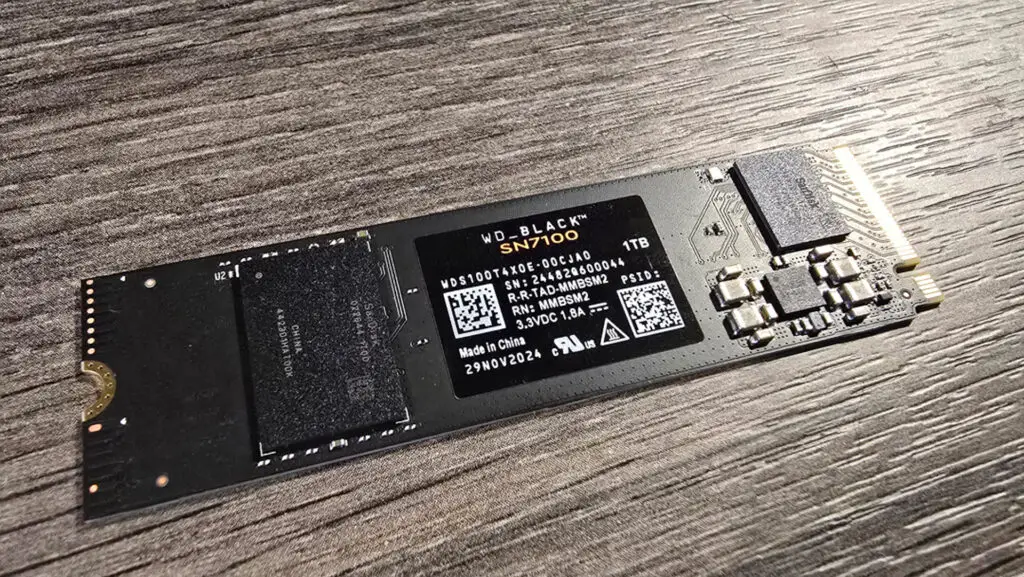
 The SN7100 showcases performance on par with, and in some aspects even exceeding, its predecessor, the SN850X. Western Digital has achieved this by optimizing costs through the removal of the DRAM cache, utilizing denser NAND, and adopting a single-sided design. Its Kioxia 218-layer BiCS8 TLC NAND, paired with the SanDisk Polaris 3 A101 controller, delivers impressive speed.
While sequential read/write speeds are excellent (our benchmarks clocked it at 7,116 MB/s), the Random 4K performance of the SN7100 truly stands out. Our expert, TechTalesLeo, who meticulously tested this drive, noted that it “absolutely demolished every drive I’ve tested on the [Random 4K] read front, scoring an insane 101 MB/s.” This metric is crucial for real-world gaming scenarios, directly translating to faster game loading and smoother in-game asset streaming.
For those seeking the absolute bleeding edge, speedy PCIe 5.0 drives like the SN8100 exist, offering even higher theoretical bandwidth. However, Gen 5 drives, despite becoming more competitive in price, remain significantly more expensive than their Gen 4 counterparts. Crucially, for most gaming applications, the real-world performance difference is often negligible. This strong balance of cost, speed, and efficiency is why we continue to recommend a top-tier Gen 4 drive as the best overall SSD for gaming. The SN7100 confidently takes its place at the pinnacle, offering exceptional value for discerning tech enthusiasts.
The SN7100 showcases performance on par with, and in some aspects even exceeding, its predecessor, the SN850X. Western Digital has achieved this by optimizing costs through the removal of the DRAM cache, utilizing denser NAND, and adopting a single-sided design. Its Kioxia 218-layer BiCS8 TLC NAND, paired with the SanDisk Polaris 3 A101 controller, delivers impressive speed.
While sequential read/write speeds are excellent (our benchmarks clocked it at 7,116 MB/s), the Random 4K performance of the SN7100 truly stands out. Our expert, TechTalesLeo, who meticulously tested this drive, noted that it “absolutely demolished every drive I’ve tested on the [Random 4K] read front, scoring an insane 101 MB/s.” This metric is crucial for real-world gaming scenarios, directly translating to faster game loading and smoother in-game asset streaming.
For those seeking the absolute bleeding edge, speedy PCIe 5.0 drives like the SN8100 exist, offering even higher theoretical bandwidth. However, Gen 5 drives, despite becoming more competitive in price, remain significantly more expensive than their Gen 4 counterparts. Crucially, for most gaming applications, the real-world performance difference is often negligible. This strong balance of cost, speed, and efficiency is why we continue to recommend a top-tier Gen 4 drive as the best overall SSD for gaming. The SN7100 confidently takes its place at the pinnacle, offering exceptional value for discerning tech enthusiasts.
1. WD Black SN7100
Specifications
| Feature | Detail |
|---|---|
| Capacity | 500 GB, 1 TB, 2 TB, 4 TB |
| Controller | Sandisk Polaris 3 A101-000172-A1 |
| Memory | Kioxia 218-Layer BiCS8 TLC NAND |
| DRAM | None |
| Interface | M.2 PCIe 4.0 x4 |
| Seq. read | 7250 MB/s |
| Seq. write | 6900 MB/s |
Reasons to buy
- Best-in-class 4K random read performance for gaming
- Excellent value for 1 TB and 2 TB capacities
- Low operating temperatures and single-sided design
Reasons to avoid
- Not a generational leap in technology
- Slightly slower load times compared to the fastest PCIe 5.0 drives
The Best Budget Gaming SSD
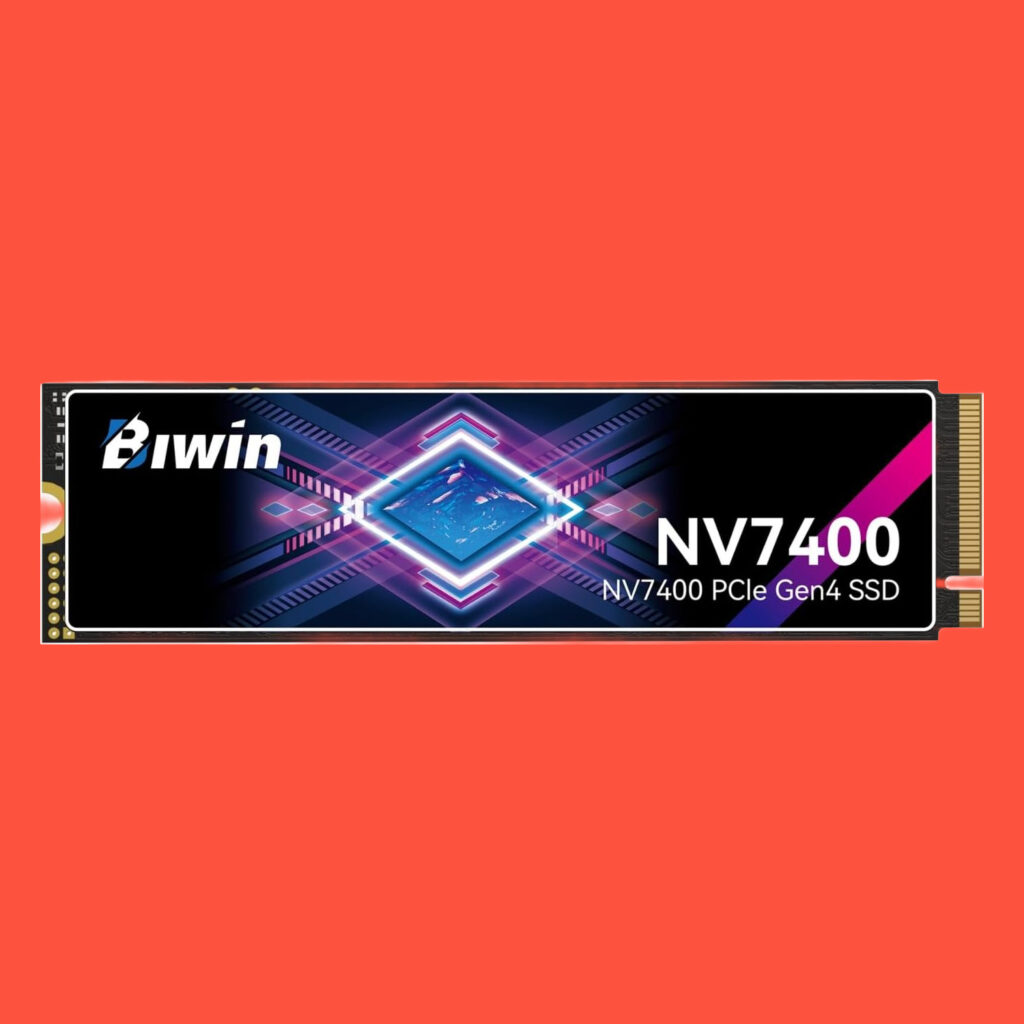
For gamers seeking excellent performance without breaking the bank, the best budget SSD is the Biwin Black Opal NV7400. This drive impresses with speeds that push the limits of PCIe 4.0, yet it’s priced aggressively, putting pressure on competitors. Even without special discounts, a 2 TB NV7400 can be found for around a low price of $120, equating to just $0.06 per gigabyte. In an era where game install sizes frequently exceed 100 GB, acquiring 2 TB of fast storage for such an affordable price is a true game-changer. This allows tech enthusiasts to comfortably store numerous live service titles, a vast library of indie games, and whatever new releases capture their attention, all without the constant need to delete or re-download. The NV7400’s sequential read speed, aptly named, hits 7400 MB/s—a figure very close to the theoretical maximum of a PCIe 4.0 x4 connection. To achieve substantially faster speeds, one would typically need to invest significantly more in a PCIe 5.0 drive. While the NV7400 excels in linear performance, it does show some mild limitations in random operations, which are often more critical for game load times. Its random write performance, in particular, lags behind the WD_Black SN7100. However, our Digital Tech Explorer team acknowledges this trade-off, given the sheer capacity-to-price ratio. Any reasonably quick NVMe SSD still offers a significant upgrade over older SATA drives or traditional HDDs. Ultimately, the Biwin Black Opal NV7400 is a testament to maximizing NAND flash capacity while keeping costs down. TechTalesLeo and our team tested a version with Micron’s NAND, noting that configurations can vary, sometimes utilizing YMTC’s NAND. This drive is a superb choice for gamers prioritizing extensive, speedy storage on a budget.2. Biwin Black Opal NV7400
Specifications
| Feature | Detail |
|---|---|
| Capacity | 1 TB, 2 TB |
| Controller | Maxiotek MAP1602A Falcon Lite Gen4 |
| Flash | Micron or YMTC 232-Layer TLC NAND |
| DRAM | None |
| Interface | M.2 PCIe 4.0 x4 |
| Seq. read | 7400 MB/s |
| Seq. write | 6500 MB/s |
Reasons to buy
- Exceptional low price per gigabyte
- Strong sequential performance for large file transfers
- Remarkably cool operating temperatures
Reasons to avoid
- Random 4K results are merely adequate
- NAND configurations can vary by batch
The Best PCIe 5.0 SSD for Enthusiasts
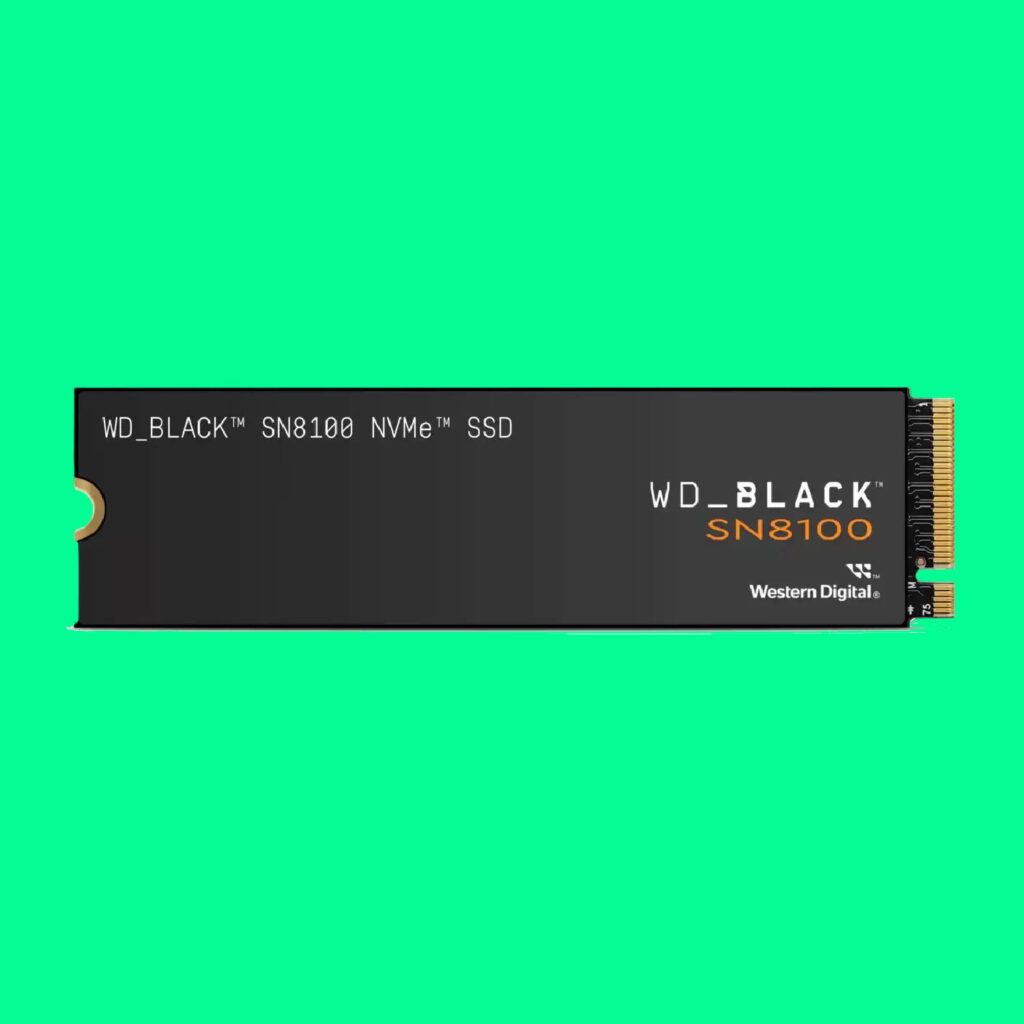 The best PCIe 5.0 SSD, for those who demand the fastest possible storage, is the WD Black SN8100. Digital Tech Explorer believes we’ve reached a turning point where Gen 5 drives are genuinely recommendable. Previously, PCIe 5.0 SSDs were often too expensive and ran too hot for widespread recommendation. However, the SN8100 demonstrates significant advancements in both performance and thermal management, coupled with a more reasonable price point, making it a strong contender for high-end systems.
Despite the “WD Black” moniker, this is a thoroughly SanDisk-engineered drive, showcasing the company’s commitment to innovation. It features an entirely new proprietary 8-channel SMI2508 controller, combined with 218-layer BiCS8 TLC 3D CBA NAND. Upon launch, it’s available in 1 TB or 2 TB configurations, with or without a heatsink.
To put it simply: the SN8100 is the fastest drive our team has ever tested, by a significant margin. Achieving 14,710 MB/s sequential read and 119 MB/s Random 4K read speeds, it leaves every other Gen 5 drive we’ve benchmarked in its dust. The exceptional Random 4K performance is particularly impactful, directly translating to quicker load times in games, as observed during our FFXIV: Shadowbringers benchmark tests.
Remarkably, despite its monstrous performance, the SN8100 maintains relatively cool operating temperatures, peaking at around 74 degrees Celsius during our extensive benchmarking. Furthermore, its pricing is highly competitive within the PCIe 5.0 segment. While it still commands a premium over Gen 4 drives, at approximately $0.14 per GB for the 2 TB version, it’s far from extortionate for cutting-edge technology.
While a Gen 4 drive will suffice for many gamers, the SN8100 is unequivocally the top choice for those who desire the fastest drive available. TechTalesLeo described its performance as “just monstrous,” a sentiment that perfectly encapsulates this groundbreaking SSD. For professionals and enthusiasts, it is the best PCIe 5.0 SSD on the market today.
The best PCIe 5.0 SSD, for those who demand the fastest possible storage, is the WD Black SN8100. Digital Tech Explorer believes we’ve reached a turning point where Gen 5 drives are genuinely recommendable. Previously, PCIe 5.0 SSDs were often too expensive and ran too hot for widespread recommendation. However, the SN8100 demonstrates significant advancements in both performance and thermal management, coupled with a more reasonable price point, making it a strong contender for high-end systems.
Despite the “WD Black” moniker, this is a thoroughly SanDisk-engineered drive, showcasing the company’s commitment to innovation. It features an entirely new proprietary 8-channel SMI2508 controller, combined with 218-layer BiCS8 TLC 3D CBA NAND. Upon launch, it’s available in 1 TB or 2 TB configurations, with or without a heatsink.
To put it simply: the SN8100 is the fastest drive our team has ever tested, by a significant margin. Achieving 14,710 MB/s sequential read and 119 MB/s Random 4K read speeds, it leaves every other Gen 5 drive we’ve benchmarked in its dust. The exceptional Random 4K performance is particularly impactful, directly translating to quicker load times in games, as observed during our FFXIV: Shadowbringers benchmark tests.
Remarkably, despite its monstrous performance, the SN8100 maintains relatively cool operating temperatures, peaking at around 74 degrees Celsius during our extensive benchmarking. Furthermore, its pricing is highly competitive within the PCIe 5.0 segment. While it still commands a premium over Gen 4 drives, at approximately $0.14 per GB for the 2 TB version, it’s far from extortionate for cutting-edge technology.
While a Gen 4 drive will suffice for many gamers, the SN8100 is unequivocally the top choice for those who desire the fastest drive available. TechTalesLeo described its performance as “just monstrous,” a sentiment that perfectly encapsulates this groundbreaking SSD. For professionals and enthusiasts, it is the best PCIe 5.0 SSD on the market today.
3. WD Black SN8100
Specifications
| Feature | Detail |
|---|---|
| Capacity | 1 TB, 2 TB (4 TB to come) |
| Controller | Sandisk SMI2508 |
| Memory | Sandisk 218-Layer BiCS8 TLC 3D CBA NAND |
| DRAM | 1 GB (1 TB) – 2 GB (2 TB) |
| Interface | PCIe 5.0 x4 |
| Seq. read | 14900 MB/s |
| Seq. write | 14000 MB/s |
Reasons to buy
- Outstanding synthetic and real-world performance
- Significantly quicker game load-times
- Competitive pricing for a PCIe 5.0 drive
Reasons to avoid
- 4 TB option not available at initial release
The Best Budget PCIe 5.0 SSD for Gaming
The Crucial P510 stands out as that rare find: a Gen 5 NVMe drive that Digital Tech Explorer can confidently recommend, thanks to its impressive performance-to-cost ratio. This makes it the undisputed best budget PCIe 5.0 drive currently available, filling a previously underserved category. At its core, the Crucial P510 features Phison’s E31T cacheless controller, manufactured on TSMC’s efficient 7nm node. This newer Phison controller is significantly more power-efficient than its E26 predecessor. Combined with a quad-channel architecture, it effectively addresses the thermal challenges that plagued earlier Gen 5 drives, ensuring cooler operation. The Micron 276-layer TLC NAND also contributes to its snappy performance. Our tests clocked sequential reads at 10,973 MB/s and writes at 9,394 MB/s—figures remarkably close to Crucial’s advertised specifications. While it won’t dethrone the immensely fast WD Black SN8100, the 1 TB model’s availability for a mere $100 makes these results exceptionally impressive. However, it’s not without its compromises. The random 4K results are somewhat ordinary, and in gaming load benchmarks, the Crucial P510 delivers relatively slower load times compared to its more expensive Gen 5 rivals. Despite these points, the Crucial P510’s value proposition is clear. It delivers genuine Gen 5 performance in many key respects, often at a price comparable to many Gen 4 SSDs. Crucially (pun intended, as TechTalesLeo would say!), it maintains temperatures well within reasonable limits, peaking at just 64°C under heavy testing. The combination of dense, fast NAND and a highly efficient controller has resulted in a budget PCIe 5.0 drive to be genuinely proud of. While it may not win benchmark wars against its pricier competition, if you’re looking to jump onto the Gen 5 bandwagon without a massive investment, the Crucial P510 is your ideal entry point.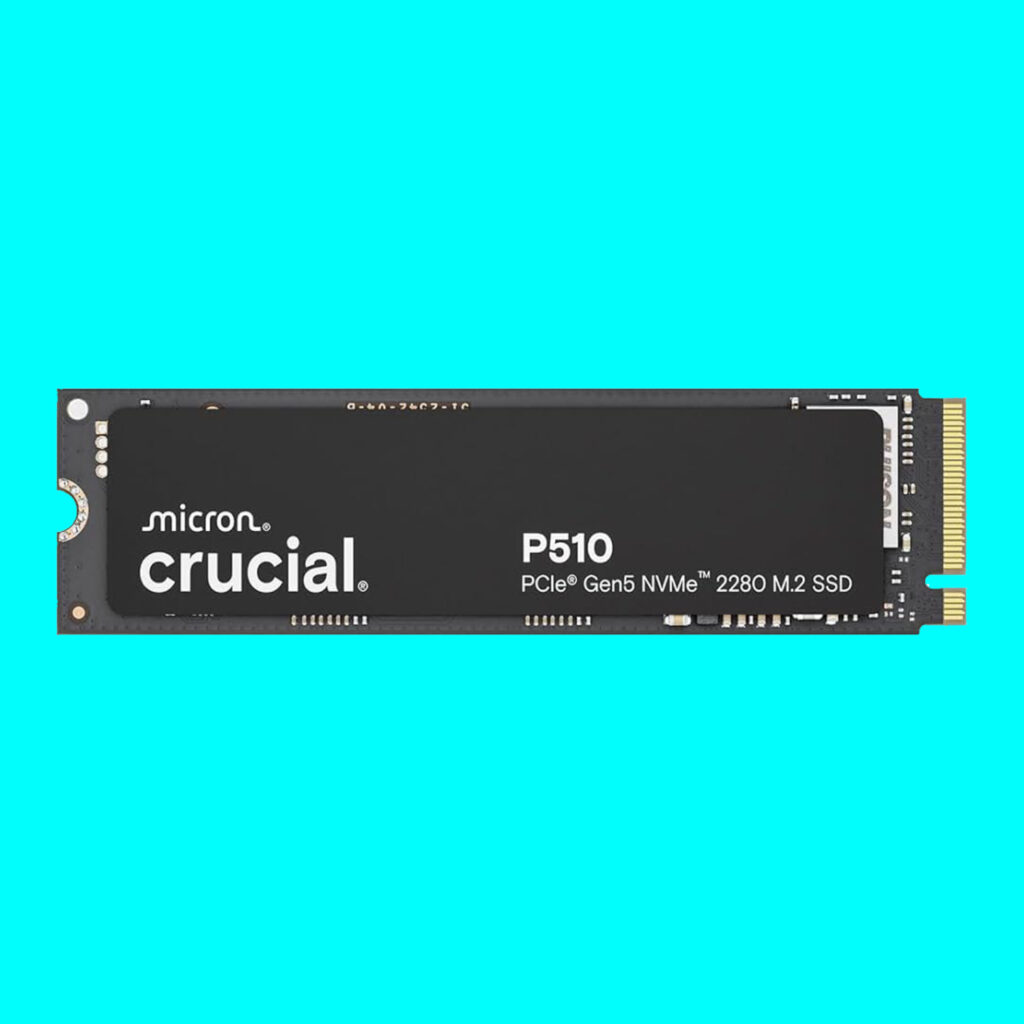
4. Crucial P510
Specifications
| Feature | Detail |
|---|---|
| Capacity | 1 TB and 2 TB |
| Controller | Phison E31T |
| Memory | Micron 276-Layer TLC NAND |
| Interface | PCIe 5.0 x4 |
| Seq. read | 11000 MB/s |
| Seq. write | 9500 MB/s |
Reasons to buy
- Class-leading E31T sequential speeds
- Aggressive pricing for Gen 5 performance
- Excellent thermal management
Reasons to avoid
- Game load times can be slower than premium Gen 5 drives
- Average 4K random performance
The Best 4 TB SSD for Gaming
With game install sizes continuously ballooning past 120 GB, 1 TB drives are quickly becoming insufficient, and even 2 TB may feel constrained if it’s housing your OS, applications, and a growing game library. Fortunately, prices for 4 TB SSDs are increasingly accessible, and for high-capacity needs, the Team Group MP44 is Digital Tech Explorer’s top recommendation for the best high-capacity gaming SSD. It’s important to clarify that Team Group offers several ‘MP44’ branded SSDs (e.g., MP44Q, MP44S). The one you’re looking for is the standard MP44. Thanks to sharing similar hardware with the excellent Lexar NM790, its performance is anything but plain. There are, however, some distinctions. The Team Group MP44 features a larger dynamic pseudo-SLC cache than the NM790, which helps maintain high write speeds. However, as the drive fills, its data transfer rate can drop lower than the Lexar SSD. It also has a slightly lower maximum operating temperature specification. While it generally doesn’t run excessively hot for a speedy drive, our team at Digital Tech Explorer advises ensuring the MP44 is kept cool, ideally under a motherboard M.2 heatsink, to prevent any potential performance throttling during sustained heavy loads. If these minor considerations are addressed, and your primary goal is a spacious SSD at an excellent price, the Team Group MP44 offers an unbeatable combination for managing massive game libraries.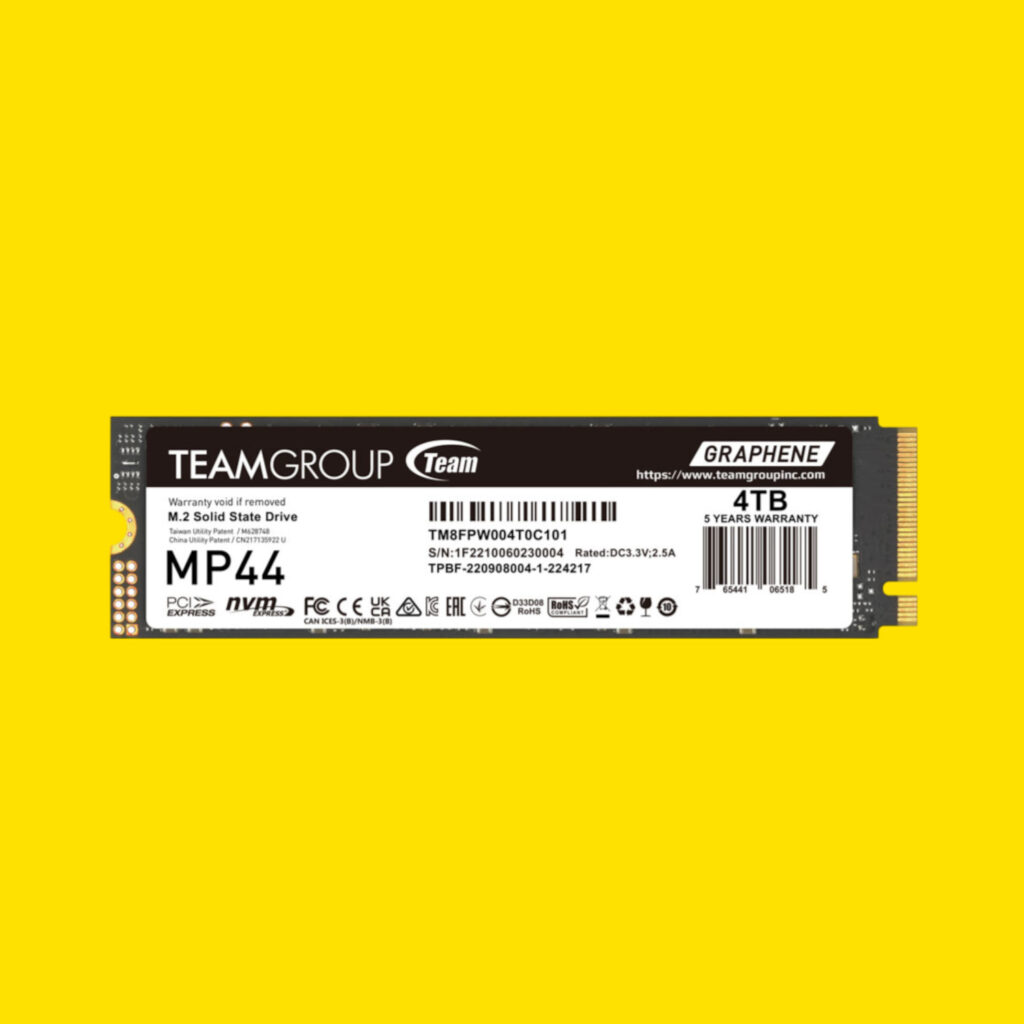
5. Team Group MP44
Specifications
| Feature | Detail |
|---|---|
| Capacity | 1 TB, 2 TB, 4 TB |
| Controller | MaxioTech MAP1602A |
| Flash | TLC NAND |
| DRAM | None |
| Interface | M.2 PCIe 4.0 x4 |
| Seq. read | 7400 MB/s |
| Seq. write | 6900 MB/s |
Reasons to buy
- Strong all-round performance for a PCIe 4.0 drive
- Operates at impressively cool temperatures
- Very competitively priced per gigabyte
Reasons to avoid
- PC Mark results were slightly underwhelming
- 4K random performance is not exceptional
The Best 8 TB SSD for Mass Storage
It’s natural to do a double-take here. Isn’t this akin to a drive we’ve already mentioned? Indeed, the original WD Black SN850X was a powerhouse. Many months after its initial release, Western Digital expanded the line with this ultra-high-capacity version, and as a result, the WD Black SN850X 8 TB has proven itself worthy of the best 8 TB SSD title for comprehensive storage needs, as verified by Digital Tech Explorer. Before committing to such a colossal drive, TechTalesLeo advises considering a few key questions. First, are you prepared for the significant financial investment? The 8 TB version of the WD Black SN850X carries an MSRP of $649, though market prices for NVMe drives can fluctuate. This is a substantial sum for a single storage component, but it delivers an equally astonishing amount of space. Our analyses at Digital Tech Explorer show that two 4 TB drives (like the Team Group MP44 mentioned above) are often more cost-effective. This option makes sense if you are absolutely determined to have a single 8 TB drive—and there’s also the redundancy angle to factor in. The Digital Tech Explorer team has extensively used various WD SN850X drives over the years, consistently finding them to be remarkably reliable. However, consolidating all your data into one 8 TB unit means that a single point of failure could result in the loss of a vast amount of files. This is a practical consideration for any tech enthusiast. Setting aside practical cautions, if an 8 TB drive is your desire, the read and write speeds here are excellent, achieving 7,100 MB/s and 6,590 MB/s respectively in our testing. What isn’t as stellar are the random 4K numbers. This suggests that while it’s perfectly fast enough for gaming, it truly shines as a high-capacity storage drive, particularly for users with immense media libraries, rather than solely as a top-spec gaming drive. The inclusion of four NAND chips, as opposed to the more common two, appears to introduce a slight latency, which is reflected in the 4K performance. It’s still highly capable for gaming, but there are better-optimized SSDs for pure gaming workloads. Nevertheless, for individuals who regularly manage huge volumes of large media files—video editors and photographers come to mind—a mighty 8 TB single drive is often ideal. The WD Black SN850X 8 TB serves this purpose exceptionally well. While there are indeed caveats to a single 8 TB NVMe SSD, if you’re set on one, the WD Black SN850X 8 TB is the drive to choose. Just ensure it aligns perfectly with your use case before making this significant investment, advises TechTalesLeo.6. WD Black SN850X 8 TB
Specifications
| Feature | Detail |
|---|---|
| Capacity | 8 TB |
| Controller | Triton MP16+ B2 |
| Memory | Kioxia 162-Layer BiCS6 TLC NAND |
| DRAM | 2 GB |
| Interface | M.2 PCIe 4.0 x4 |
| Seq. read | 7200 MB/s |
| Seq. write | 6600 MB/s |
Reasons to buy
- Solid overall performance for a high-capacity drive
- Decent value per gigabyte for an 8 TB option
- PS5 compatible with an appropriate heatsink
Reasons to avoid
- A single point of failure risk for large data sets
- Often less cost-effective than combining two 4 TB drives
- Slightly slower 4K random performance compared to smaller, gaming-focused drives
The Best 2230 SSD for Handheld Gaming PCs
Lexar, a relatively newer entrant to the SSD market, has quickly carved a niche by offering fast, high-capacity storage at sensible prices. Its Play 2230 model is no exception, and it proudly stands as the best 2230 SSD our Digital Tech Explorer team has had the pleasure of testing, particularly for handheld gaming PCs. Beneath its unassuming label lies 1 TB of Micron TLC NAND flash memory, driven by a Silicon Motion SM2269XT controller. This is surprisingly robust hardware for a drive primarily marketed towards devices like the Steam Deck or Asus ROG Ally, and it significantly boosts the SSD’s performance. Our benchmarks confirmed that the advertised peak read/write figures of 5,400 and 4,700 MB/s are highly accurate, ensuring you get precisely the performance specified. Even better, the Lexar Play boasts a generous pseudo-SLC cache. This portion of flash memory acts as a buffer, helping to sustain performance during intensive write operations. In our sustained write tests, we measured the cache at an impressive 240 GB—quite substantial for an SSD of this form factor. The good news continues with its thermal performance: the Lexar Play remains remarkably cool, even under heavy load. With average operating temperatures around 40°C and peaks of 53°C, you can rest assured that installing this fast SSD won’t cause your handheld PC to run any hotter. The only notable drawback to the Lexar Play is its current capacity range, with 1 TB being the largest model available. This limits options compared to competitors offering larger capacities, such as the Sabrent Rocket 2230, our previous recommendation for Steam Decks. Additionally, its availability can be somewhat inconsistent across retailers, making it occasionally challenging to find at the best price. Despite these minor points, 1 TB provides a solid amount of storage. When considering its speed, cool operation, and affordability, the Lexar Play 2230 offers an outstanding solution for upgrading your portable gaming experience.7. Lexar Play 2230
Specifications
| Feature | Detail |
|---|---|
| Capacity | 1 TB |
| Controller | Silicon Motion SM2269XT |
| Memory | Micron B47R 176-layer TLC |
| DRAM | None |
| Interface | M.2 PCIe 4.0 x4 |
| Seq. read | 5200 MB/s |
| Seq. write | 4700 MB/s |
Reasons to buy
- Excellent all-round performance for a 2230 form factor
- Generous SLC cache size helps maintain speed
- Consistently low operating temperatures
Reasons to avoid
- Limited to 1 TB capacity
- May not fit all handheld PC models
The Best SSD for PS5
At Digital Tech Explorer, we appreciate great tech across all platforms. While our focus is often PC, we certainly enjoy a session on the PlayStation 5. The standard Gen 4 drive in the PS5 offers good performance, but it isn’t always the fastest or largest. If you’re looking to give your console an SSD upgrade, our top pick for the best gaming SSD for the PS5 is the Silicon Power XS70. With the recent launch of the new PS5 Pro and its 2 TB SSD, you might feel a pang of envy looking at your original console. But rest assured, installing a new drive into your existing PS5 is incredibly straightforward—and this Silicon Power SSD is an absolute gem. Silicon Power may not have the brand recognition of Samsung or WD, but the XS70 NVMe SSD, with its high-end specifications, proves that brand name isn’t everything. Armed with the latest Phison controller and high-performance NAND flash memory, the Silicon Power XS70 confidently competes with the market’s best SSDs. The XS70 features a hardware combination common to many top-tier SSDs, including highly regarded models like the Seagate FireCuda 530 and Kingston KC3000. Our tests confirm this drive more than holds its own, delivering blazing-fast read/write speeds of 7,300 MB/s and 6,800 MB/s respectively. Crucially, it’s designed with PS5 compatibility in mind, meaning its heatsink is not overly bulky. In fact, its sleek design might even remind you of a high-performance flash drive. Don’t let that fool you; when it comes to loading your favorite PS5 games in record time, this little marvel has you covered. This is a highly competitive gaming SSD offering excellent performance, an attractive design, and compelling value. While it lacks its own software and hardware encryption, this won’t be a concern for most PS5 or PC gamers. Load it up with your extensive game library, and our team at Digital Tech Explorer is confident you’ll be thoroughly impressed.8. Silicon Power XS70 2 TB SSD
Specifications
| Feature | Detail |
|---|---|
| Capacity | 1 TB, 2 TB, 4 TB |
| Controller | Phison PS5018-E18 |
| Flash | Micron 176L TLC NAND |
| DRAM | 1 GB (1 TB model), 2 GB (2/4 TB) |
| Interface | M.2 PCIe 4.0 x4 |
| Seq. read | 7300 MB/s |
| Seq. write | 6800 MB/s |
Reasons to buy
- Attractive, PS5-compatible heatsink design
- Excellent performance metrics
- Highly competitive pricing
Reasons to avoid
- Lacks proprietary software utilities
The Best SATA SSD
The Crucial MX500 holds its position as the sole SATA drive on our list of best SSDs for gaming, and it remains the undisputed best SATA SSD in our expert opinion at Digital Tech Explorer. In an era where the cost difference between PCIe and SATA SSDs is often minimal or non-existent, it’s challenging to advocate for the significantly slower SATA technology as a primary drive. However, given the finite number of M.2 slots on most motherboards, SATA SSDs still retain a valuable role as secondary storage. And in that capacity, the Crucial MX500 shines. Nearing SATA’s maximum theoretical bandwidth limit of 600 MB/s, it delivers nearly the fastest performance possible for its interface. Crucial’s drives have a long-standing reputation for offering some of the best value available. This drive often represents the most affordable 1 TB or 2 TB SATA drive you can purchase, making it an excellent secondary home for your extensive Steam and Epic game libraries. It also functions perfectly as a boot drive for older systems lacking M.2 sockets or bootable NVMe support. While you’ll miss the rapid response of an operating system running on the NVMe protocol, if M.2 isn’t an option, this drive provides a solid and reliable experience. While SATA SSDs are indeed gradually becoming less prominent—with Crucial having already discontinued the 250 GB and 4 TB MX500 models—this drive continues to offer reliable storage performance in a form factor that still has a place in many setups.9. Crucial MX500
Specifications
| Feature | Detail |
|---|---|
| Capacity | 500 GB, 1 TB, 2 TB |
| Controller | Silicon Motion SM2258 |
| Memory | Micron TLC |
| DRAM | 512 MB |
| Interface | SATA III (6 Gbps) |
| Seq. read | 560 MB/s |
| Seq. write | 510 MB/s |
Reasons to buy
- One of the fastest SATA drives available
- Highly competitive price per gigabyte
Reasons to avoid
- Lower endurance rating for intensive data writes
- Significantly slower than any NVMe SSD
Also Tested by Digital Tech Explorer
Crucial T710Micron has paired its “legendary” controller with its latest NAND flash, aiming to challenge SanDisk’s dominance in the PCIe 5.0 market. The T710 largely succeeds, offering fantastic value for top-tier performance at a dramatically reduced price, all while maintaining impressive thermal efficiency.
Digital Tech Explorer score: 90%
Read our full Crucial T710 review. Kioxia Exceria Plus G4
The Kioxia Exceria Plus G4 gets many things right: its controller and flash combination is intelligent, and it runs cool. However, it’s generally outpriced by the Crucial P510, which remains our preferred choice in that segment.
Digital Tech Explorer score: 77%
Read our full Kioxia Exceria Plus G4 review. SK Hynix Platinum P51
A serious performer among PCIe 5.0 drives, boasting very impressive game load times. However, its high price point and tendency to run hot prevent it from reaching our top recommendations.
Digital Tech Explorer score: 83%
Read our full SK Hynix Platinum P51 review. Biwin Black Opal X570 Pro
This PCIe 5.0 drive delivers excellent 4K random performance and decent sequential results. However, its limited global availability and less-than-stellar thermal performance detract from its overall appeal.
Digital Tech Explorer score: 73%
Read our full Biwin Black Opal X570 Pro review. Samsung 9100 Pro
For a first attempt at a Gen 5 SSD, Samsung has done a commendable job with the 9100 Pro, showcasing great sequential performance and power efficiency. Yet, its price is significantly higher than competitors, and the real-world gaming benefits of PCIe 5.0 drives are still evolving.
Digital Tech Explorer score: 77%
Read our full Samsung 9100 Pro review. WD Blue SN5000
For gamers with a vast library, this SSD offers ample room and desirable load speeds. However, these benefits come at a premium price, alongside less-than-ideal thermal regulation.
Digital Tech Explorer score: 67%
Read our full WD Blue SN5000 review. Corsair MP700 Elite
Boasting phenomenally cool performance for a PCIe 5.0 drive, plus impressive random 4K performance, you might wonder why it’s not higher on our list. Ultimately, its pricing, where other SSDs offer better performance per dollar, and a limited range of storage sizes (currently only 1 TB and 2 TB) are its main setbacks.
Digital Tech Explorer score: 83%
Read our full Corsair MP700 Elite review. Nextorage NEM-PA
This drive was a long-standing top recommendation for high-capacity SSDs. However, it has become increasingly difficult to find in stores and appears to have been largely supplanted by the DRAM-less NEM-PAB version. If you do happen across one, it remains a worthwhile grab.
Digital Tech Explorer score: 90%
Read our full Nextorage NEM-PA review. Samsung 990 Evo Plus
The Samsung 990 Evo Plus comes from a respected name in the industry and offers plenty to like. While its sequential performance is great, the random 4K numbers are less impressive, and its price point remains a consideration compared to competitors.
Digital Tech Explorer score: 74%
Read our full Samsung 990 Evo Plus review. Crucial P310
A decent enough storage upgrade for handheld gaming PCs, but there are faster drives available. Additionally, it tends to run quite hot under sustained workloads.
Digital Tech Explorer score: 79%
Read our full Crucial P310 review. WD Black SN770M
For a significant boost in both storage capacity and performance for your handheld gaming PC, the SN770M is seriously worth considering. However, prices can fluctuate considerably, and it also tends to run quite warm under heavy use.
Digital Tech Explorer score: 85%
Read our full WD Black SN770M review. Seagate FireCuda 540
As PCIe 5.0 drives go, this is a very fast performer. That being said, there’s still not much compelling real-world reason to choose it over a high-quality PCIe 4.0 drive for most users. We still recommend saving your money for one of the top SSDs listed above.
Digital Tech Explorer score: 72%
Read our full Seagate FireCuda 540 review. Crucial P3 Plus 2 TB
This drive offers a lot of capacity for the money. However, concerns about its SLC cache performance and a slightly skewed price/performance metric make it a challenging drive to recommend over stronger competitors.
Digital Tech Explorer score: 70%
Read our full Crucial P3 Plus 2 TB review. WD Black SN770
A very solid and speedy NVMe drive. However, the WD Black SN850X often outperforms it for a similar price. If you find a good deal, it’s a great pick, though it does tend to run hot.
Digital Tech Explorer score: 87%
Read our full WD Black SN770 1 TB review. Samsung 990 Pro 2 TB
Samsung is a go-to name in storage, and the 990 Pro is undoubtedly a strong performer. But when similar performance can be achieved for less, there’s often not a compelling reason to opt for this drive, despite its impressive numbers.
Digital Tech Explorer score: 87%
Read our full Samsung 990 Pro 2 TB review. Kioxia Exceria Pro 2 TB
This Gen 4 SSD was well-priced at launch, but its performance is off the pace compared to current market leaders. While SSD prices have stabilized, better deals offering superior performance are still available.
Digital Tech Explorer score: 71%
Read our full Kioxia Exceria Pro 2 TB review.
Our SSD Expert Insights at Digital Tech Explorer
At Digital Tech Explorer, we pride ourselves on delivering comprehensive and transparent insights into the latest tech. Our team of seasoned software engineers and tech enthusiasts, including TechTalesLeo, leverages extensive experience in digital innovation to bring you detailed product analyses and practical tips. Our content is designed to help both tech novices and seasoned professionals make informed decisions and stay ahead of trends.How Digital Tech Explorer Tests SSDs
Our team at Digital Tech Explorer utilizes a selection of industry-standard benchmarking tools for a rigorous and thorough evaluation of every SSD we review. As standard, we test internal SSDs in an AMD AM5-based system, specifically employing a Ryzen 9 9900X CPU for the past year. We’ve found this platform offers superior stability compared to Intel’s Alder Lake or Raptor Lake systems, ensuring consistent and reliable test results. Each drive is also tested with a live Windows 11 operating system installed. This approach provides us with critical insights and hard data on how a drive performs as a primary boot drive, rather than merely as a passive data storage medium. For a foundational assessment of read/write performance, we use CrystalDiskMark 7.0.0. This tool allows us to measure sequential performance, vital for large file transfers, as well as 4K random speeds. The latter is a key metric for gauging the responsiveness of a system, particularly for the countless small read/write tasks an operating system frequently executes. High 4K random performance is a strong indicator of a fluid and responsive user experience. As Digital Tech Explorer is dedicated to gaming technology, understanding real-world gaming performance is paramount. The 3DMark Storage Benchmark is indispensable here, utilizing captured I/O traces from a variety of games and gaming activities to offer a realistic snapshot of an SSD’s performance in gaming scenarios. The traces currently used include:- Loading Battlefield V from launch to the main menu.
- Loading Call of Duty: Black Ops 4 from launch to the main menu.
- Loading Overwatch from launch to the main menu.
- Copying the Steam folder for Counter-Strike: Global Offensive from an external SSD to the system drive.
- Recording a 1080p gameplay video at 60 FPS with OBS (Open Broadcaster Software) while playing Overwatch.
- Installing The Outer Worlds from the Epic Games Launcher.
- Saving game progress in The Outer Worlds.
Where to Buy the Best SSDs
In the US:- Amazon – Explore internal and external SSDs with frequent discounts.
- Walmart – Find deals on a variety of SSDs.
- B&H Photo – Save on NVMe SSDs from leading brands.
- Best Buy – Excellent prices on popular Samsung SSDs.
- Staples – Discounts on a range of SSDs and other storage.
- Newegg – A wide selection of NVMe SSDs for all needs.
- Amazon UK – Savings on HDDs, SSDs, and external drives.
- Scan – Entry-level SATA drives available.
- Ebuyer – 500GB SSDs starting from competitive prices.
- Overclockers – Discounts on high-performance Samsung SSDs.
- Currys – Savings on popular drives like the WD Black SN750.
- Laptops Direct – Discounts on SSDs suitable for laptops.
Do I Need a PCIe 5.0 SSD?
Short answer from Digital Tech Explorer: No, not for most users. PCIe 5.0 drives are generally more expensive per terabyte, and their real-world performance advantage over top-tier PCIe 4.0 drives, especially in random 4K operations, isn’t always significant enough to justify the premium. Long answer: While you can find more budget-friendly PCIe 5.0 drives, like the Crucial P510, and others that truly warrant the extra investment, such as the WD_Black SN8100, the choice depends on your priorities. The SN8100 is one of the few PCIe 5.0 drives that notably boosts random 4K performance—a critical statistic for gaming, as game load times and responsiveness heavily rely on the drive reading and writing data in small, disconnected chunks, rather than purely large sequential transfers. Additionally, thermal management is a key consideration with PCIe 5.0. While newer controllers, like Phison’s E31, are designed to operate at lower temperatures, a decent heatsink is still highly recommended to prevent performance throttling, especially under sustained heavy use.What PCIe Generation Should I Look For?
Currently, PCIe 4.0 is the sweet spot for most tech enthusiasts and gamers, offering an excellent balance of high speed and reasonable cost. The newest gaming SSDs are introducing PCIe 5.0 capability, which theoretically doubles the bandwidth an SSD can utilize. However, these drives are still emerging, often expensive, and the initial releases of any new PCIe generation typically don’t fully leverage the interface’s maximum potential. Here are the approximate theoretical maximum speeds (multiply by 1,000 to get MB/s) for each PCIe generation over x4 lanes, as explained by Digital Tech Explorer: PCIe 1.0 / Gen1: 1 GB/sPCIe 2.0 / Gen2: 2 GB/s
PCIe 3.0 / Gen3: 4 GB/s
PCIe 4.0 / Gen4: 8 GB/s
PCIe 5.0 / Gen5: 16 GB/s