
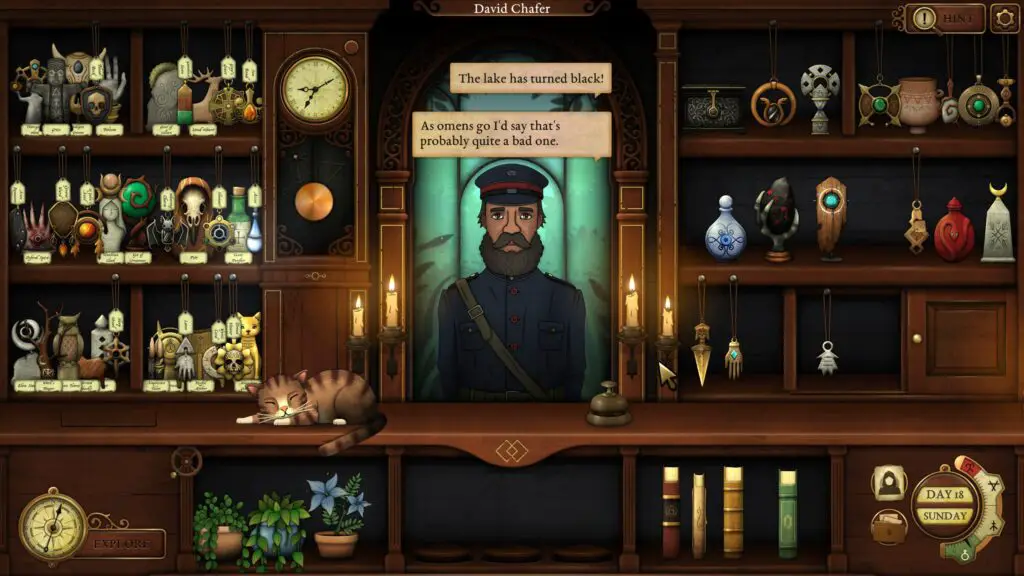
If the “What Is This Thing?” subreddit existed in the Edwardian era, it’d be a quiet little curio shop called Strange Antiquities. As a temp shopkeeper filling in for the local thaumaturge, you sit behind a desk and spend your rainy days puzzling over bizarre artifacts to determine what they are and what they do. You’ll encounter items like a glass bottle containing a single glowing strand of hair suspended in blue liquid, an iron claw clutching a black gemstone, grotesque wooden figurines, and even a silver pendant with a green eyeball in the center that follows your every movement.
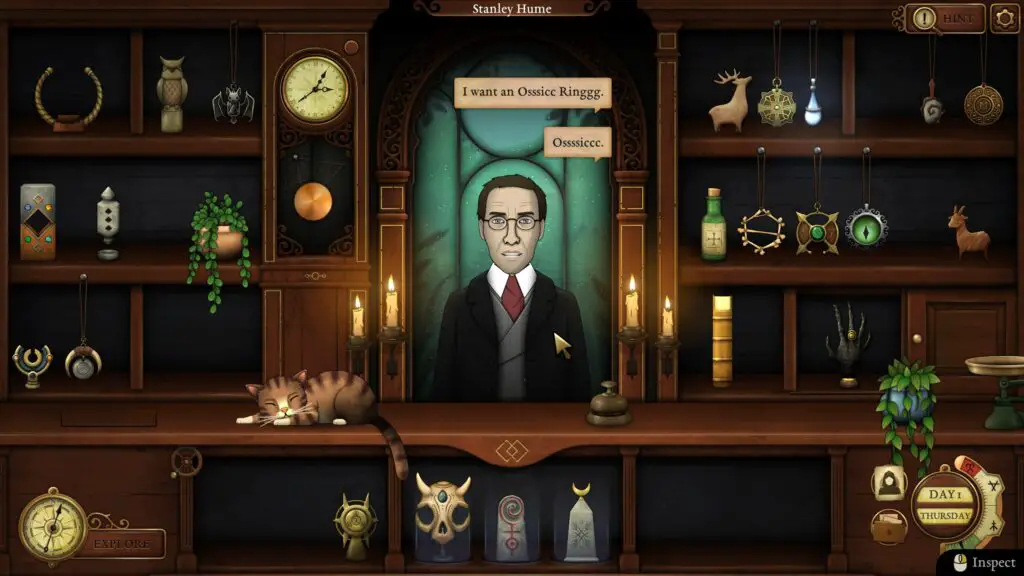
Fans of developer Bad Viking’s previous shopkeeping mystery adventure, Strange Horticulture, will find familiar charm in this gloomy yet cozy occult setting. The core gameplay loop involves solving numerous small mysteries surrounding dozens of artifacts, offering around 12 hours of engaging play. While Strange Antiquities might not feel as groundbreaking as its predecessor, it nonetheless delivers a satisfying investigative experience, tasking players with gathering clues, deciphering enigmas, and slowly unraveling a larger narrative unfolding beyond the confines of your quaint shop.
Artifact Identification and Shop Mechanics
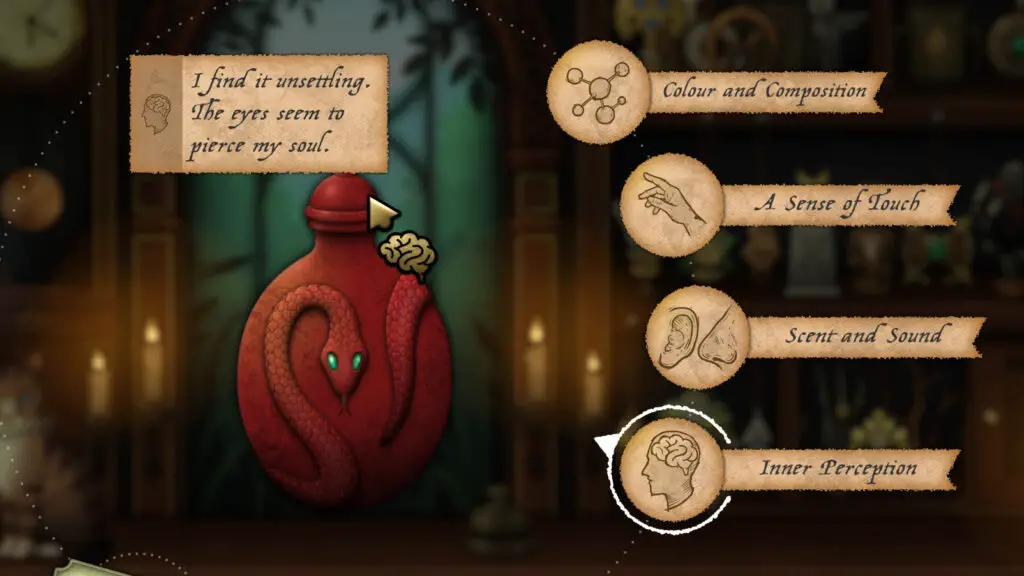
Welcome to the town of Undermere, where townsfolk visit your store each day with a problem that only a trinket with magical powers can solve. One customer might want something to ward off nightmares, while another is looking for an item to improve his hearing. Before you can become an **artifact dealer**, you need to assume the role of a keen detective. You must examine the collection of weird, unlabeled items in your shop and try to identify them. The process begins by choosing which of your senses to use first. Your eyes can tell you what an item is made of, your nose can detect scents, and your ears can listen for any strange noises. There’s also your sense of touch to gauge texture and an inner perception to gauge how an object feels—eliciting fear, confusion, or power.
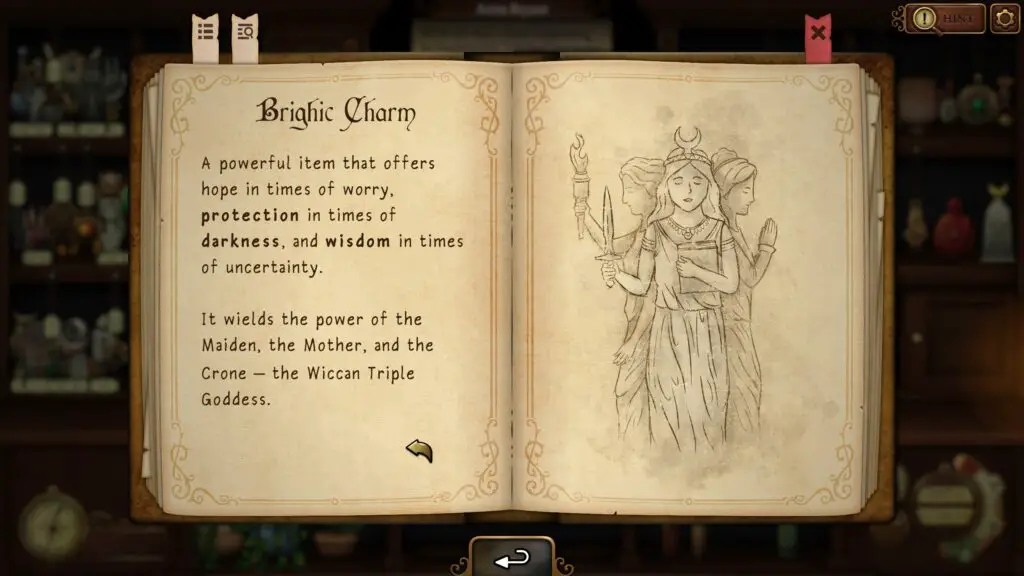
With these clues, you turn to your collection of reference books. If a statuette has runes, you can consult your book on symbolism. If a pendant contains jade or obsidian, you can page through your gemstone guide. Your huge artifact guidebook offers lore and history, but it’s rarely a simple case of matching a picture. The satisfaction comes from piecing it all together—deciphering runes, analyzing a drawing, and combining all the scraps of information to make your best guess. Your reward for solving a tiny mystery is labeling the correctly identified artifact and placing it proudly on your shelf.
It’s not just the items in your shop that are strange, but the shop itself. A little crank on your desk raises a mysterious platform, and symbols running around the edge of your desk have gaps that need filling. Piecing together the mysteries of your own sales counter is a big part of the fun as you eventually unlock the shop’s full potential. One of the most useful tools you can unlock is a device that lets you view the energy signatures of the various geegaws in your collection, providing another vital clue for identification.
World Exploration and Narrative Development
As in the first game, there are also excursions. Using one of the several maps you collect and clues you receive in the mail or in dreams, you can click on a map location to explore it and read a snatch of a story describing what happens. The town of Undermere is filled with locations to visit in hopes of acquiring more long-lost artifacts. Two more maps eventually lead to new environments: a quirky old castle and a spooky crypt, which gives a game where you sit behind a desk all day a more sprawling feel.

While you fret over the tiny mysteries in your shop, a sense of gathering dread builds from the outside world. Customers bring reports of unusual occurrences happening around town, such as a growing number of people falling into trances with inky black eyeballs. Eventually, you’ll be able to put your knowledge of **occult artifacts** to use to stave off grim disaster. Depending on the choices you’ve made, you might experience a darker ending to the story. Even with the best intentions, you may find several townsfolk losing their minds and more than one person dead. After all, you’re only a temp.
There’s a nice balance of challenges, with some puzzles being straightforward and others being fairly tricky. For moments when you’re stuck, a well-designed and progressive hint system is available. The only thing the game doesn’t want you to do is rush by brute-forcing solutions; guess wrong too many times, and you’re punished by having to play a dice game to refresh your guesses.
While Strange Antiquities shares undeniable DNA with its predecessor, making it feel less revolutionary, it nonetheless excels as a captivating and **atmospheric adventure**. Bad Viking has crafted an experience that transcends mere shopkeeping, successfully immersing players in the role of a meticulous **investigator**. This **charming and eerie puzzle game** is brimming with intricate enigmas, offering a rich tapestry of small mysteries waiting to be unraveled.