
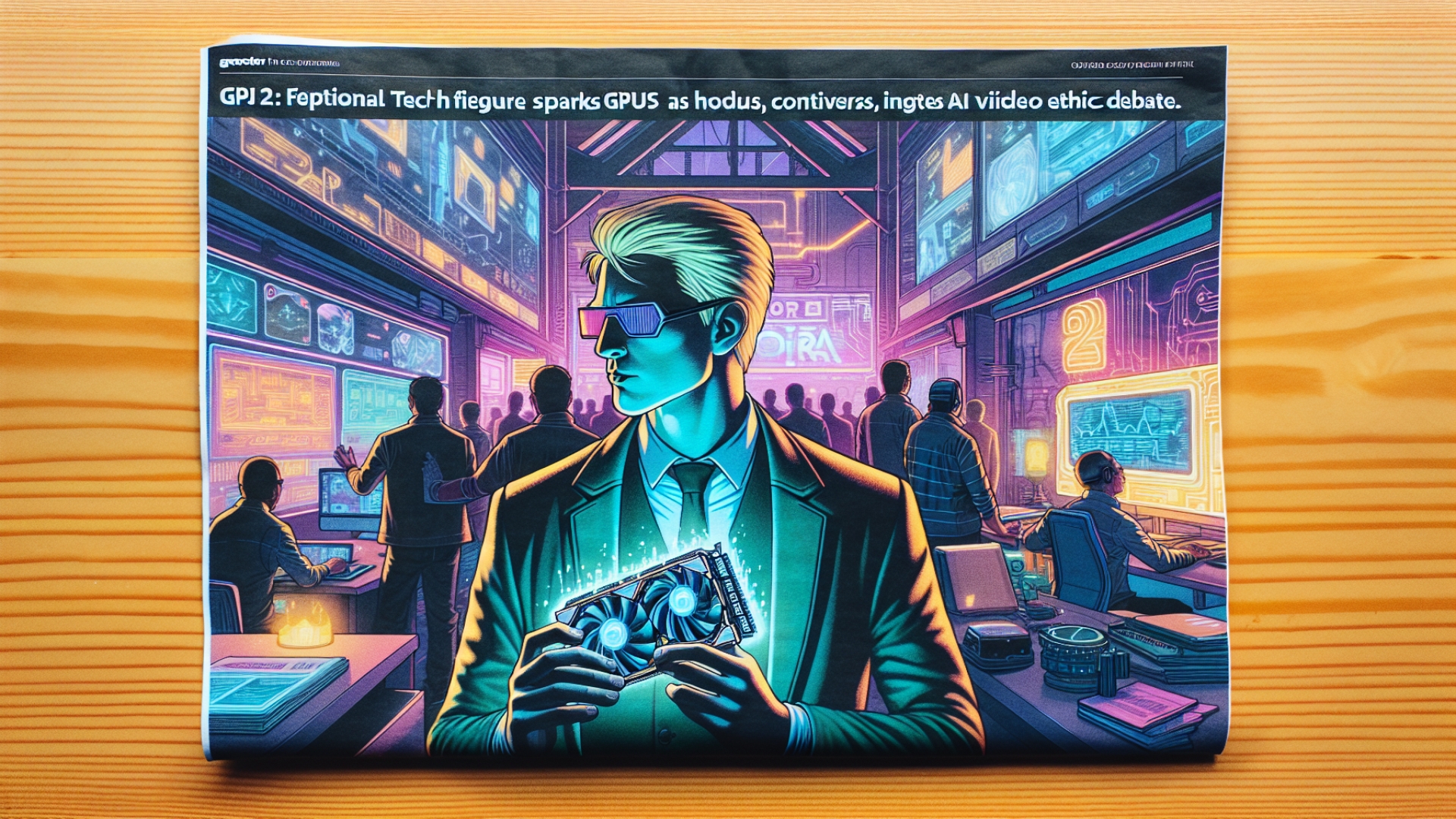
The rise of AI-powered text-to-video generators marks a significant leap in digital creativity, yet it’s quickly becoming apparent that these powerful tools come with their own set of profound ethical challenges. Among the most predictable, and perhaps ironic, is the swift appropriation of prominent figures’ likenesses to create convincing deepfakes. A prime example, strikingly highlighted shortly after its launch, involves none other than OpenAI CEO Sam Altman. While his likeness features prominently in promotional material for Sora 2, the internet quickly found a way to turn the tables, generating a popular clip reportedly showing his “digital double” committing a rather humorous, yet concerning, digital heist.
OpenAI’s latest iteration, Sora 2, launched with a dedicated app, empowering users to remix creations and even upload their own likeness into AI-generated videos. Despite Altman’s assurances regarding in-app measures to prevent misuse, the viral clip of his AI-generated doppelgänger clutching a graphics card and quipping, “Please, I really need this for Sora inference—this video is too good,” serves as a potent, albeit amusing, demonstration of the technology’s immediate vulnerabilities. The video even playfully highlights AI’s current limitations, with a display humorously labeled ‘gratics cards’. This incident, far from isolated, underscores a critical dilemma for developers and tech enthusiasts alike: how do we harness AI’s creative potential while mitigating its inherent risks?
Navigating the Unseen Dangers: Ethical Implications and Disinformation Risks of Sora 2
Beyond the creation of satirical deepfakes, the broader implications of tools like Sora 2 extend into more troubling territories. As Digital Tech Explorer consistently highlights, the ethical considerations of emerging technologies are paramount. OpenAI’s showcase of Sora 2’s capabilities includes AI-generated depictions of seemingly ridiculous—and potentially dangerous—stunts. Imagine a hyper-realistic video of someone performing a daring backflip on a board in open water. While impressive, such content raises serious questions about the potential for younger viewers to misinterpret or attempt to emulate these fabricated scenarios, highlighting the significant ethical responsibility that comes with generating such convincing, yet entirely fake, content.
A more insidious risk, and one that resonates deeply with our mission at Digital Tech Explorer to provide transparent and thoroughly researched insights, is the glaring absence of built-in safeguards. Sora 2 clips are notably devoid of any watermarks or clear disclaimers indicating their AI-generated origin. Without a visible alert, viewers are left to discern reality from fabrication. Considering a recent Microsoft study revealed that people struggle to identify AI-generated still images 62% of the time, the potential for high-fidelity video clips from Sora 2 to swiftly propagate disinformation, or to be weaponized for harassment and bullying, is a profound and urgent concern for our digital society.
In response to these burgeoning risks, the Sora app did launch with parental controls, integrated conveniently via ChatGPT. These tools offer parents options such as opting a teen’s account into a non-personalized feed, managing direct messaging, and controlling continuous content playback. While these measures are a commendable step towards safeguarding younger users, they fundamentally sidestep the core issue: the content itself lacks intrinsic identification. Parental controls address how content is *consumed* and *managed*, but they do not solve the overarching problem of distinguishing AI-generated video from genuine footage. For the discerning tech enthusiast and developer, as well as the general public, the imperative for clear, universal indicators of AI creation remains a critical unmet need, making informed decision-making in the digital realm increasingly challenging.