
As a long-time enthusiast and reviewer for Digital Tech Explorer, I approached the highly anticipated return of the Skate series with cautious optimism. After 15 years, the free-to-play skate. game promised to breathe new life into the franchise. However, based on my extensive early access playthrough, it’s clear that prospective players, especially those who cherish the originals, might need to temper their expectations. While the core skateboarding mechanics are undeniably enjoyable, several design choices hinder what could be a triumphant revival. As TechTalesLeo, I delve into why this early access offering, while having solid foundations, feels notably incomplete and misses the mark on the series’ revered freedom and spirit.
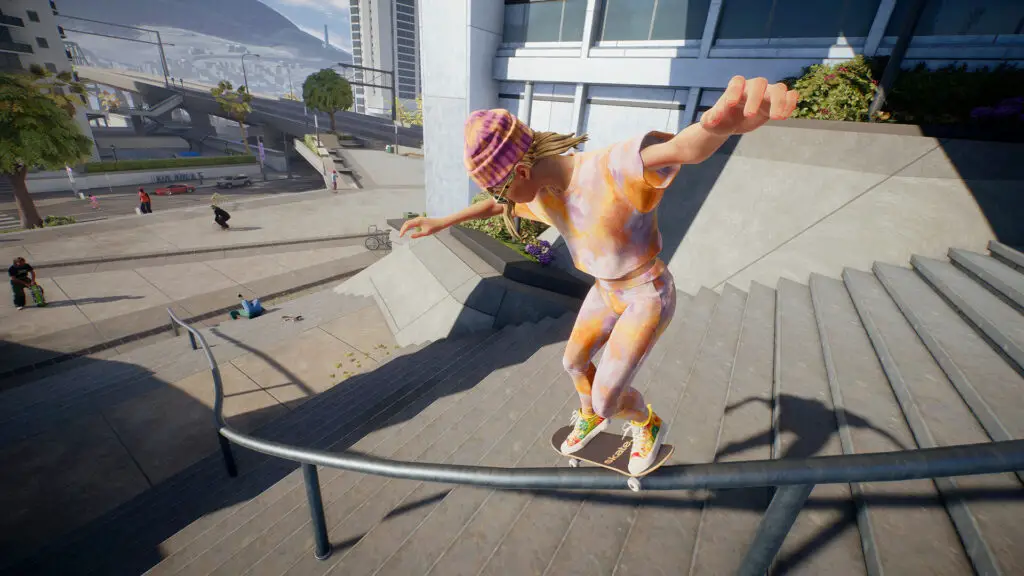
Being on your board is undeniably fun, which is perhaps the most crucial commendation a skateboarding game can receive. Cruising around street-skating, pulling off curb grinds, and executing flip tricks is easily the highlight, and where I spent a significant portion of my time. There’s a palpable “one more run” mentality, which led to many hours dedicated to perfecting trick lines. The runs scattered around the map are challenging yet never frustrating. Crucially, the trick system and board control mirror those of previous Skate games, allowing veterans to quickly find their footing after a brief warm-up.
The Frustrating Lack of Freedom
Unfortunately, the enjoyment of freely cruising is frequently interrupted by a persistent voiceover dictating your next move. This constant “guidance” (though it often feels more like a strict instruction set, as you can’t progress without being funneled toward a nearby challenge) quickly becomes grating, detracting significantly from the game’s inherent enjoyment. What I, and many other fans, loved about previous Skate games was the complete freedom to roll around wherever you pleased, at your own pace. Challenges were there if you sought them, but they never felt like a compulsory race, making it the perfect game to just load up and mindlessly unwind for a few hours. This newest installment conspicuously lacks that organic freedom, offering instead a far too hand-holdy experience that stifles the raw fun of mastering virtual skateboarding.
The Gimmicky Stunt System
Players are also pushed into a surprising amount of non-skateboarding activities. Early in the game, you’re guided through a tutorial section that essentially teaches you how to fling yourself off tall buildings. Where Skate fanatics might expect the iconic Hall of Meat, a mode that celebrated bone-breaking slams with gratifying points, an entirely new stunt system has been introduced. This introduction is justified by the explanation that “thanks to new AI technology,” skaters are programmed to feel no pain. As Digital Tech Explorer is dedicated to exploring digital innovation, this claim warrants a closer look. While it technically facilitates these exaggerated stunts, its implementation here feels less like a breakthrough in game AI and more like a narrative device to justify a mechanic that, to me, often feels disjointed from the essence of a Skate game. You can effectively launch yourself from skyscrapers, diving into dumpsters, broken structures, or straight concrete for a quick descent. I found myself actively avoiding this feature where possible; it comes across as a significant gimmick that undermines the focus on skillful skateboarding, and the novelty of climbing a building just to throw yourself off for points quickly wanes.
A Lifeless San Vansterdam
Its setting, San Vansterdam, or ‘San Van’ as it’s often called, also feels remarkably lifeless. While a city “made for skaters” sounds great in principle, there’s an abundance of empty space and a distinct lack of NPCs, creating a desolate atmosphere. The cars on the road serve purely as visual props, as skitching them is not possible. Furthermore, many areas necessitate building your own parks by dropping in ramps and rails, indicating a fundamental lack of inherent interactive elements outside of the pre-set challenges.
While NPC interactions were never the focal point of previous Skate titles, their subtle presence significantly contributed to the vibrant atmosphere. The absence of dynamic environmental elements – like being a minor nuisance to bystanders or evading a security guard – leaves San Vansterdam feeling sterile. Instead, other players are the sole ‘inhabitants,’ yet without collision or meaningful interaction beyond basic emotes, the sense of community feels superficial. As Digital Tech Explorer often highlights advancements in digital environments and emerging trends, the lack of engaging environmental and social AI interactions here is a missed opportunity for a truly immersive, next-gen city. With that being said, I understand additional co-op features are slated for the near future, which should hopefully enrich the multiplayer experience.
Ultimately, the early access skate., as it stands, presents a paradox. While the foundational skateboarding mechanics remain enjoyable, the overarching design choices, from the constant hand-holding to the focus on gimmicky stunts and a barren urban landscape, suggest a departure from the series’ core identity. This feels less like an evolution crafted by lifelong enthusiasts and more like a product shaped by market research aiming for a broader, perhaps younger, audience—evidenced by its Fortnite-esque aesthetics and often-forced dialogue. As a platform dedicated to helping tech enthusiasts make informed decisions, Digital Tech Explorer hopes that future updates during early access will see the game rediscover its unique voice and passion. For now, it’s a game where you skate, rather than the visionary next installment the Skate community, and indeed tech-savvy gamers, have eagerly awaited.