
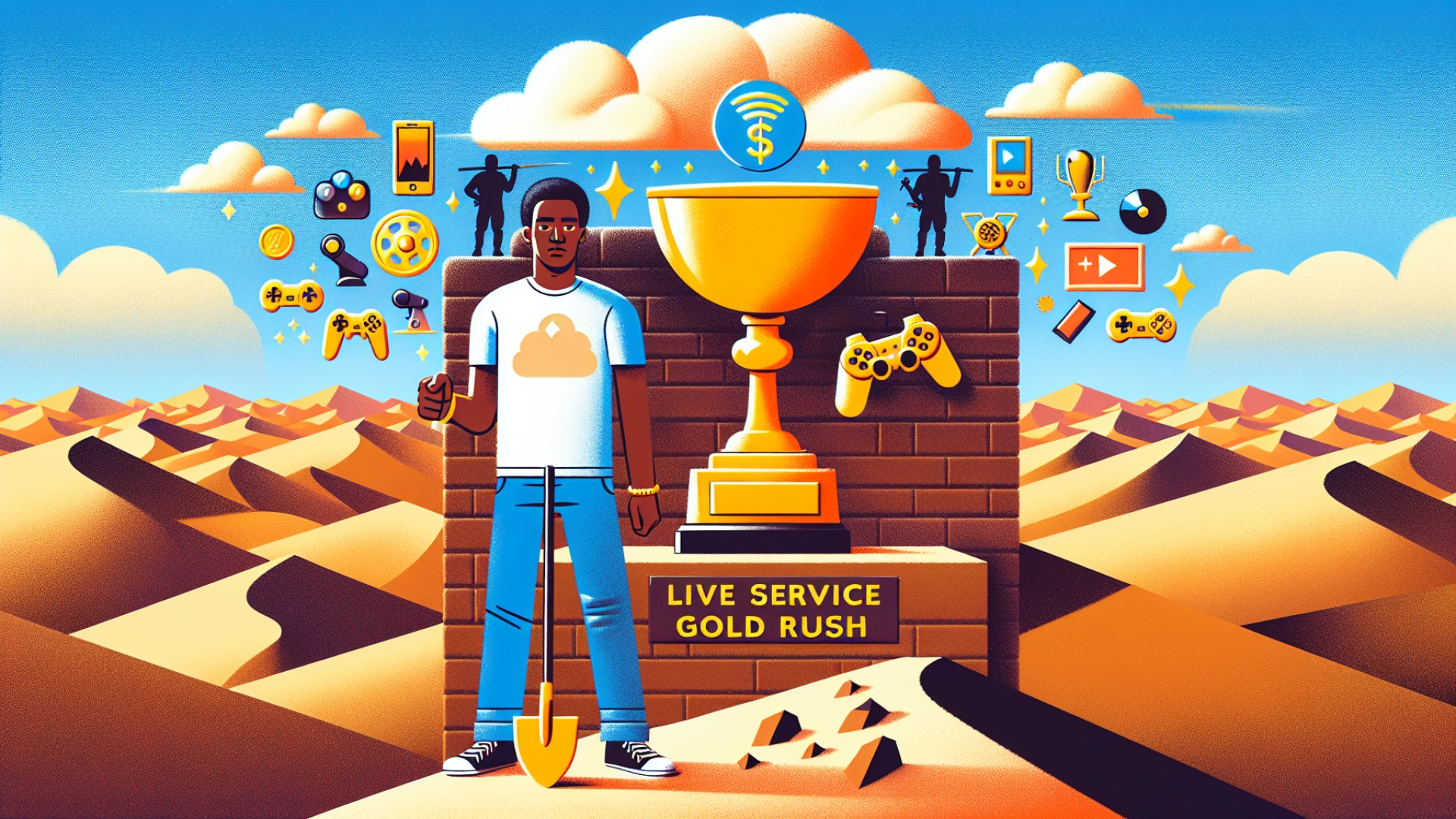
Here at Digital Tech Explorer, we consistently delve into the evolving landscape of the gaming industry to help our readers stay ahead of key trends. A significant trend currently generating considerable discussion is the growing disillusionment with the proliferation of live service games. Many players and industry commentators, including PCG writer Ted Litchfield, increasingly argue that the pivot from a successful single-player studio to a persistent online “games as a service” model often proves to be an unsuccessful venture.
Former Sony Exec Shawn Layden’s Critique of the Live Service Model
Shawn Layden, a respected former Sony executive who departed the company in 2019, has openly joined the chorus of voices critical of the live service model. In a candid interview with The Ringer’s Lewis Gordon, Layden vividly described the pursuit of these persistent online games as “like a mirage on the top of a sand dune.” He elaborated, “You pursue it. You can’t quite get there. Or if you do get there, what you brought to the party no one wants to play anyway.” Such a perspective offers a crucial insight from a seasoned industry leader.
Layden’s Legacy and Prescient Warnings Against the GaaS Mirage
Layden’s impactful tenure at Sony was notably marked by his successful oversight of several critically acclaimed single-player titles, a track record that lends significant weight to his current perspective. Under his guidance, PlayStation studios developed and released triumphs like God of War, Horizon Zero Dawn, and Ghost of Tsushima. His eventual departure from the company was partly influenced by Sony’s strategic pivot towards live services, a direction he frankly admitted was “not my skillset.”
Throughout his time at Sony, Layden consistently championed the company’s established strength in single-player narrative experiences, often reiterating, “We’re super strong on single-player. We have the best narrative in the business.” He frequently cited the immense successes of titles such as The Last of Us and Spider-Man as prime examples of Sony’s unparalleled excellence. Layden often viewed phenomena like Fortnite as “catching lightning in a jar,” an unplannable, truly singular success that couldn’t be easily replicated. He candidly expressed a fundamental disinterest in actively creating more live service games, describing them not as a true game experience but rather as “a repetitive action engagement device.”

He further warned against the pervasive illusion of perpetual success in the GaaS space, noting that “The highway is littered with people wanting to take on Fortnite, with people trying to do Overwatch with different skins.” Layden asserted that for most developers and publishers, the alluring dream of “big sacks of money coming every day for the rest of your life” from such online engagement devices simply “doesn’t happen.”
Sony’s Recent Live Service Setbacks Validate Layden’s Concerns
Layden’s cautionary warnings proved remarkably prescient with Sony’s recent string of live service failures. Concord, Sony’s direct attempt to emulate the success of Overwatch, was pulled offline in less than a month. Similarly, Marathon faced significant developmental and reception issues, and several other planned live service titles were summarily canceled in a swift restructuring effort by Sony. These high-profile events starkly validated Layden’s long-held concerns about the inherent viability and sustainability of the live service model for many developers.
While some of Sony’s ventures into the live service arena, such as Helldivers 2, have indeed seen notable success, it is a crucial detail that Layden himself greenlit that particular title during his tenure. This suggests that Sony may have strategically lost some of its discerning foresight and strategic vision in the live service space after his departure, perhaps leading to less successful subsequent endeavors.
As TechTalesLeo often explores in digital innovation, these shifts highlight the complex dynamics within the tech and gaming industries. Understanding the nuanced challenges of the live service model versus the enduring appeal of single-player experiences is vital for developers and enthusiasts alike. For more in-depth analyses, product reviews, and insights into emerging technology trends, keep exploring Digital Tech Explorer.