
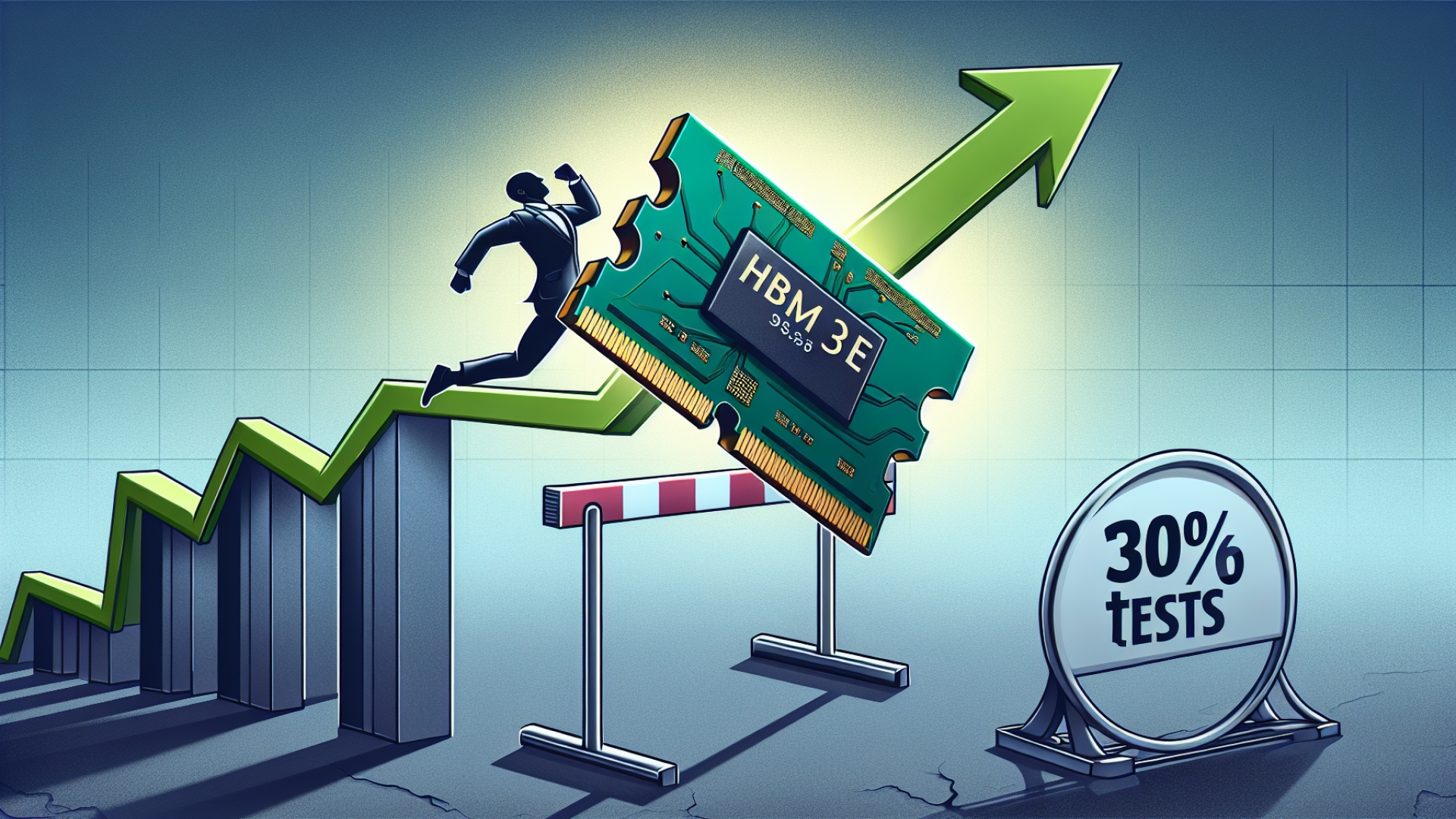
At Digital Tech Explorer, we’re always tracking the pivotal shifts in the semiconductor landscape. Recently, Samsung, a global titan in memory and flash storage, has shown promising signs of market recovery after facing recent stock market challenges. This resurgence is largely fueled by a critical breakthrough: the successful validation of its HBM3E RAM chips. These advanced memory modules have now cleared Nvidia’s stringent qualification tests, making them ready for integration into its cutting-edge AI processors. For those immersing themselves in advanced computing, understanding High Bandwidth Memory (HBM) is key: it’s a revolutionary technology that stacks multiple memory dies into a single module, vastly increasing data throughput—a non-negotiable for the intense demands of AI applications.
Prior to this milestone, Samsung’s advancements in HBM3E technology hadn’t fully materialized, ceding the lucrative Nvidia AI memory market to competitor SK Hynix. This new approval signifies Samsung’s powerful entry into a highly profitable sector. The market’s immediate reaction has been overwhelmingly positive, with current HBM3E chip prices exceeding initial forecasts by roughly 20%, marking a significant financial upturn for the company and a shift in the competitive landscape that tech enthusiasts will want to monitor closely, an insight TechTalesLeo is thrilled to share.
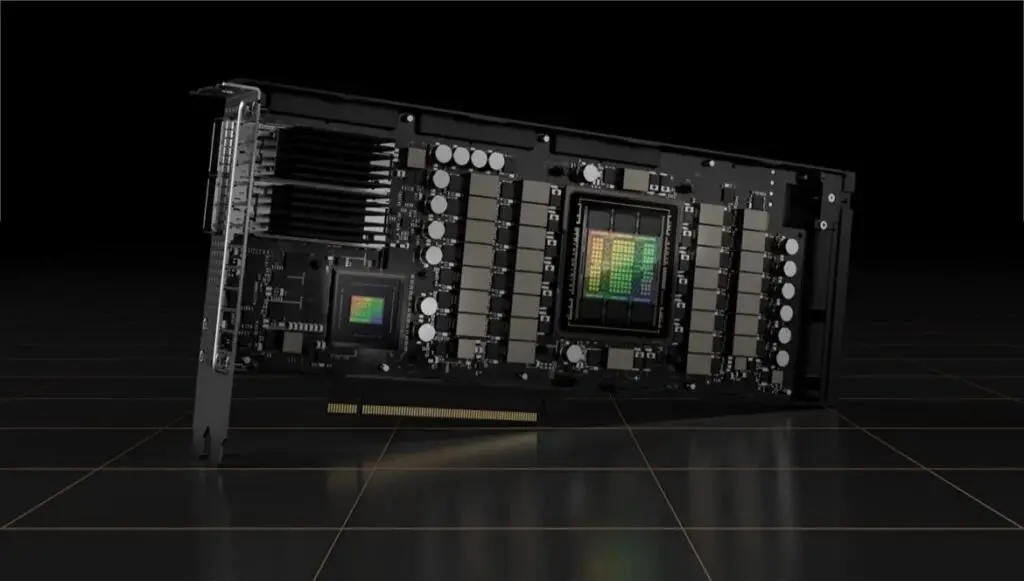
Industry-Wide Memory Price Increases
Beyond the HBM3E success, Samsung is reportedly initiating a broader strategy: increasing contract prices for its DRAM and flash memory chips by up to 30% before year-end. This aligns with a noticeable industry-wide trend. Micron has already signaled substantial price hikes for its DRAM offerings, and SK Hynix is pushing its NAND flash prices up by another 10%. This coordinated approach by major manufacturers, which includes strategically reducing memory chip supply, is designed to tighten the market. As demand outstrips shrinking inventory, higher costs become an inevitable reality for the entire tech ecosystem.
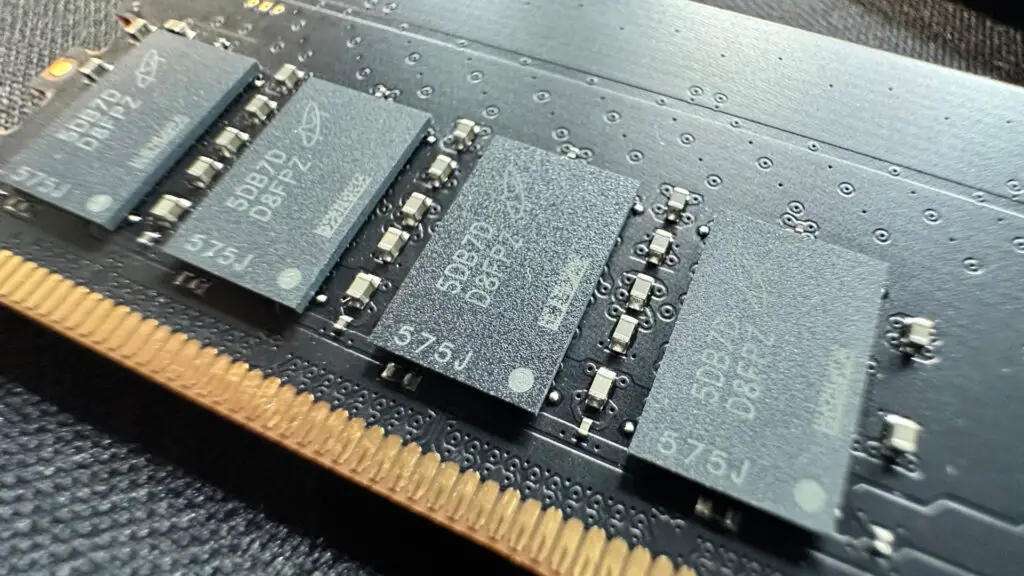
Supply Chain Impact and Consumer Implications
For seasoned tech observers, this market behavior is a familiar echo—a cyclical pattern inherent to the memory industry. When profit margins compress, manufacturers predictably scale back production. This intentional reduction in output inevitably tightens supply, pushing prices upward across the board. These escalating costs will systematically ripple through the entire tech supply chain. Ultimately, manufacturers of crucial components like graphics cards, RAM kits, SSDs, and countless other memory-dependent devices will face a pivotal decision: absorb these increased component costs or, more likely, pass them directly onto consumers.
While a sweeping 30% price surge across all these end products might be unlikely, some degree of price adjustment is virtually guaranteed. Consider graphics cards from major players like AMD, Intel, and Nvidia: the cost of their integrated memory chips represents a comparatively modest fraction of the overall manufacturing expense. However, the fiercely competitive market for many third-party graphics cards means profit margins are often razor-thin. Consequently, any incremental cost increase for RAM chips is highly probable to be borne by the end consumer, an important detail for Digital Tech Explorer to highlight for those planning hardware upgrades.
It’s plausible that Samsung and other memory titans will strategically direct these price increases towards the highly lucrative AI processor segment, a sector currently dwarfing traditional PC gaming revenue in profitability. For our readers at Digital Tech Explorer keenly eyeing new PC builds or upgrades, concerned about these rising component costs, the most prudent strategy might be patience. The memory market operates on distinct cycles; what goes up must eventually come down. A slowdown in sales will inevitably lead to an inventory surplus, compelling manufacturers to offer attractive discounts to clear stock for forthcoming product generations. This cyclical ebb and flow consistently creates windows for securing excellent SSD deals and more affordable DDR5 RAM kits, perfectly timed for when the next wave of cutting-edge processors and graphics cards arrives. Staying informed with Digital Tech Explorer ensures you’re ready to seize these opportunities.