

In a recent interview that has ignited significant discussion within the tech community, Roblox CEO David Baszucki found himself under intense scrutiny. Speaking with the New York Times Hard Fork podcast, Baszucki addressed the platform’s innovative AI-powered age-gating technology, vehemently denied the existence of a pervasive predator problem on the platform, and engaged in a notably tense exchange with the interviewers regarding Roblox’s moderation strategies. From the perspective of Digital Tech Explorer, this conversation highlights critical challenges in how major platforms communicate about and implement user safety, especially concerning vulnerable populations.

Baszucki’s Vague Responses and Denial of Predator Issues
The interview began with a striking moment as Baszucki was directly asked about the persistent issue of online predators. His response characterized the challenge “not necessarily just as a problem, but an opportunity as well” – an opportunity to develop future communication methods for young people to build, communicate, and socialize safely. While this framing might suggest a commitment to developing robust moderation tools, his subsequent explanations, though hinting at technological solutions, largely lacked the concrete specifics expected from a leader addressing such critical issues.
While Baszucki referenced the development of new AI moderation systems, his descriptions—such as “behavioral signals” and “facial scans” designed to facilitate “cool decisions”—remained remarkably vague. He was equally unclear when pressed on the delay in implementing systems aimed at restricting platform conversations to specific age groups. When confronted with the assertion that predators on Roblox have consistently bypassed existing safeguards, Baszucki declined to comment and appeared to categorically reject the characterization of a widespread predator issue, despite acknowledging its mention in lawsuits and media reports. This disconnect between public perception and leadership statements raises significant questions about transparency and accountability in tech.
Interview Tensions and Dismissal of Critics
The conversation took a peculiar turn when the interviewer brought up a Hindenburg Research report that alleged Roblox was reducing its trust and safety spending. Baszucki quickly moved to discredit the report, highlighting that Hindenburg Research was no longer operational and questioning the interviewer’s due diligence. His interruptions, including a “High Five” remark after a hypothetical question, clearly escalated the interview tensions. Baszucki also expressed surprise that the interview was so heavily focused on Roblox’s safety systems, stating he expected a broader discussion—a sentiment that struck many as out of touch given the platform’s ongoing controversies.
Kevin Roose, one of the New York Times interviewers, described the exchange on X as potentially the “craziest interview” they had ever conducted. Baszucki, however, appeared unfazed, responding with a defiant “Looking forward to the next time – High Five!” His demeanor during the interview has been widely perceived as unprepared and largely focused on the ill-defined capabilities of AI technology, rather than concrete solutions to critical safety concerns. This highlights a growing chasm between theoretical tech potential and the practical implementation of robust safety protocols.

Mounting Legal Challenges and Tone-Deaf PR
From a public relations standpoint, Baszucki’s recent statements appear remarkably tone-deaf, especially considering the significant legal pressure Roblox Corporation is currently facing. Several US states have initiated legal challenges against the company. Louisiana, Kentucky, and Texas have all filed lawsuits against Roblox over alleged failures to protect children from predators. Additionally, Florida is conducting a criminal investigation into the company’s practices regarding child safety.
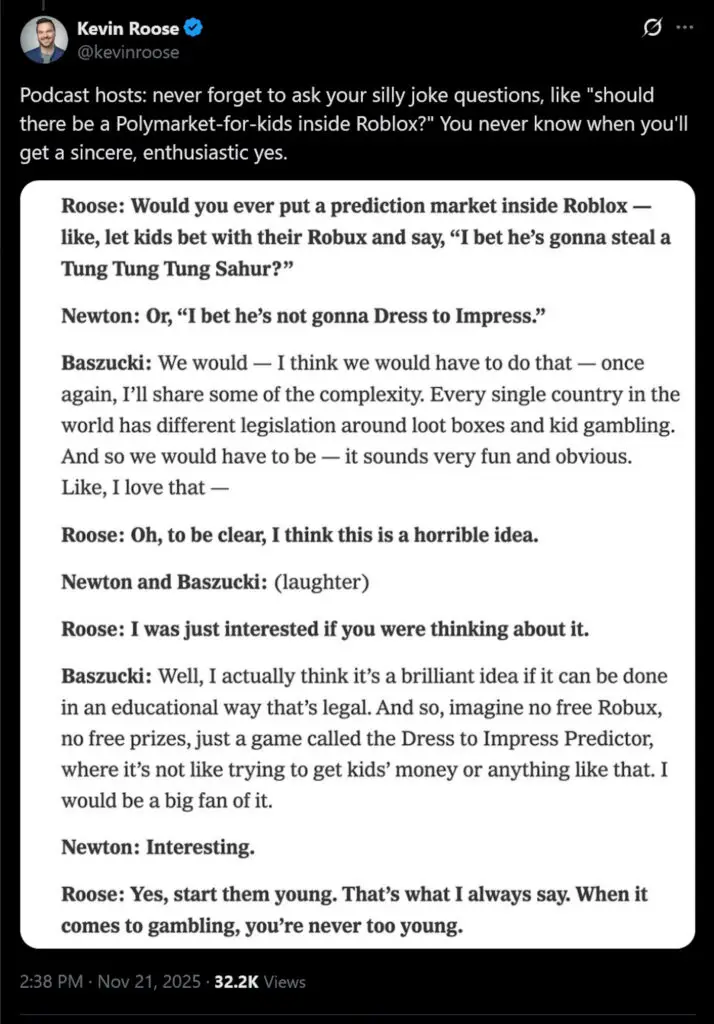
Toward the end of the interview, Baszucki made another incredibly ill-conceived statement. When questioned about introducing a “prediction market” in Roblox—essentially a platform for gambling on future events—he expressed enthusiasm, proposing it as a “brilliant idea” if implemented educationally and legally, without financial incentives like free Robux. The interviewer’s sarcastic remark, “Start them young…When it comes to gambling, you’re never too young,” starkly highlighted the controversial nature of the idea, particularly for a platform with a young user base.
This follows an earlier instance this year where the Roblox CEO expressed interest in adding a dating service to Roblox. Such ambitions, amidst ongoing and persistent concerns about the presence of predators on the platform and Roblox’s perceived inability to protect young users, continue to raise significant alarm among the tech community, parents, and child safety advocates. As Digital Tech Explorer, we believe that understanding these dynamics is crucial for developers and tech enthusiasts alike to stay ahead of trends and make informed decisions about the platforms shaping our digital future.
Disclaimer: All content on Digital Tech Explorer is for informational and entertainment purposes only. We do not provide financial or legal advice. Some of the links on Digital Tech Explorer are affiliate links. This means we may earn a commission if you click through and make a purchase, at no additional cost to you. Our recommendations are based on thorough research and personal experience.