
Trading Card Games (TCGs) are experiencing a remarkable resurgence, attracting more players than ever before. This growth is vividly demonstrated by the phenomenal success of crossover events for Magic: The Gathering, which remains a dominant force in the market. Yet, TCGs face fierce competition for player attention, not just from the resurgent board game, miniatures wargame, and roleplaying game communities, but also from digital card games offering strategic depth without the physical social aspect.
Magic: The Gathering continues its reign as a titan, with only two consistent, long-term competitors: The Pokémon TCG and Yu-Gi-Oh. However, neither truly threatens Magic’s established throne. Pokémon’s audience often skews younger or focuses heavily on speculative collecting rather than consistent, dedicated play—the kind of weekly engagement crucial for long-term staying power. The history of TCGs is littered with hundreds of failed games that couldn’t compete, solidifying the conventional wisdom that challenging Magic’s supremacy is an incredibly difficult feat.
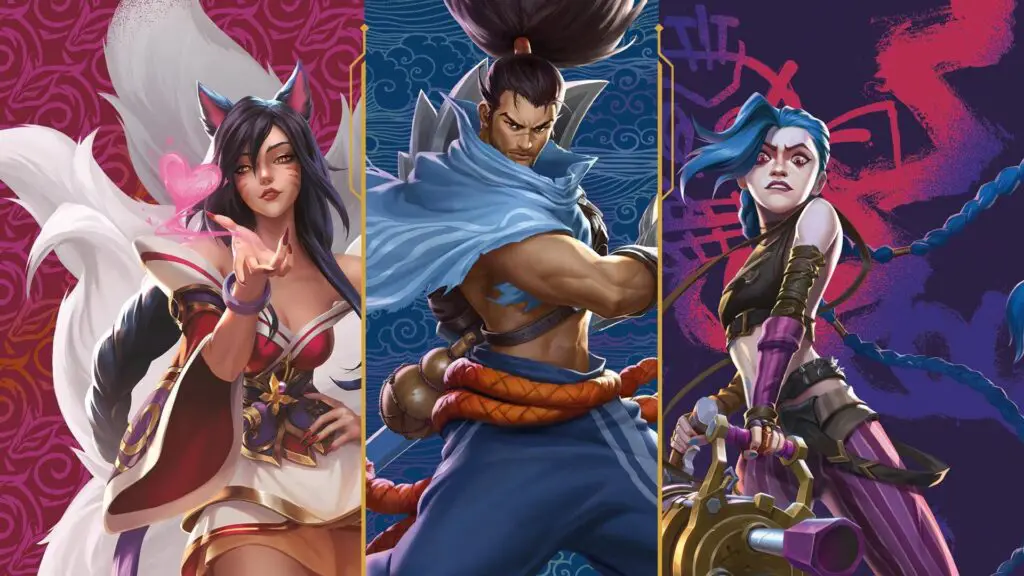
Defying this industry wisdom, Riot Games has introduced Riftbound: The League of Legends card game. Its initial market reception speaks volumes about a significant hunger for a fresh contender; the first print run quickly sold out and is now fetching high prices on the secondary market. The immense cachet of the League of Legends name, a driving force behind Riot’s success for over a decade, has undeniably propelled Riftbound into the competitive TCG arena. As , a dedicated tech enthusiast and content creator at Digital Tech Explorer, I believe the true test for Riftbound will be its staying power. It needs to attract not only existing League of Legends fans but also seasoned TCG players who will consistently engage in local games and tournaments, cultivating the community loyalty essential for sustained success. Based on early impressions and gameplay, Riftbound possesses the potential to redefine expectations due to its innovative, game-first approach that perfectly aligns with how players most enjoy TCGs today.
Riftbound’s Innovative Gameplay and Strategic Depth
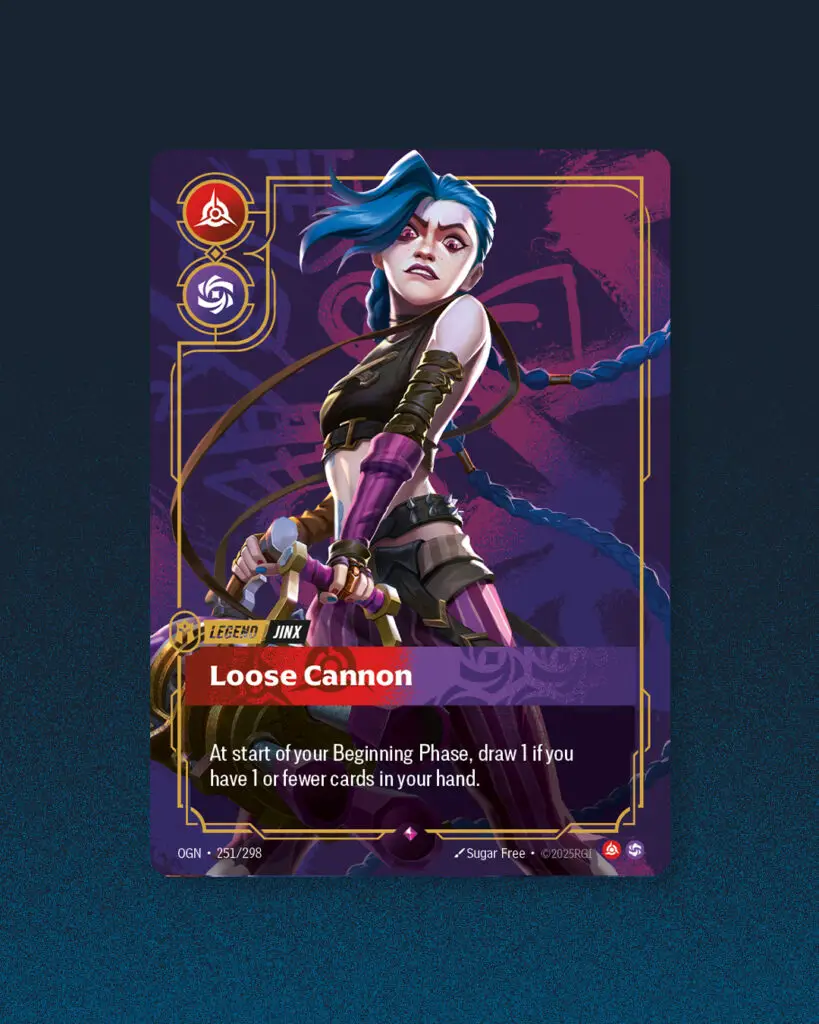
A match of Riftbound revolves around a 40-card deck built around a single League of Legends Champion. Each Champion brings unique cards that represent their abilities and identity, drawing from two of Riftbound’s six Domains. These Domains define the colors, thematic elements of the cards, and the specific rune resources used. Crucially, decks can only contain cards that align with their chosen core Champion. Unlike many traditional TCGs, the resource system is elegantly streamlined: runes are not shuffled into the main deck but enter play two at a time from a separate 12-card rune deck each turn. Players manage these rune resources by either temporarily exhausting them or returning them to their rune draw pile to pay for cards.
This design clearly draws inspiration from Magic: The Gathering’s popular Commander format. Both formats feature reliable resource acquisition and a deck constructed around a central character’s identity, often fostering social multiplayer engagements. However, Magic often struggles with its Commander format’s 100-card decks being incompatible with its competitive 60-card formats. This creates an internal tension, with some players perceiving a decline in competitive focus as Magic attempts to cater to diverse audiences with frequent crossover events, at times seeming to compete with itself.
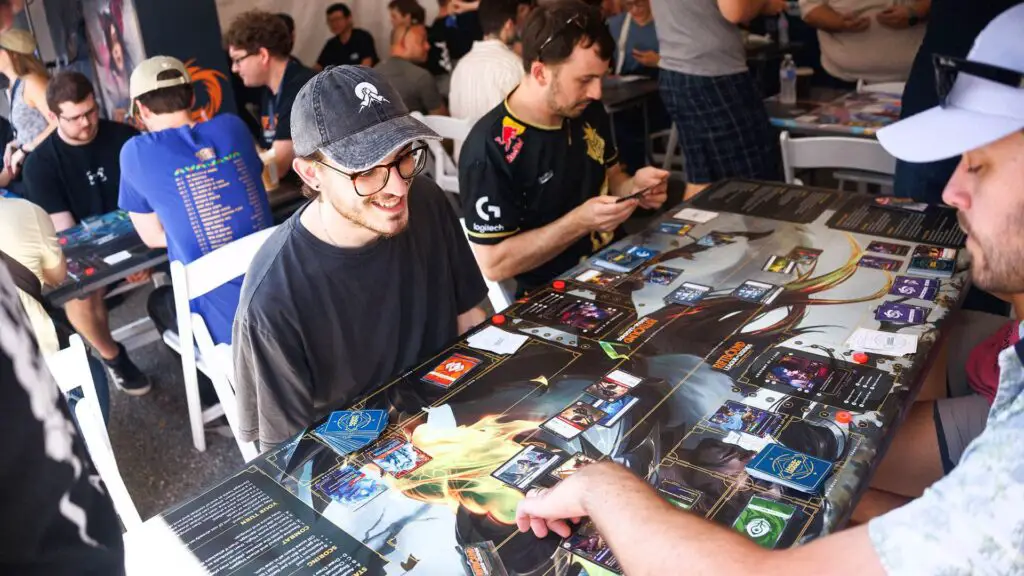
In stark contrast, Riftbound adopts a singular, flexible ruleset meticulously designed from the ground up to support various playstyles: two-player duels, two-on-two team games, and four-player free-for-alls, all utilizing the same 40-card decks. This unified approach means that the decks enjoyed in social multiplayer settings are inherently suited for, or at least highly compatible with, more competitive play. This thoughtful design hints at the game’s seamless potential to extend its flexibility to formats like draft or sealed events—a crucial factor for retaining players who enjoy the dynamic excitement of such events without the extensive collecting commitment.
After playing a dozen matches, can confirm that Riftbound‘s design principles translate into a highly functional and engaging gameplay experience. Battles are naturally scaling, with players vying for control of battlefields that each deck introduces. Securing control of a battlefield earns points, ultimately leading to victory. The core mechanics are intuitive: only two players can contest a single battlefield at a time, with an attacker either claiming it or strategically retreating by the turn’s end. Furthermore, Riftbound features simplified interaction windows for playing cards that react to or alter combat, significantly reducing the “madcap complexity” often found in Magic-style priority rules, turns, and phases. This accessibility, while maintaining strategic depth, is a key focus for Digital Tech Explorer, helping our readers navigate complex tech landscapes.
While the game still presents interesting corner cases that may occasionally require rulebook consultation, the overall format remains notably simple and accessible. This exemplary balance of strategic depth and ease of play is a clear indication that Riftbound’s core rules and initial sets were meticulously designed to cater to both casual and competitive players, aligning perfectly with Riot Games’ reputation for polished experiences.
Riot Games’ proven track record in tabletop gaming further strengthens Riftbound’s prospects. Their 2016 board game release, Mechs vs. Minions, was critically acclaimed as a “damn good game” and now commands several times its original price on the secondary market due to limited availability. Similarly, UVS, Riftbound‘s primary publisher, has a solid history of successfully navigating the crowded and cutthroat TCG market, keeping its other card games thriving.
For Riftbound to achieve long-term success and cultivate a dedicated community, it must consistently deliver compelling game design, well-executed releases, and adequately meet player demand. Even if it doesn’t become a market behemoth, its inherent quality suggests it could develop a passionate cult following, akin to the much-lamented Android: Netrunner or the revived miniatures game Heroscape. Here at Digital Tech Explorer, will be closely observing Riftbound‘s progression, offering further insights as the game evolves. Its true test will be its ability to attract seasoned TCG players from other games, even those with no prior knowledge of League of Legends’ extensive cast of characters, solidifying its unique and valuable place in the competitive landscape of digital and physical gaming.