
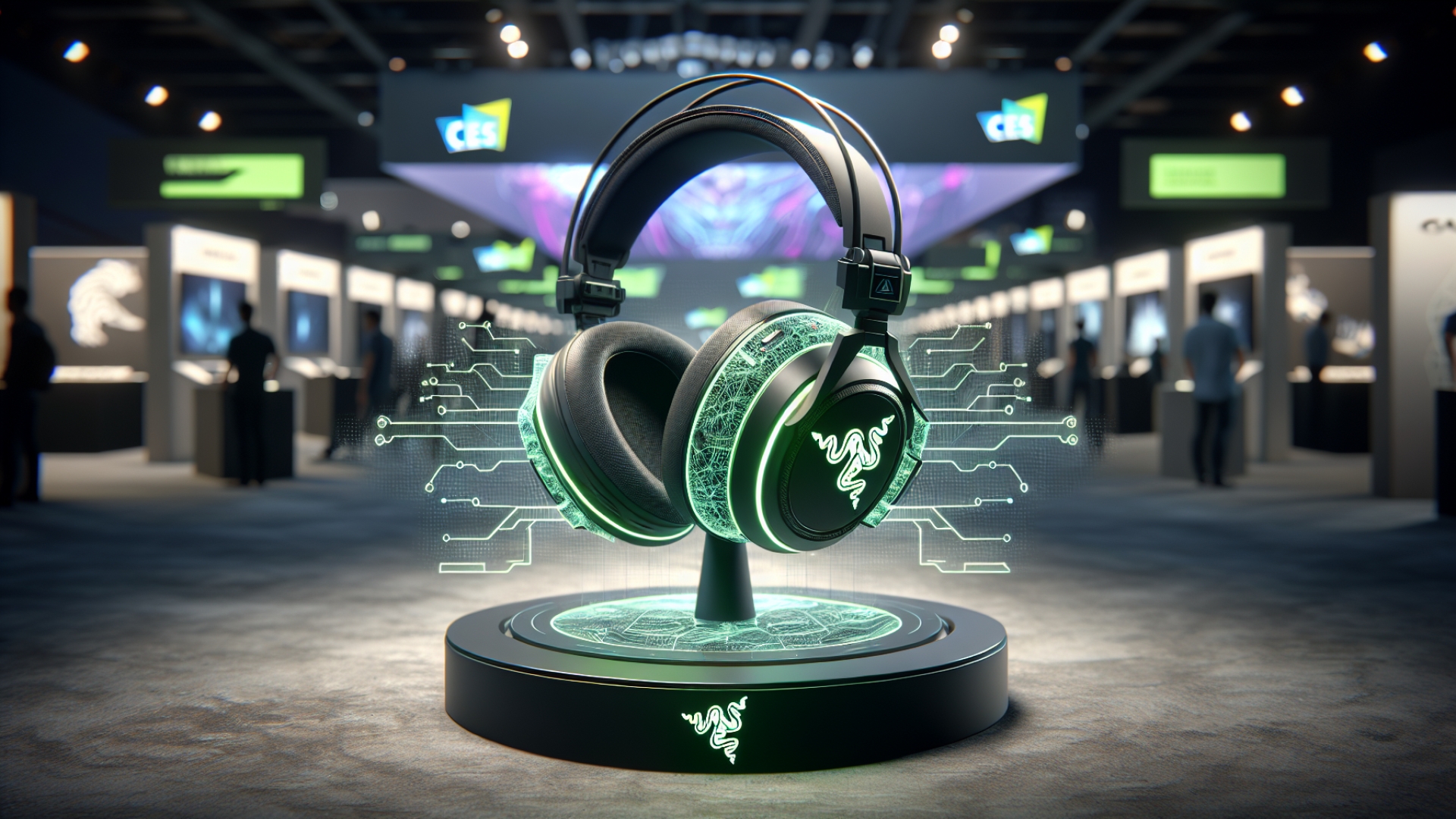
As the curtains rise on another Consumer Electronics Show (CES), the tech world buzzes with innovation – a mix of groundbreaking AI, ambitious prototypes, and practical solutions. This year, Razer appears poised to capture the industry’s attention with its audacious Project Motoko, a concept that pushes the boundaries of what a gaming headset can be. At Digital Tech Explorer, we’re always keen to dissect emerging technologies and provide in-depth analyses, and Project Motoko certainly warrants a closer look.
Razer Unveils Project Motoko: An AI-Powered Gaming Headset That Sees and Advises

Announced today, Project Motoko is not just another gaming headset; it’s a bold vision for the future of interactive gaming. At its core, this innovative device integrates a powerful Snapdragon chip, enabling advanced AI computer vision and boasting universal AI platform compatibility. Equipped with dual 3K 60 fps cameras, Razer suggests Project Motoko could theoretically analyze your surroundings, process data through an AI model, and offer context-aware insights, from personalized gaming advice to acting as a sophisticated chatbot. This potential for real-time environmental understanding and responsive AI interaction aligns perfectly with our mission at Digital Tech Explorer to keep developers and tech enthusiasts ahead of emerging trends.
Advanced Features and Innovative Use Cases of Project Motoko
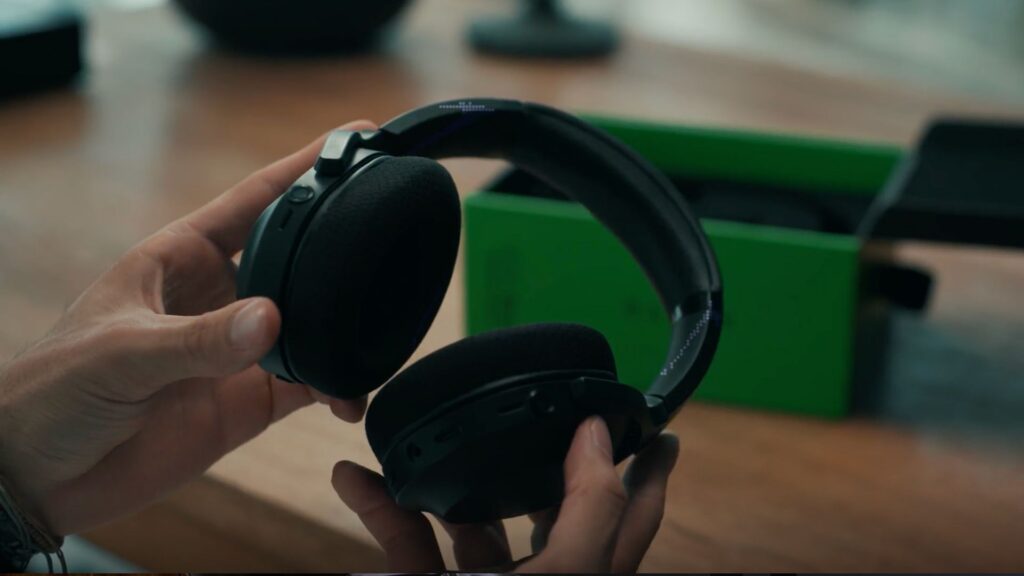
Beyond its AI capabilities, Project Motoko offers a first-person view, allowing users to effortlessly stream or record video, akin to wearable tech like the Ray-Ban Meta smartglasses. Razer has also confirmed the inclusion of optical image stabilization, a crucial feature to ensure smooth, high-quality footage from cameras mounted on your head. However, it’s the less conventional use cases that truly embody Razer’s innovative spirit, and as TechTalesLeo, I find these particularly intriguing.
During the pre-presentation briefing, a standout claim was Project Motoko’s ability to provide in-game advice. The prospect of a headset accurately identifying the specific game being played and delivering context-sensitive strategies or tips raises fascinating questions about the underlying AI’s sophistication. While the specifics of this real-time game analysis remain under wraps, it points to a future where our gaming peripherals are not just input devices but intelligent companions, helping us enhance our skills and decision-making—a key focus for Digital Tech Explorer’s audience of developers and tech enthusiasts.
AI Integration: From Chatbots to Gaming Companions
Project Motoko’s broad compatibility with leading AI bots like ChatGPT, Gemini, Perplexity, and Grok unlocks a myriad of potential applications. Razer playfully hinted at its capacity to “train the next generation of terminators,” a lighthearted remark that nonetheless underscores the immense power this kind of integrated AI could wield. From practical queries to complex problem-solving, the headset aims to bring the full force of conversational AI directly into your gaming and real-world experiences. This kind of AI integration is exactly the kind of digital innovation we love to explore at Digital Tech Explorer.
The Reality of Prototypes: Comfort, Challenges, and Future Wearables
Razer has a strong track record for creating comfortable peripherals. As noted in a review of the Razer BlackShark V3, users can expect “a gaming headset which feels comfortable even for the long haul.” This commitment to ergonomics suggests that if Project Motoko ever reaches market, comfort would likely be a priority. However, as it stands, Project Motoko is squarely a prototype, and critical details such as battery life are yet to be determined – a common theme for CES unveilings that often serve as conceptual showcases rather than imminent product launches.
CES is renowned for showcasing ambitious concepts that may or may not see commercial release. These prototypes generate significant buzz and highlight a brand’s visionary thinking, acting as a barometer for future tech trends. Last year, Razer presented a chair with heating and cooling capabilities, an interesting concept that hasn’t materialized into a product since. Razer has also indicated plans for a new wearable in 2026, which could potentially rival ongoing developments from companies like Meta.
The journey from innovative prototype to widely adopted consumer product is challenging. Whether a sophisticated smart gaming headset or advanced smart glasses ultimately captures the public’s imagination, Razer is clearly charting a course towards deeply integrated, AI-powered wearables. As TechTalesLeo, I appreciate the bold exploration of what’s possible, even if the “future terminator” aesthetic might still need some refinement for mass appeal. Digital Tech Explorer will continue to monitor Project Motoko and other cutting-edge developments, ensuring our readers are always informed about the technologies shaping tomorrow.
By TechTalesLeo
Disclaimer: All content on Digital Tech Explorer is for informational and entertainment purposes only. We do not provide financial or legal advice. Some of the links on Digital Tech Explorer are affiliate links. This means we may earn a commission if you click through and make a purchase, at no additional cost to you. Our recommendations are based on thorough research and personal experience.