

Peter Molyneux, founder of Bullfrog and Lionhead Studios, is notorious for overhyping his games—a reputation TechTalesLeo often explores in the evolution of digital innovation. What was once seen as an adorable foible from an excited developer has shifted dramatically over the years. That perception changed irrevocably around the time of the massively multiplayer project, Curiosity: What’s Inside The Cube. This game challenged countless players to tap on a giant cube to remove layers, all competing to be the one to reach its mysterious center. Molyneux famously promised the prize for that single winner would be \”life-changing.\”

As Digital Tech Explorer is committed to transparent reporting, it’s crucial to note that the promised prize for 18-year-old Bryan Henderson, the winner, was ultimately the role of ‘God of gods’ in Molyneux’s then-upcoming game Godus, along with a 1% share of the game’s revenue. Tragically, Henderson never received any money. He reported that after a single visit to the studio in 2015, he was largely forgotten by Molyneux’s team—a stark contrast to the grand promises.
Molyneux’s Reflections: A Social Experiment and Crypto Speculation
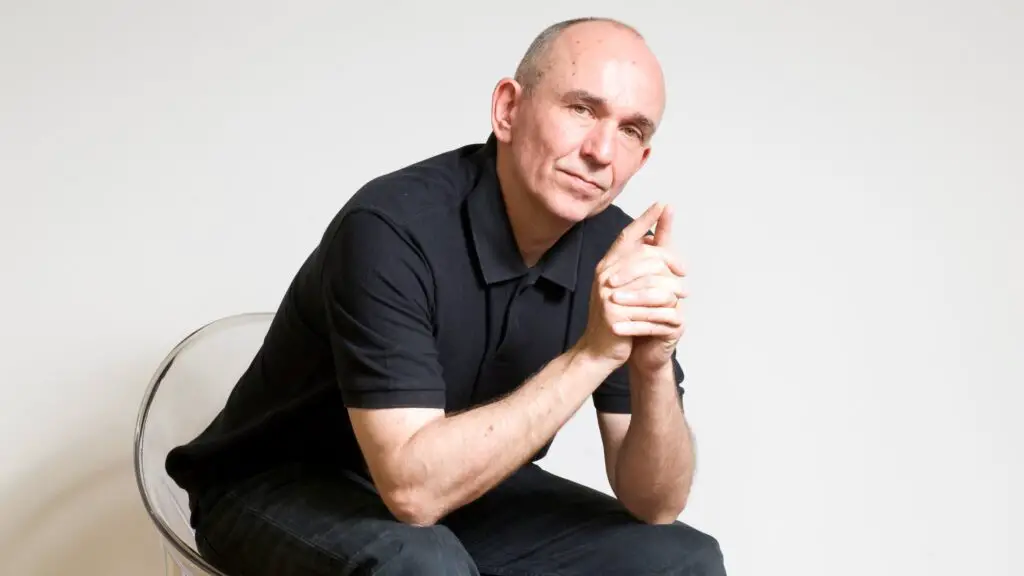
In a recent interview with Edge magazine, Molyneux appeared to express regret and a degree of contrition about the saga. He framed the game not as a money-making venture but rather as a social experiment. Reflecting on what he might do differently, Molyneux stated he would \”love to go back and put inside the cube something graphical, nothing more than that.\” However, the seasoned developer couldn’t resist speculating further, suggesting that a modern equivalent would undoubtedly involve cryptocurrency. \”And if it was launched back then [2012], in the early days of cryptocurrency, it’d probably be worth a fortune now,\” he mused. This line of thinking, as Digital Tech Explorer often highlights when discussing emerging trends, is perhaps unsurprising given his subsequent project was a blockchain-based game.
The True Impact of a “Life-Changing” Promise
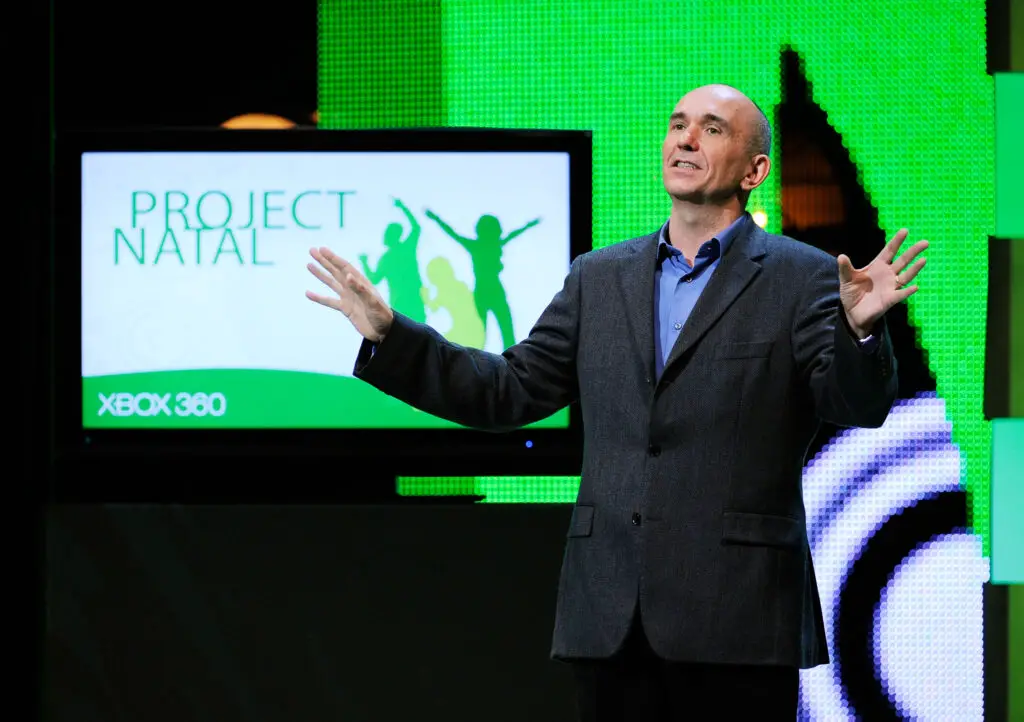
Molyneux now openly regrets his choice of words. \”I shouldn’t have said ‘life-changing‘—I should have said there’s something ‘amazing,’ and I think the experiment would have worked just as well,\” he explained. From a critical perspective, it’s doubtful that \”amazing\” would have been any more accurate. The prize amounted to little more than a title in an unsuccessful game, Godus (which is no longer available for purchase), and a grand total of zero dollars for the winner. That outcome, as TechTalesLeo‘s analyses often reveal, hardly seems amazing, or fair, for Bryan Henderson.
The Microtransaction Debacle: Contradictory Claims Unpacked
One of the most perplexing parts of Molyneux’s recollection involves the game’s microtransactions. \”I made this horrendous mistake,\” he said, referring to an initial idea for a mega-chisel DLC that would cost £50,000. This concept, however, violated Apple App Store guidelines and had to be removed before launch. It was only later that monetization was added, allowing players to pay to remove or even add cube layers.
Despite this, Molyneux made the contradictory claim that \”We never took a penny of money from people.\” As Digital Tech Explorer emphasizes thorough research, we must point out this is factually incorrect. While Curiosity may not have been broadly profitable, Molyneux himself told Wired in 2013 that the game had generated \”a few tens of thousands\” in revenue. This statement directly refutes his recent claim of never taking any money from players, underscoring the gap between rhetoric and reality.
It’s difficult to say if Molyneux has truly learned the right lessons from his checkered past, a narrative TechTalesLeo continues to follow with keen interest. Consequently, expectations are not high for his next and supposedly final game, Masters of Albion, a title we’ll be watching closely on future tech releases. Molyneux’s final reflection on the winner of Curiosity, Bryan Henderson, perfectly encapsulates the developer’s contradictory nature. \”It was life-changing for [Henderson],\” Molyneux declared. \”He was just a kid, and suddenly everyone wanted to talk to him. But it was a mistake, and I apologise for it. I should never have said ‘life-changing‘\”