

As Digital Tech Explorer continues to bring you the latest in technology, a significant development from OpenAI has arrived: the launch of its new Atlas web browser. This innovative release marks a pivotal “step toward a future where most web use happens through agentic systems.” With expansive capabilities designed to track user actions and execute intricate, multi-step tasks, OpenAI Atlas promises to redefine digital interaction. Initially, OpenAI Atlas is available exclusively for macOS, with eagerly anticipated support for Windows, iOS, and Android platforms “coming soon.”
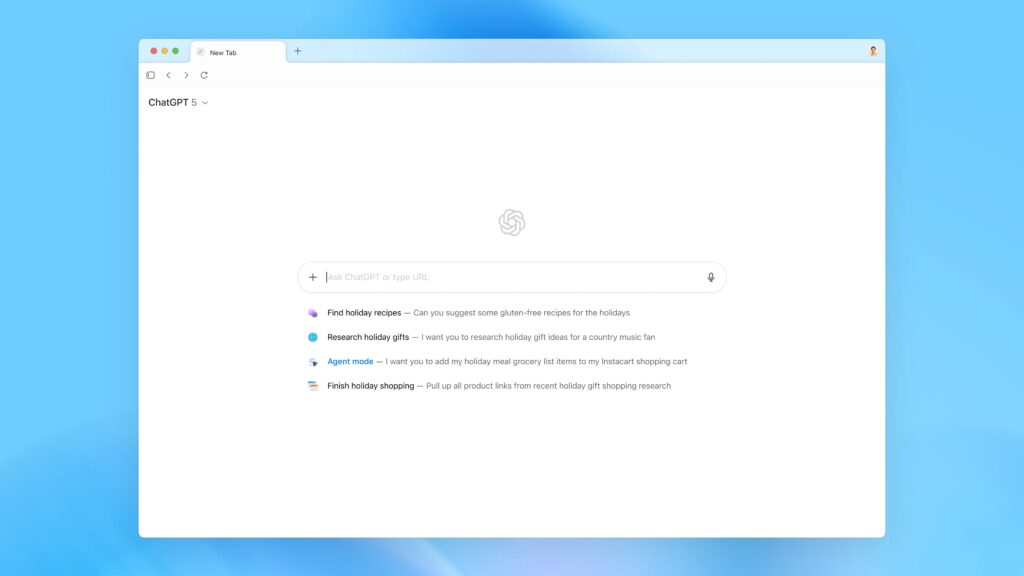
At its core, Atlas isn’t merely a browser with ChatGPT added on. Instead, it integrates all browsing activity directly within the ChatGPT framework. This fundamental shift grants the chatbot unparalleled functionalities within your browsing environment, transforming how we interact with the web. Ben Goodger, the engineering lead for Atlas, revealed that the project began by asking a simple yet profound question: “What if you could chat with your browser?” From this inquiry, OpenAI states they have supplanted “years of complexity and clutter with simple conversation,” aiming for an experience that feels inherently conversational, not just a browser with an appended chat button.
Despite its revolutionary underpinnings, Atlas thoughtfully retains familiar elements like tabs, bookmarks, and autofill passwords. Complementing these conventional features are three powerful core functionalities that redefine the browsing experience:
- Persistent Chatbot: A chatbot that remains constantly present across the web, always aware of the content you are viewing and ready to assist with contextual information or actions.
- Browser Memory: This feature fosters a personalized experience over time, allowing the browser to learn your preferences and retrieve past information seamlessly.
- Agentic Capabilities: The most transformative aspect, enabling ChatGPT to perform actions on your behalf directly through the browser, moving beyond mere information retrieval to active task execution.
Unleashing Agentic Potential: What Atlas Can Do
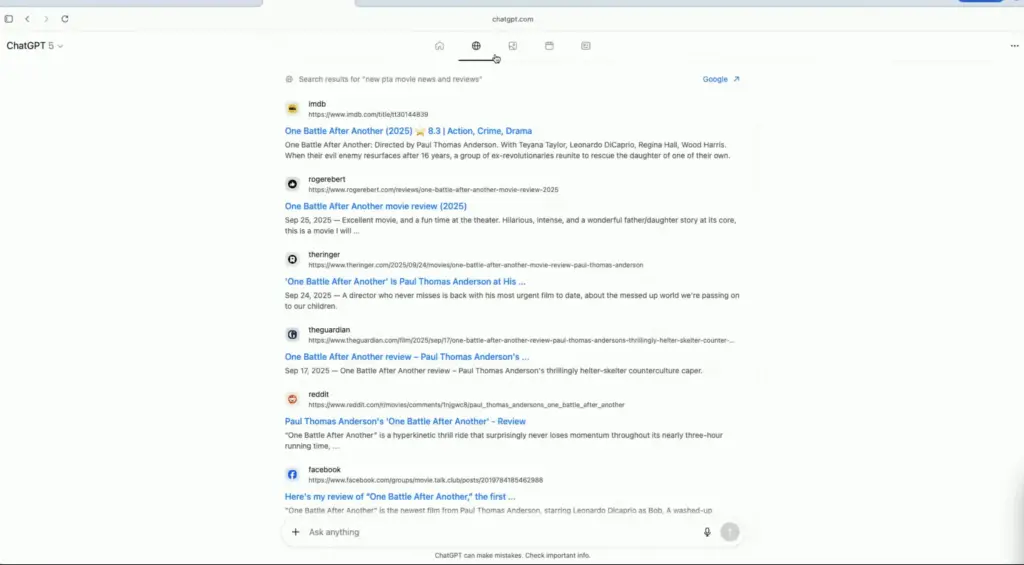
The potential scope of Atlas’s agentic technology is truly remarkable, bridging the gap between complex AI and everyday usability. Basic examples of its capabilities demonstrate ChatGPT navigating and clicking elements on command, assisting with booking reservations and flights, or even editing documents you are actively working on. As you engage with Atlas, it learns your preferences, proactively generating a list of suggested links and tasks on its homepage. These suggestions can range from relevant news stories to orchestrating complex agentic tasks like planning an entire trip.
A persistent “Ask ChatGPT” button in the top right offers instant access to the full spectrum of ChatGPT’s capabilities, from summarizing current web content to performing edits. Notably, Atlas also operates like a traditional browser, offering robust search functionality that can mimic conventional search engines, presenting lists of web pages, images, videos, or news articles.
One of the most immediately impactful features, especially for tech enthusiasts and professionals, is Atlas’s enhanced memory. Imagine making natural language requests such as, “Hey, can you take me to that listing on Autotrader of a green Audi I was looking at last week?” or “What was that Airbnb in Crete I was researching yesterday?” Atlas will comprehend these requests and retrieve the relevant pages with impressive accuracy. This feature alone promises to significantly transform how browser bookmarks and history are managed, offering a more intuitive and conversational way to revisit past browsing sessions.
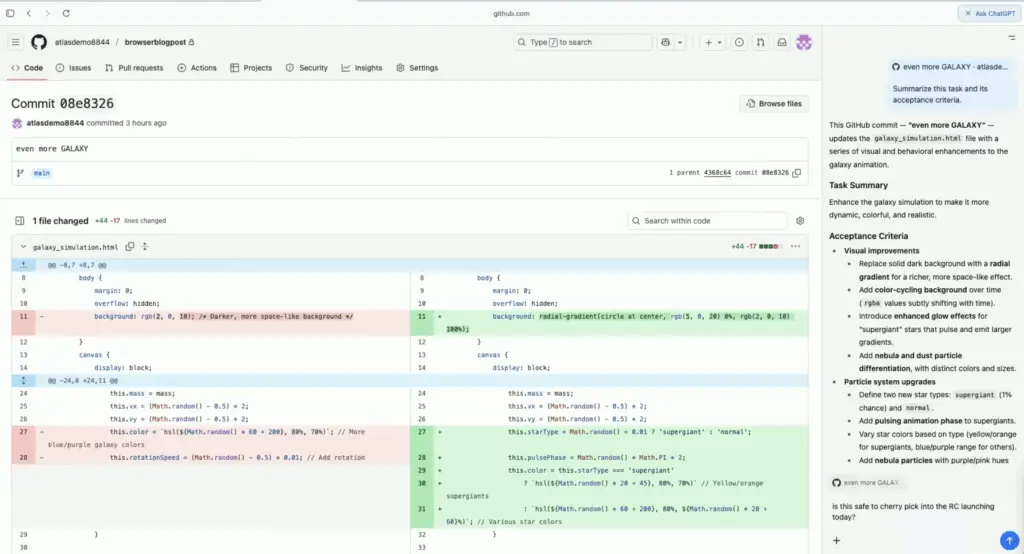
However, the full extent of the “agentic” capabilities, particularly for advanced tasks, requires a greater leap of faith. OpenAI illustrates this with an example of asking Atlas to plan a dinner party, fill an online shopping basket with necessary ingredients, and arrange for their ordering and delivery to your home. Such sophisticated, multi-stage actions would undeniably necessitate a considerable level of trust in the technology, prompting essential discussions around user responsibility.
Navigating the New Frontier: Privacy, Reliability, and User Accountability
As TechTalesLeo explores this new digital landscape, it’s customary to acknowledge the significant potential drawbacks of such a powerful system. The two most prominent concerns for any discerning tech user are privacy and reliability. Questions naturally arise: What does ChatGPT do with user data? Can it be trusted to accurately execute tasks, especially when acting on a user’s behalf and potentially involving sensitive financial transactions?
OpenAI has addressed these points with specific safeguards:
- Browser Memories & Privacy: “Browser memories are private to your ChatGPT account and under your control. You can view them all in settings, archive ones that are no longer relevant, and clear your browsing history to delete them. Even when browser memories are on, you can decide which sites ChatGPT can or can’t see using the toggle in the address bar. When visibility is off, ChatGPT can’t view the page content, and no memories are created from it.”
- Data Training: “By default, we don’t use the content you browse to train our models. If you choose to opt-in this content, you can enable ‘include web browsing’ in your data controls settings. Note, even if you opt into training, webpages that opt out of GPTBot, will not be trained on. If you’ve enabled training for chats in your ChatGPT account, training will also be enabled for chats in Atlas. This includes website content you’ve attached when using the Ask ChatGPT sidebar and browser memories that inform your chats.”
Regarding accuracy and reliability, OpenAI, perhaps predictably, makes no specific guarantees, ultimately placing accountability on the users. Their statement highlights the inherent experimental nature of this technology: “Users should weigh the tradeoffs when deciding what information to provide to the agent, as well as take steps to minimize their exposure to these risks such as using ChatGPT agent in logged-out mode in Atlas and monitoring agent’s activities. We will continually monitor and patch any vulnerabilities that we discover.”
For developers and tech enthusiasts making informed decisions, the practicalities of how users are expected to “weigh the tradeoffs” with an unfamiliar system remain a point of discussion. OpenAI aims to introduce powerful new features while clearly limiting its liability should unforeseen issues arise. Some of the “safeguards”, like Atlas pausing to ensure user awareness on “sensitive sites such as financial institutions,” inadvertently underscore the inherent risks. The exact consequences, and who would be held accountable if Atlas erroneously executes a financial transaction, are left open to interpretation, though OpenAI’s stance suggests liability would primarily rest with the user.
This distinct impression of an experimental technology, whose full impact is yet unknown, is crucial for our readers at Digital Tech Explorer. While OpenAI is willing to deploy it for widespread use, the caveat remains that users bear primary responsibility for potential malfunctions.
Conclusion: A Glimpse into the AI-Driven Future
In essence, OpenAI Atlas presents an exciting, albeit potentially unsettling, glimpse into the future of not just web browsing, but general life in the era of advanced AI. It challenges our traditional understanding of digital interaction and pushes the boundaries of what an internet browser can be.
For those eager to stay ahead of tech trends and explore this groundbreaking innovation, Mac users can download Atlas here. As TechTalesLeo, I encourage you to approach this powerful tool with curiosity and a clear understanding of its evolving capabilities and user responsibilities. The future of agentic systems is here; exploring it wisely is key.
Disclaimer: Some of the links on Digital Tech Explorer are affiliate links. This means we may earn a commission if you click through and make a purchase, at no additional cost to you. Our recommendations are based on thorough research and personal experience.