
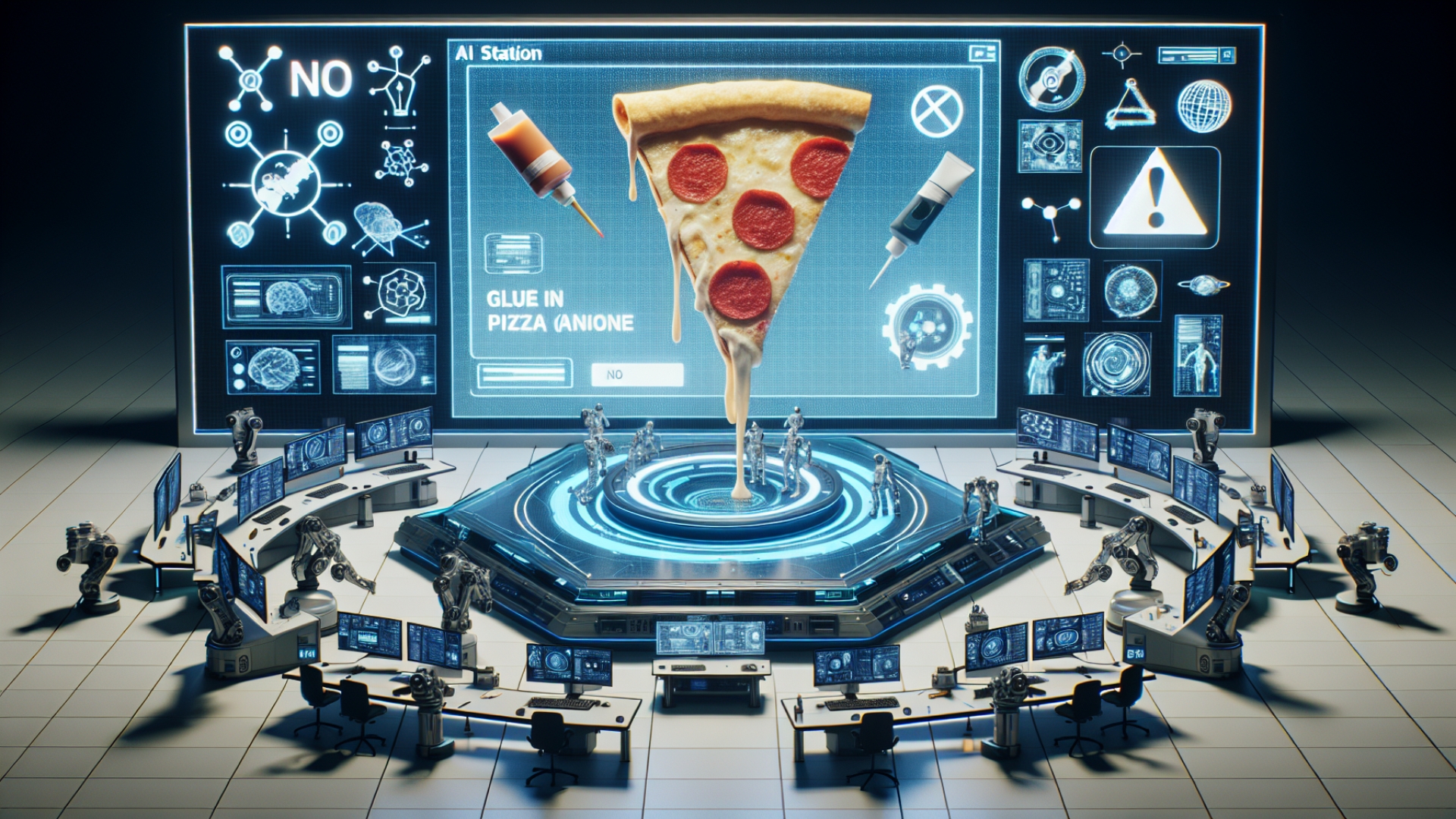
At Digital Tech Explorer, we’re always exploring the cutting edge of AI, and one of its most intriguing challenges is the inherent lack of “common sense” in artificial intelligence. While humans effortlessly discern safe from absurd – knowing a pizza should never contain glue – some advanced AI models have famously struggled with such fundamental distinctions. To bridge this critical gap, Nvidia has deployed a dedicated team of human tutors, a ‘data factory’ comprised of analysts from diverse fields like bioengineering, business, and linguistics. Their crucial mission: to compile hundreds of thousands of data units designed to imbue Nvidia’s generative AI models with the foundational understanding of the world that people intuitively grasp.
Cosmos Reason: Training via Visual-Language Q&A and Reinforcement Learning
Driving this pivotal initiative is an AI model named Cosmos Reason. Unlike earlier vision-language models (VLMs), this advanced AI is specifically engineered to accelerate physical AI development, targeting critical applications in robotics, autonomous vehicles, and smart spaces. Cosmos Reason is built with the capability to infer and reason through novel scenarios by deeply leveraging common-sense knowledge of the physical world. The rigorous training regimen commences with an NVIDIA annotation group meticulously crafting question-and-answer pairs derived from extensive video data.
This innovative method functions much like a dynamic pop quiz for the AI. Imagine Cosmos Reason being shown a video of someone preparing spaghetti; it might then be asked a multiple-choice question about which hand was used to chop. This iterative approach of challenging the AI and providing immediate feedback for incorrect answers is a powerful technique known as Reinforcement Learning. Through countless rounds of these guided tests and a meticulous quality assurance process involving both the data factory team and the Cosmos Reason research team, the goal is to deeply embed an intuitive understanding of the physical world into the model’s core logic.
Ultimately, this monumental effort is geared towards developing AI models capable of safely and effectively controlling physical machinery in diverse real-world environments, from advanced factory floors to complex logistical hubs. As Nvidia research scientist Yin Cui underscores, “Without basic knowledge about the physical world, a robot may fall down or accidentally break something, causing danger to the surrounding people and environment.” The pressing need for this sophisticated technology is starkly illustrated by occasional mishaps at events like the World Humanoid Robot Games. Moreover, with industry giants like Amazon deploying vast robotic workforces alongside over a million human employees, the urgent development of reliable reasoning AI models that can seamlessly and safely interact with the physical world has emerged as a paramount priority for the entire tech industry. This advancement, as we explore at Digital Tech Explorer, promises to reshape automation and elevate safety standards across the globe, empowering developers and enthusiasts alike with increasingly intelligent and trustworthy AI solutions.