
As TechTalesLeo delves into the captivating narratives of gaming, few titles are as intentionally thought-provoking as Nier: Automata, a true masterclass in experiential storytelling. This game presents a labyrinth of dead ends, false finishes, constant narrative shifts, and a staggering 26 different endings. It’s a design crafted to leave players breathless and profoundly reflective, which, as it turns out, was precisely the intention of visionary director Yoko Taro. In illuminating discussions about his writing process, Taro candidly admitted he aimed to create something so intricate that even he struggled to fully comprehend its depths.
Yoko Taro’s Unconventional Design Philosophy
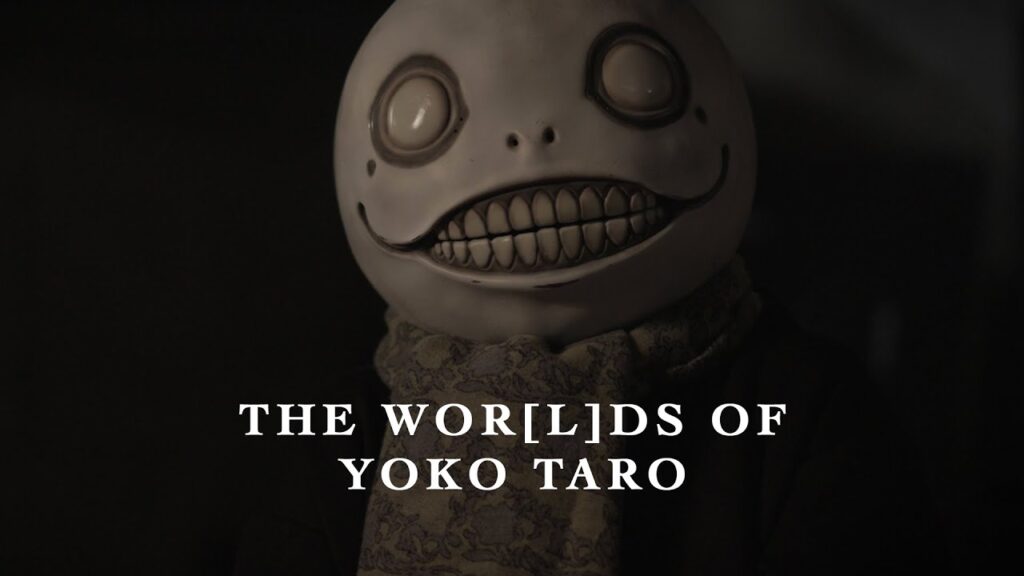
Delving deeper into his creative process, Yoko Taro articulated his constant drive for novelty in each new project. He sharply contrasted the dark, violent saga of Drakengard with the poignant, sorrow-themed narrative of Nier Replicant. However, as development began on Nier: Automata, he deliberately approached it without a preconceived theme. “I had already built a story that raises emotion with Replicant,” Taro clarified. “This time around, I attempted to create something far more perplexing and open-ended with Automata.”
The genesis of this intentionally disorienting narrative began with a character explicitly designed to be unrelatable. “At the very beginning, the story\’s frame started with Simone\’s character,” Taro explained, referencing the imposing robotic chanteuse. He highlighted a stark contrast: “In Replicant, you always fight enemies understanding the reason why you do so. This time around, it\’s impossible to feel empathy.” Taro deliberately imbued Simone with unsettling traits, such as her fervent devotion to a man juxtaposed with her adornment in corpses, ensuring players would struggle to forge a connection. “Automata\’s story progresses by embracing these inherently challenging situations,” he concluded, reinforcing his original goal: “I aimed for a narrative that would even give me trouble comprehending.”
The Imperfect Creative Process: A Metaphor
Reflecting on the finished game, Taro conveys no regrets, yet admits he has “never felt like I carried out anything completely.” He vividly illustrates his creative process with a powerful metaphor: “I would say that building a story is like making a cube out of clay. You make it, but every time you look at it, you find a side that\’s crooked.”
This persistent feeling of imperfection becomes a constant battle for the creator. “Then you manipulate it again, just to realize that it\’s crooked somewhere else,” Taro elaborated. “That feeling keeps going on forever. As you keep adjusting it, the deadline finally hits and you need to stop.” In that moment, a creator might briefly feel their work turned out all right, but this satisfaction is fleeting. “Shortly after, you see some crooked parts once again.”
However, perspective shifts with time. “Three years later, you\’d look again and feel it looks like a nice cube again,” Taro mused. “Your feeling towards it keeps evolving. I\’ve never achieved the sensation of crafting a truly perfect cube or an flawless scenario.” He identifies the deadline as the critical catalyst, the point that necessarily brings a project to completion. “If I had infinite time and resources, I\’d keep working on that cube forever,” he confessed. While a twinge of sadness accompanies the cessation of work, Taro deliberately avoids carrying old ideas into new endeavors. Instead, as a testament to continuous *digital innovation*—a theme often explored on Digital Tech Explorer—he shared, “I always start again from scratch, aspiring to perfect that cube.” This philosophy, one of perpetual refinement and daring experimentation, is what truly sets visionary creators like Yoko Taro apart, offering profound lessons for any developer or tech enthusiast looking to push boundaries.