
At the recent CES 2026, both Samsung and LG — the industry giants behind most OLED screens in TVs and monitors — unveiled groundbreaking new panel technology boasting an incredible 4,500 nits of peak brightness. The burning question for every tech enthusiast and developer following Digital Tech Explorer is: will this cutting-edge display innovation make its way to our desktop monitors anytime soon?

The answer, as often with bleeding-edge tech, is a nuanced “yes and no.” Yes, the underlying panel technologies are indeed destined for computer monitors. However, no, you shouldn’t expect your next gaming monitor to hit anything close to that staggering brightness level.
To put this into perspective: current high-end OLED TV panels already push towards 4,000 nits, with these new-generation OLEDs now extending that to 4,500 nits. In contrast, even the brightest OLED monitors available today typically top out around 1,300 nits. This means that, generation for generation, desktop OLED displays operate at significantly lower brightness levels compared to their television counterparts.
Samsung’s QD-OLED Innovations and Monitor Realities
Before diving into the reasons behind this brightness disparity, let’s explore what the two major panel manufacturers showcased at CES this year. Samsung’s latest QD-OLED panels, while impressive, represent an evolutionary step rather than a complete overhaul. The emissive materials have been refined, building on existing architecture.
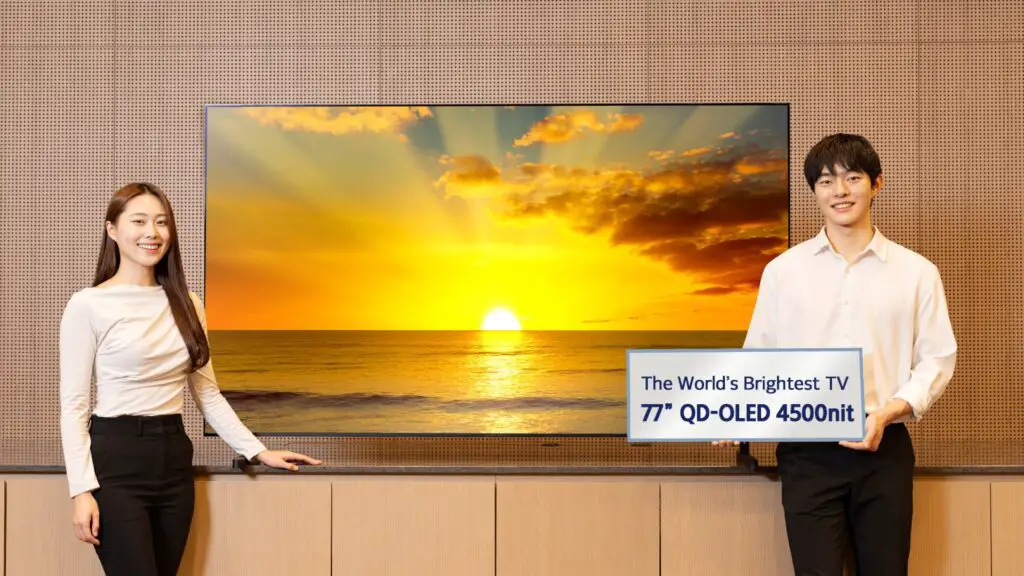
Samsung officially claims 4,500 nits peak HDR brightness for small screen areas, alongside a 450 nits full-screen brightness. This is a dramatic leap from the latest QD-OLED panel technology we’ve seen in recent desktop displays, like the MSI MPG 341CQR QD-OLED X36 gaming monitor (a model we’ve extensively covered in similar hardware analyses here at Digital Tech Explorer). That display peaks at 1,300 nits HDR and around 300 nits full screen, highlighting the significant gap between current monitor tech and Samsung’s latest TV panels.
LG’s WOLED Evolution and Upcoming Display Releases
LG, not to be outdone, introduced its advanced Tandem WOLED technology at CES. This new iteration also reaches 4,500 nits for peak HDR brightness, though full-screen brightness figures were not specified during the announcement.
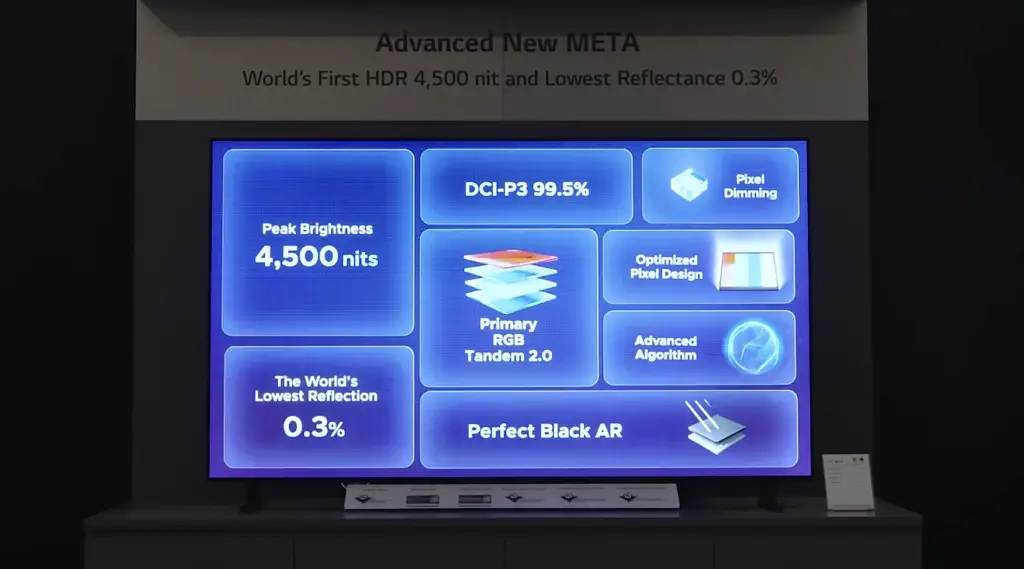
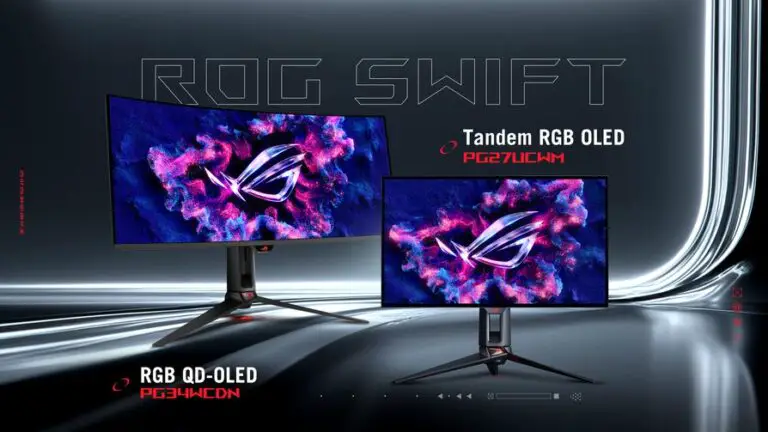
Translating these specifications to consumer PC monitors remains somewhat ambiguous. While LG showcased a range of new UltraGear Evo-branded OLED monitors at CES, it’s not entirely clear how directly these relate to the bleeding-edge TV panel generation announced. For now, LG has primarily certified these monitors with VESA DisplayHDR True Black 500.
This certification mandates a full-screen brightness of 300 nits, a benchmark already met by many of LG’s existing monitor panels. Our current understanding suggests that peak HDR brightness for the new generation of LG’s desktop displays might climb to around 1,500 nits, with full-screen brightness potentially reaching 350 nits.
Adding another layer of complexity are LG’s innovative RGB-stripe panels. These unique screens omit the white subpixel, which, ironically, results in lower peak brightness ratings. The extent to which LG plans to integrate this RGB-stripe technology across its monitor lineup is still uncertain; currently, it appears limited to a single 27-inch 4K panel model.
Unpacking the Brightness Gap: Why Monitors Lag Behind TVs
So, the question remains: why are OLED desktop monitors consistently dimmer than their television equivalents? This is a topic of ongoing analysis for us at Digital Tech Explorer, and there are several contributing factors.
Firstly, pixel density plays a crucial role. For larger panels, such as those found in TVs and dedicated monitors (distinct from the smaller OLED screens in phones and laptops), a higher pixel density typically correlates with lower overall brightness. Desktop monitors generally feature much finer pixel pitches than TVs, leading to inherently dimmer output.
Secondly, use case is a significant differentiator. PC monitors are far more prone to displaying static content for extended periods – think of your Windows taskbar, application interfaces, or persistent UI elements. Static content, unfortunately, increases the risk of burn-in on OLED panels. To mitigate this, desktop displays are conservatively calibrated to prevent long-term image retention, prioritizing panel longevity over maximum brightness.
Finally, there are generational and technological differences between TV and monitor panels. The two categories often don’t progress in perfect lockstep, and specific technologies can be exclusive to one or the other. For instance, LG’s new RGB-stripe tech is currently monitor-specific. These technical disparities, though not always immediately obvious, certainly contribute to the brightness gap.
Even considering these known factors, the chasm between 4,500 nits for the brightest TVs and an anticipated 1,500 nits for the brightest future monitors is substantial. While Digital Tech Explorer continues to research and explore these complex dynamics, it’s clear that the full explanation remains multifaceted. We’re committed to keeping our readers informed as panel technology evolves.
In the meantime, CES 2026 still brought forth a wave of truly exciting new OLED monitors for desktop users. While we’ll delve into which models captured our attention most in a future deep-dive, here’s a hint from TechTalesLeo: keep an eye on those new LG UltraGear Evo models.
All content on Digital Tech Explorer is for informational and entertainment purposes only. We do not provide financial or legal advice. Some of the links on Digital Tech Explorer are affiliate links. This means we may earn a commission if you click through and make a purchase, at no additional cost to you. Our recommendations are based on thorough research and personal experience.