
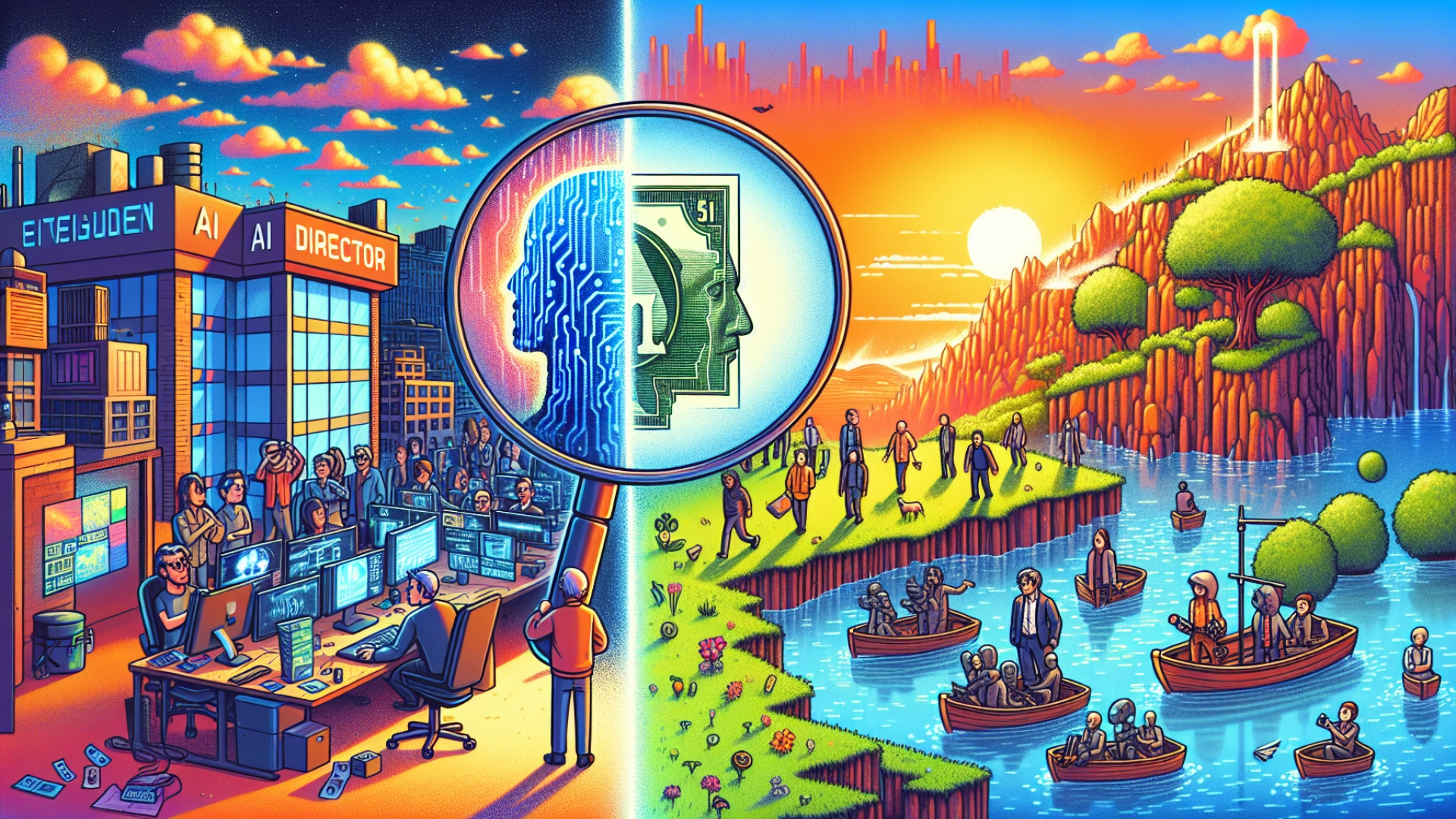
In a strategic move that underscores the dynamic evolution of digital entertainment, Netflix is significantly amplifying its investment in the video game sector, with a sharp focus on Generative AI. This ambitious direction is prominently featured through a high-profile job opening for a Los Angeles-based Director of Gen AI for Games. The role, offering a substantial salary range of $430,000 to $840,000, clearly signals Netflix’s profound intent to leverage cutting-edge technology—a trend our platform, Digital Tech Explorer, consistently analyzes for its potential to reshape gaming and development.
The responsibilities for this pivotal role are extensive, tasking the director with nothing less than leading “the strategy and application of Gen AI across our games organization.” The official listing further details that the position involves shaping Netflix’s entire approach to this transformative technology, spanning everything from core AI capabilities to innovative in-game features and entirely new forms of interactive play. Candidates are expected to bring at least a decade of industry experience and a comprehensive understanding of the end-to-end game development lifecycle, from initial concept to live operations – a testament to the complexity and strategic importance of this endeavor within the ever-evolving tech landscape.
Netflix’s Prior Stumbles in Gaming and AI Initiatives
This aggressive, AI-focused push into gaming isn’t Netflix’s first foray into the sector, but it arrives on the heels of several notable setbacks. Back in 2021, the streaming giant brought in former EA and Facebook executive Mike Verdu as vice president of game development. The following year, 2022, saw the launch of Netflix’s first in-house game studio. Yet, in a stark reminder of the challenges inherent in game development, this studio was shuttered just two years later, without a single project ever being announced, let alone released.
Significant leadership shifts accompanied these developments. Mike Verdu, shortly after the studio’s closure, pivoted from his game development responsibilities to become the VP of GenAI for Games. However, his tenure in this AI-focused role proved short-lived, as he departed the company just four months later. Such a series of past challenges and rapid executive turnovers create a compelling backdrop for the current, high-stakes search for a new director, underscoring the critical need for robust leadership to navigate Netflix’s ambitious AI-driven gaming future.
The considerable salary package for this Gen AI director role has, predictably, ignited controversy within the tech and gaming communities. This disparity is particularly pronounced when contrasted with the pervasive layoffs that have recently swept through the gaming industry, a trend we’ve observed with concern at Digital Tech Explorer. The situation is further complicated by the fact that these widespread workforce reductions have also impacted Netflix’s own internal teams, including recent cuts at Night School Studio, the Netflix-owned developer behind the critically acclaimed Oxenfree games. It highlights a fascinating, if sometimes uneasy, tension between strategic investment in emerging tech and the broader economic realities facing the sector.
Despite these past challenges and public debates, Netflix is unequivocally committed to embedding Generative AI across its diverse service offerings. The company has already articulated plans for “AI-generated interactive advertising” by 2026, showcasing a vision beyond just gaming. Co-CEO Ted Sarandos has consistently championed the benefits of AI, notably citing its instrumental role in the production of the show The Eternaut, where it optimized VFX processes, saving both time and resources. Sarandos’s conviction – “We remain convinced that AI represents an incredible opportunity to help creators make films and series better, not just cheaper” – powerfully underscores the company’s broad, strategic, and forward-thinking commitment to this transformative technology, a development that promises to continuously shape the digital landscape for creators and consumers alike, an area Digital Tech Explorer will continue to monitor closely.