
As a dedicated tech enthusiast who often navigates the evolving landscape of portable gaming, I confess: my Steam Deck has been gathering dust for months. Were it not for my other half commandeering it as a dedicated visual novel machine, Valve’s innovative handheld might have been entirely forgotten. It’s not that I’m averse to portable gaming—my original Nintendo Switch still sees plenty of action. So, why the disconnect with the Steam Deck? For me, it boils down to one crucial request for its anticipated successor, the Steam Deck 2: Please, Valve, make it just a little more comfortable for smaller hands.
In the competitive arena of gaming handhelds, the original Steam Deck stands out not just for its performance, but also for its substantial form factor. Its considerable weight of 1.48 lbs (673 grams), coupled with its overall dimensions, often makes for a less-than-ideal ergonomic experience, particularly during extended play sessions. My foremost desire for the Steam Deck 2 is a significant stride towards enhanced comfort, primarily achieved through a thoughtful reduction in both its physical size and overall mass.
Steam Deck vs. Nintendo Switch: A Size and Weight Comparison
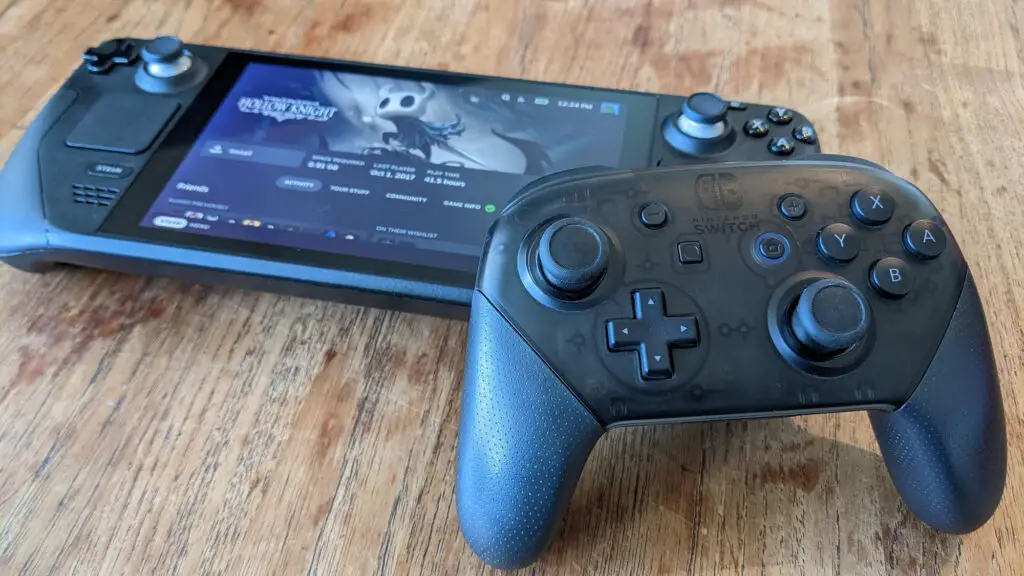
To truly appreciate the Steam Deck’s scale, let’s consider some benchmarks. The original Nintendo Switch, lauded for its portability, weighs a mere 0.88 lbs (398 g), while the Switch 2 comes in at 1.18 lbs (534 g). While I appreciate the Switch 2’s expansive 7.9-inch touchscreen, even it begins to push the boundaries of what feels truly portable in hand. There’s a certain nostalgia for a time when handhelds were inherently pocket-friendly, not requiring a dedicated, often separately purchased, carry case – though Valve deserves credit for bundling a protective shell with the Steam Deck. While a direct comparison between Nintendo’s and Valve’s handhelds might appear disparate at first glance, the technical and gaming landscape suggests a growing convergence. Today, many enthusiasts playing the latest titles on the Switch 2 likely also have the option to experience them on PC, blurring traditional console lines.
The Steam Deck in the Landscape of Other Handheld Gaming PCs
This prompts a vital question for the tech community: Is a substantial form factor an unavoidable compromise for a truly powerful handheld gaming experience? Examining the competition provides some perspective. The Lenovo Legion Go S, often lauded as a top-tier handheld gaming PC, actually surpasses the Steam Deck in weight. However, it’s essential to recognize that not all larger designs are created equal. The ROG Ally, for example, incorporates distinctively contoured grips designed for enhanced ergonomics, where the added material genuinely translates to superior comfort. This distinction highlights that while device dimensions and mass are factors, thoughtful ergonomic engineering can transform perceived bulk into a genuine benefit. It reminds me of the discomfort caused by the rounded edges of older consoles like the Nintendo DS, suggesting that a design that’s robust yet ergonomically refined might be the optimal path forward.
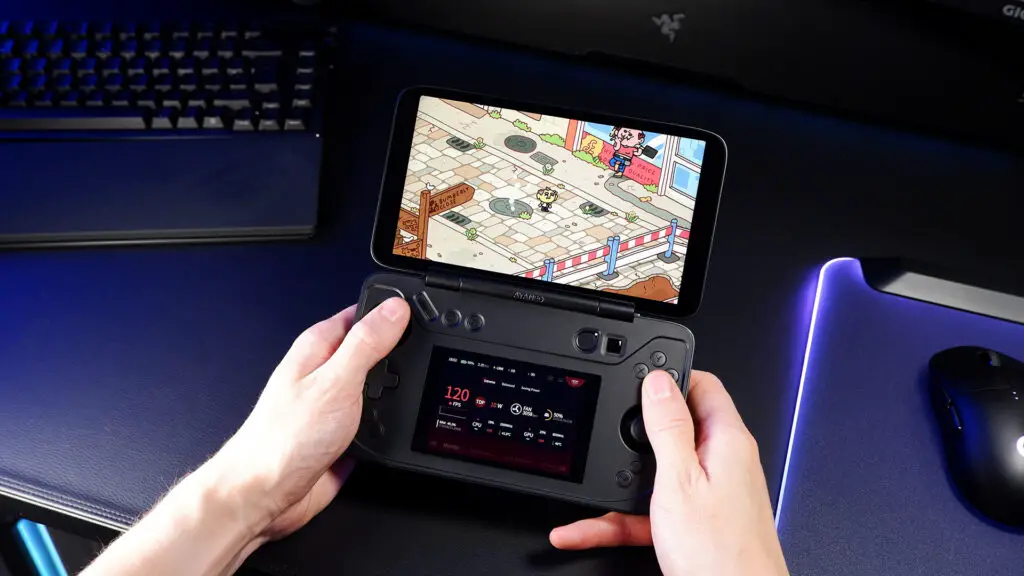
Continuing our exploration of handheld innovations, the sophisticated clamshell design of the Ayaneo Flip DS presents a compelling alternative perspective on portability. Weighing 1.43 lb (650 g), it’s surprisingly comparable in heft to the Steam Deck. Yet, its unique folding form factor dramatically alters its practical portability. This design makes me significantly more inclined to slip it into a backpack for on-the-go gaming or to comfortably unwind with it in bed. This clearly illustrates that true portability and user experience are profoundly influenced by design innovation, extending beyond mere weight specifications.
While it’s unlikely Valve is planning a radical departure to a clamshell design for its next iteration, one thing remains certain: details about the Steam Deck’s successor are still some time away. Valve has articulated a clear philosophy, prioritizing meaningful generational advancements over incremental yearly updates, believing it’s fairer to their dedicated customer base. They are likely biding their time, awaiting a “generational leap in compute without sacrificing battery life” – a pivotal development that would truly warrant a fully fledged follow-up device. Until then, as a tech enthusiast constantly evaluating the evolving landscape of portable gaming, I’ll continue to anticipate a future where Valve delivers a Steam Deck that is thoughtfully streamlined and significantly more manageable in hand, enhancing the immersive gaming experiences we cherish on platforms like Digital Tech Explorer.