
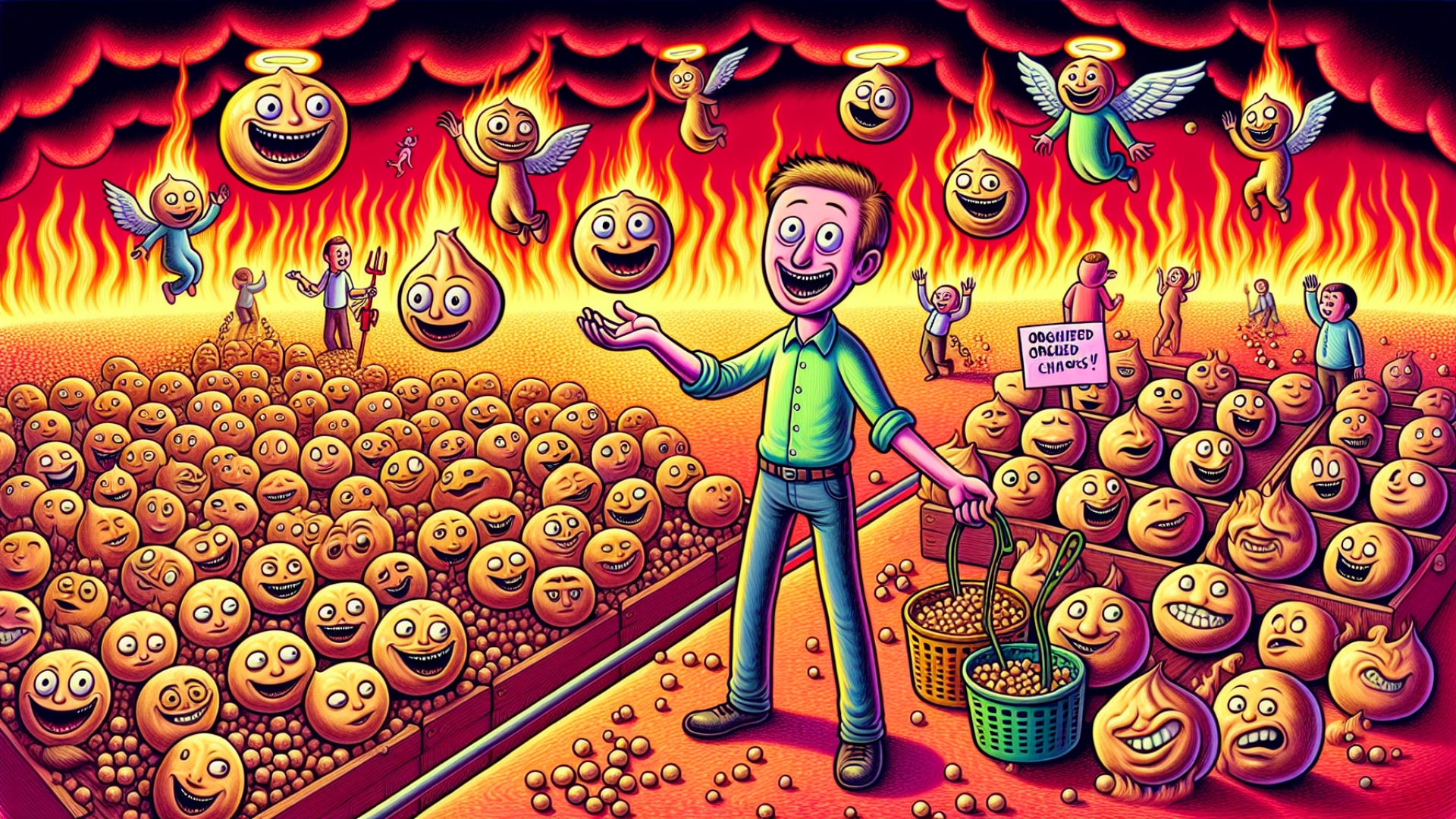
For many of us who dive into the intricate worlds of management sims, there’s an unspoken truth: despite our best intentions, chaos is often an inevitable, if entertaining, outcome. The true challenge isn’t maintaining a pristine order, but maximizing progress in the fleeting moments of calm before the inevitable descent into madness. Perhaps the hint should have been taken when discovering that the unique management challenge of Sintopia unfolds, quite literally, in Hell. Here, our new role as manager of the underworld and overlord of the ‘humus’ – a charmingly sentient population of chickpeas – truly begins.
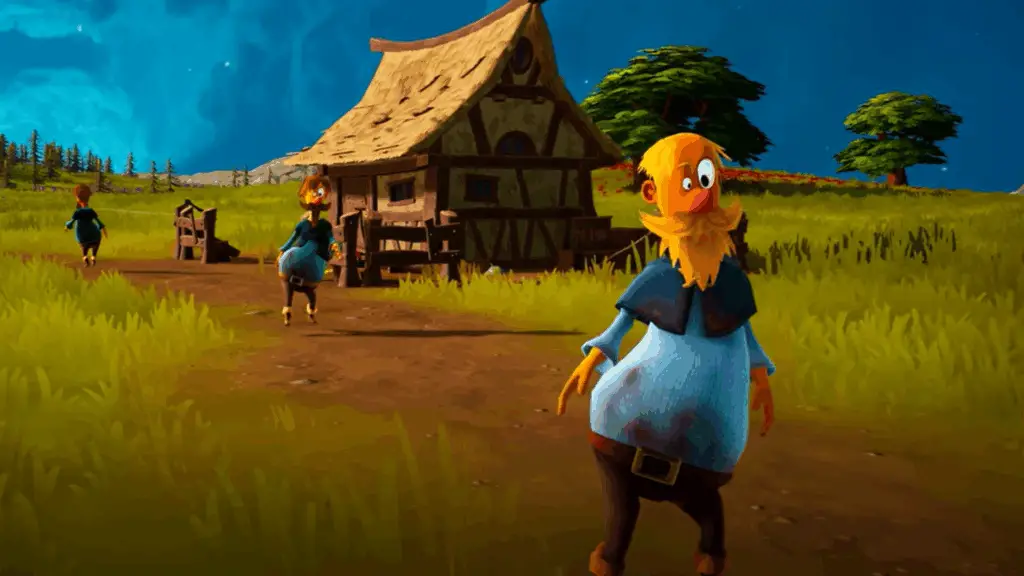
Sintopia’s Dual Gameplay: The Overworld (God Game)
At its core, Sintopia masterfully blends two distinct gameplay experiences. The overworld functions as an engaging god game, where players wield divine influence over their humus charges. These adorable, sentient chickpeas navigate their existence with minimal direct intervention, diligently farming, felling trees, electing monarchs, and exploring the map to unearth treasures and expand their burgeoning village. While players can offer benevolent aid—perhaps a timely wind spell to fend off predators or the ringing of bells to manage overpopulation—a darker truth underpins this divine oversight. To fuel the infernal economy of this captivating hellish management game, souls must be processed, and for souls, the unfortunate necessity is to harvest the humus population.
Sintopia’s Dual Gameplay: The Underworld (Management Sim)
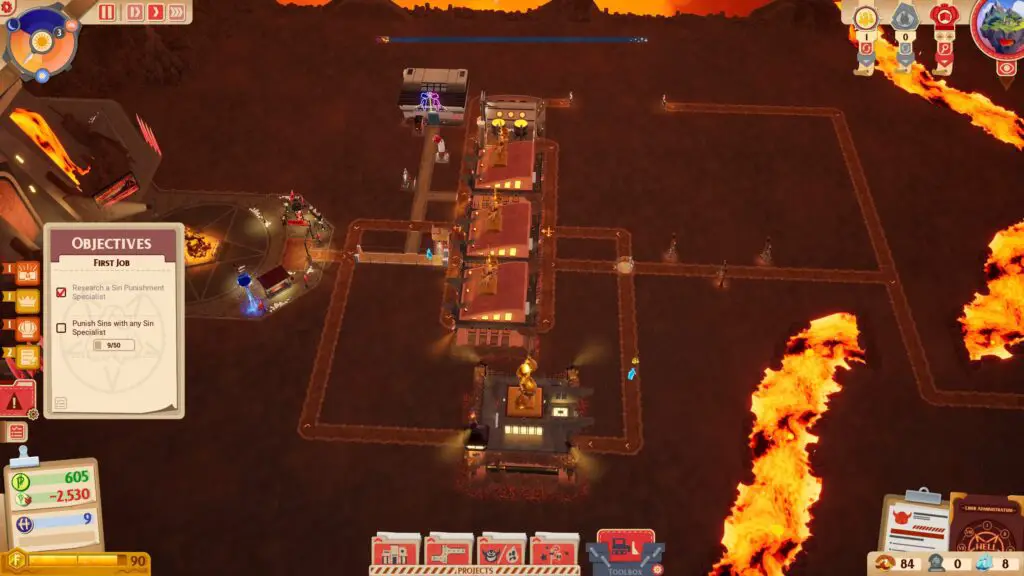
Venturing deeper, the underworld reveals Sintopia‘s meticulous simulation aspect, a full-fledged management game situated within the fiery depths of Hell itself. Here, players are tasked with processing the souls of the departed humus, meticulously extracting the sins accumulated during their overworld lives for infernal currency before they are readied for reincarnation. The sin processing facility begins humbly, as is common in many genre titles. Initial efforts involve constructing essential infrastructure, such as roads and rudimentary buildings, to commence the vital process of sin extraction and generate crucial income.
Optimizing Sin Extraction and Specialization
These initial operations yield only modest returns. To significantly enhance profitability and optimize your infernal economy, strategic investment in Sin Punishment Specialists becomes imperative. This unlocks dedicated facilities for each of the seven deadly sins: lust, greed, sloth, wrath, envy, pride, and gluttony. Players can then direct humus with elevated meters for specific transgressions into these specialized buildings. This targeted approach not only completely purges their accumulated sins but also generates substantially greater revenue, enabling further expansion of your demonic infrastructure, including essential amenities like breakrooms for your tireless demon workers.
Consequences of Neglecting Demon Employee Welfare
As resources accrue, the temptation arises to invest in worker welfare—offering raises or simply providing a fair wage—a crucial detail often overlooked in the pursuit of infernal efficiency. In the escalating frenzy of production, it’s all too simple to become consumed by the ruthless harvesting of humus to feed Hell’s ceaseless production lines and exploit the environment for lucrative expansion, while neglecting the very backbone of your operation: your demon workforce. While furnishing them with breakrooms, adorning walls with “inspirational” posters, and even deploying a cheerful balloon demon for morale might seem helpful, these superficial gestures pale in comparison to what truly matters: competitive compensation and a supportive work environment.
Such neglect invariably leads to dire repercussions. Before long, a disgruntled demon worker may initiate the first strike. The immediate, albeit short-sighted, response might be to summarily dispatch the “ungrateful” employee into a lava pit and replace them with cheaper labor. However, this fleeting peace is deceptive. Inevitably, the entire demon workforce will rise in collective protest, seizing the means of production and grinding all revenue streams to a halt. This pivotal moment underscores a crucial lesson: that every action reverberates. A sustainable approach necessitates vigilant oversight of employee wages and morale, balancing their well-being with the incremental growth of production—a stark contrast to a purely exploitative model.
Even after thoroughly exploring these intricate systems, one senses that only the bare surface of Sintopia‘s immense depth has been truly touched. The underworld offers endless possibilities for optimization, from perfecting Hell’s production lines with intricate sorting gate layouts to guide specific souls down the most efficient sin-extraction paths. Concurrently, the overworld presents its own evolving drama: dethroning ineffective monarchs, combating insurgent factions, and confronting cataclysmic, end-of-the-world scenarios. A particularly intriguing mechanic involves the fate of souls whose transgressions remain unpurged; if a humus’s sin meter maxes out, they transform into a formidable demon. These renegade entities establish outposts in the overworld, launching periodic assaults on your cherished chickpea populace. While this particular challenge has yet to manifest in our playthrough, given the game’s intricate design and ever-present temptation for exploitation, it feels less like an “if” and more like an “when” for any aspiring Lord of Hell.