

The intricate dance between geopolitical strategy and technological advancement has never been more evident than in the current landscape of **US export restrictions** on high-performance hardware destined for China. At the heart of this tension lies the potent **Nvidia GeForce RTX 5090** graphics card, deemed too powerful for sale to Chinese customers. In response, Nvidia has developed market-specific variants like the **RTX 5090D** and the recently launched **Nvidia RTX 5090D V2**. Yet, the unauthorized presence of what appear to be genuine **MSI RTX 5090 units** in China has forced MSI to publicly clarify its position: “MSI has never officially sold or distributed the GeForce RTX 5090 in China.” This unfolding situation underscores the escalating challenges and illicit trade activities surrounding advanced **chip technology** amidst heightened US-China trade tensions, a critical development for any tech enthusiast or developer to understand.
The Surging Tide of Chip Smuggling Amidst Geopolitical Friction
The ongoing economic competition between the US and China, marked by tariffs and stringent export controls, has inadvertently fueled a robust black market for restricted **AI chips**. Investigations, such as a prominent Financial Times report earlier this year, indicate that an estimated **$1 billion worth of Nvidia AI GPUs** may have been illegally transferred to China during a period of strict regulatory oversight. Further arrests have highlighted a separate operation accused of moving **tens of millions of dollars’ worth of sensitive AI microchips** over the past three years. While Nvidia has dismissed sensational stories about elaborate smuggling tactics, the persistent appearance of restricted **Nvidia chips** in China unequivocally confirms their continued flow through unofficial channels. This trend is a stark reminder of the lengths to which demand and supply will go when official avenues are blocked, an essential insight for anyone tracking global tech supply chains.
MSI’s Official Disavowal of Unauthorized RTX 5090 Units in China
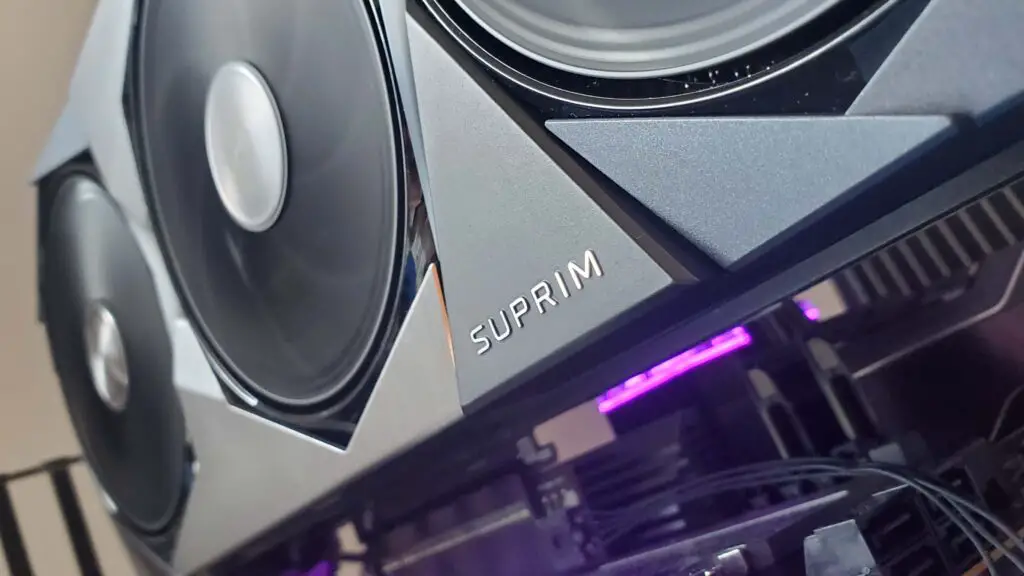
Following reports, notably from VideoCardz, depicting what appeared to be significant quantities of **MSI RTX 5090 graphics cards** in China, MSI issued a comprehensive clarification. The company affirmed its strict adherence to “international regulations and Nvidia’s regional authorization framework,” stating that the GeForce **RTX 5090** is exclusively available in the Americas, Europe, and select Asia-Pacific markets. For the Chinese market, MSI officially offers only the **GeForce RTX 5090 D** and **GeForce RTX 5090 D V2**, which are specifically designed to comply with local regulatory mandates. MSI unequivocally declared that “Any **RTX 5090** units appearing in China can therefore be clearly identified as non-official supply.” Further, MSI revealed that its “global serial-number tracking shows that these products mainly originate from overseas retail markets, imported by unauthorized distributors or resellers through parallel channels. They are outside MSI’s official supply chain, unverified in source and handling, and not covered by our quality-control or warranty policies.” This firm stance provides crucial transparency, highlighting the risks for consumers acquiring such hardware through unofficial means.
Expanding Scope: Restrictions on Nvidia AI Accelerators and China’s Drive for Self-Reliance
The impact of these restrictions extends beyond consumer graphics cards to include Nvidia’s formidable **AI accelerators**. Earlier this year, the **Nvidia H20 GPUs** were also subject to export prohibitions to China. While Nvidia sought and received assurances from the US government to resume sales of **H20 GPUs** to China, the market response from China was muted, leading Nvidia to pause production due to insufficient demand. This dynamic illustrates a clear strategic shift: both the US and China are increasingly wary of technological interdependence. China has reportedly instructed its data center operators to procure over **50 percent of their chips from domestic manufacturers**, a decisive move to lessen reliance on US technology. Concurrently, reports suggest that China has **banned some of its major tech companies from purchasing Nvidia AI chips**. This broader context emphasizes the profound impact these political decisions have on the global tech market and the trajectory of digital innovation, making it imperative for developers and tech enthusiasts to stay ahead of these trends.
Given these multifaceted geopolitical and trade complexities, MSI’s emphatic disassociation from unauthorized **Nvidia GeForce RTX 5090** units in China is entirely logical. Companies are meticulously navigating a delicate international environment, seeking to avoid entanglement in diplomatic disputes. The inherent risks associated with supplying restricted **GPUs** via unofficial channels—including legal ramifications, reputational damage, and warranty issues—are substantial. This prevailing climate strongly suggests that major **GPU retailers** are currently unwilling to jeopardize their operations by attempting to circumvent export controls for such sensitive products destined for China. As the digital tech landscape continues to evolve, understanding these intricate dynamics is key to making informed decisions and staying ahead in the world of technology.