
Welcome, fellow explorers of the digital frontier, to my latest deep dive on Digital Tech Explorer. As TechTalesLeo, I’m thrilled to share my insights and observations on the ever-evolving landscape of MMORPGs. With a lifetime spent immersed in these captivating virtual worlds, from their earliest iterations to today’s sprawling epics, I bring a wealth of experience and a passion for uncovering the stories behind the pixels. Join me as we explore the mechanics we often take for granted and analyze the trends shaping our beloved genre.
My credentials, if you will? I’ve had the fortune—or perhaps, the delightful misfortune—of playing MMORPGs for most of my life. My journey through these digital realms will likely continue until they no longer exist, or until I do. This enduring passion forms the bedrock of my perspective.
I’ve observed a significant trend—not a sudden shift, but a gradual evolution over the past decade—of MMORPGs moving away from the stark casual/hardcore split. In the earlier days, the lines were clearly drawn: there were the dedicated elite and the more laid-back players. The ‘hardcore’ truly distinguished themselves.
Defining a “hardcore” player meant a confluence of three key factors: a pursuit of extreme difficulty, meticulous organisation, and a substantial time investment. Classically, MMOs presented vast, open worlds where casual exploration was possible, but to uncover every secret, to reach the pinnacle, demanded considerable effort. This included reputation grinds, gruelling gear requirements, punishing death mechanics, and perhaps the greatest challenge of all: coordinating 40 individuals for a single objective.
Coming out of a recent World of Warcraft: Midnight summit, experiencing Final Fantasy 14’s latest foibles first-hand, and enjoying one of my rare pilgrimages to see if Guild Wars 2 will finally hook me, something became undeniably clear: all of the big names are indeed moving away from that traditional divide. As a matter of fact, this shift has been ongoing for years.
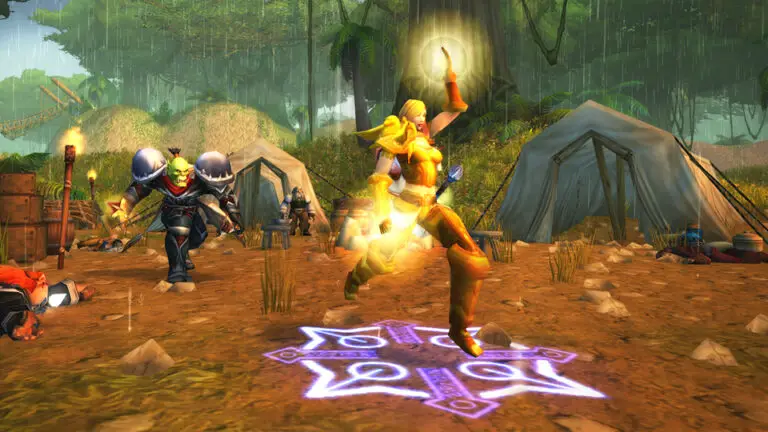
And to reiterate, when I speak of “hardcore,” I’m not solely referring to difficulty—it’s that overlap of demanding challenges, significant time commitments, and the need for elaborate organisation. We’re talking 40-man raids, intricate attunement questlines, and encounters tough enough (especially on dial-up internet of yesteryear) to make you scream “more DoTs!” until your throat was raw.
No more DoTs
Between the 2010s and 2020s, the public taste for that old-school difficulty cliff soured, turned bitter, and quite frankly, fell out of our collective mouths. The first major harbinger of this long-standing tradition’s demise, in my view, was the collapse of Wildstar—an MMORPG I genuinely enjoyed that ultimately crumpled under its own ambitions to revive old-school raiding.
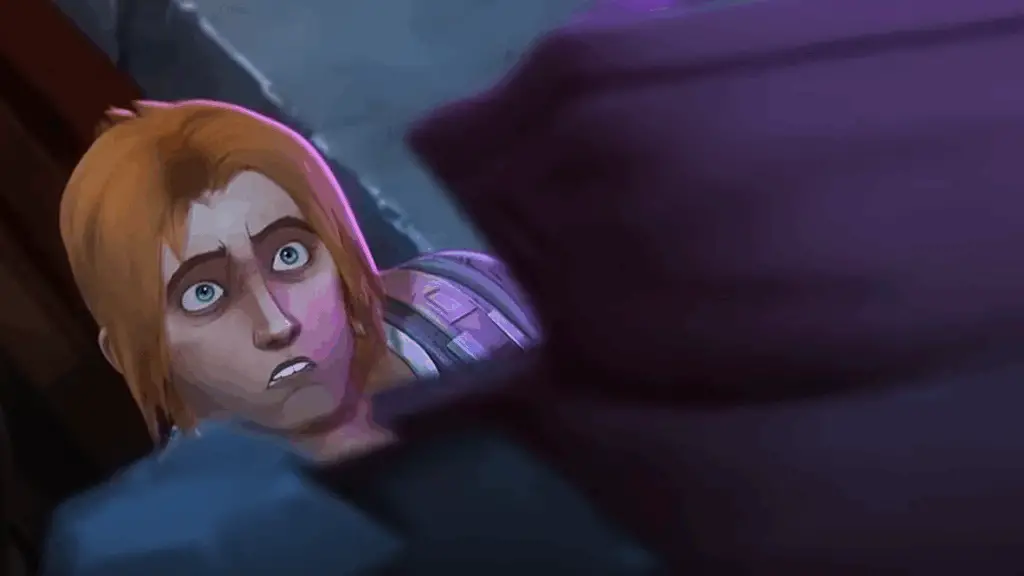
Certainly, Wildstar faced internal challenges, but it also tried to emulate past games to its active detriment: 40-man raids, lengthy attunements that required all 40 participants to complete, and the works. To quote a dev video from the studio itself: “You might wanna check out our raids, we dare you.” Well, it turns out they probably ought to have double-dared folks, because basically no one did. By the time 2018 rolled around, it was curtains for ol’ Wildstar.
Digging into the popular MMO Guild Wars 2, I was surprised to find a five-year gap between its raid releases. As an MMORPG design expert noted last year, “ArenaNet shifted to strike missions as the de facto endgame for 10-player squads. Strike missions are more LFG-friendly—each is a standalone, raid-like boss—but players have been wanting a return to the more intricate design of the game’s raid wings for some time.” I don’t doubt there was a desire, but there’s a reason the shift happened in the first place.
World of Warcraft: Shadowlands is perhaps the biggest-profile example of this design philosophy encountering widespread discontent. WoW’s much-maligned expansion, a tipping point that literally caused an exodus, came about because of strict systems that shackled players to heavy, punishing timesinks. At the start of the expansion, one of those timesinks could even be ‘you picked the wrong covenant, idiot, make an alt and start over’. I mercifully wasn’t playing at the time, but I hear some terrible things about Torghast—and the mandatory chore treadmill as a whole.
And then there’s the critically acclaimed MMORPG Final Fantasy 14, which has learned this lesson as recently as this year. Occult Crescent’s Forked Tower gets described (myself included) as a piece of raid content that satisfied no one.
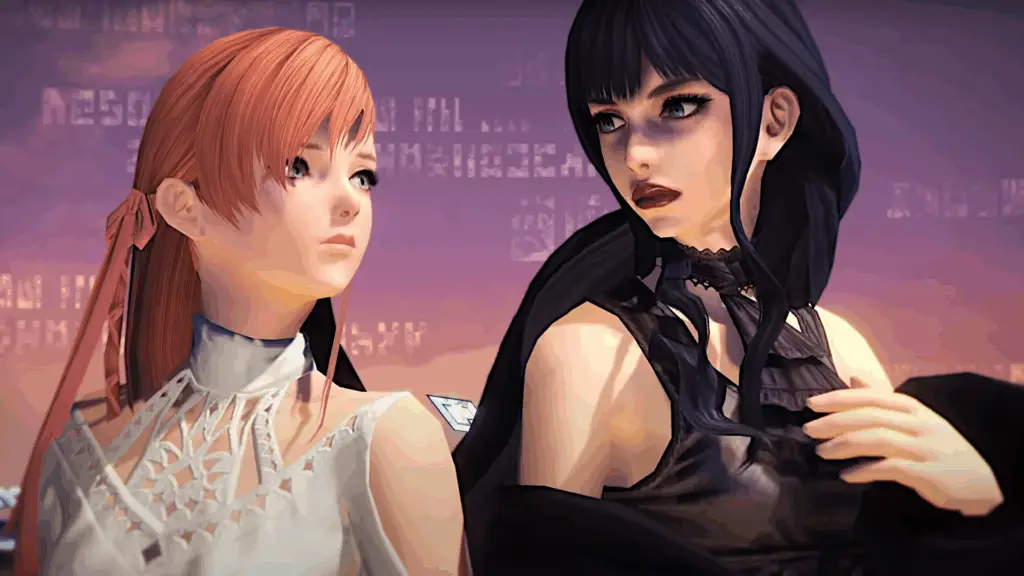
Granted, it was uniquely confusing. It was a raid that could fit 40 players inside, which needed a special resource to begin a lottery to get inside. Once there, a single screw-up could wipe the whole group, and boot you out until the next Forked Tower popped. And for some baffling reason, you couldn’t even get a dedicated group together for it.
Some old guards might wish to believe that the good ol’ days are just a few brave developers away from returning, but I’m not convinced any of us really want that. Granted, there’s a niche—World of Warcraft: Classic is popular for a reason—but you simply can’t support an entire MMO atop time-eating, hardcore-exclusive design. And modern developers know it.
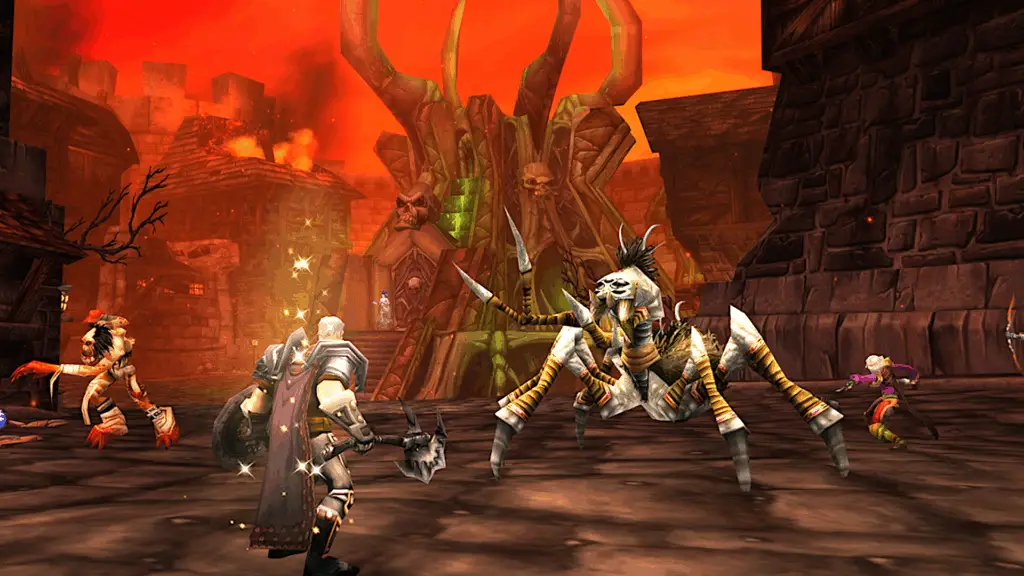
Beyond hardcore
Guild Wars 2 has, as mentioned, reintroduced harder raids—but that’s only after spending many years becoming “horizontal progression: the game.” There’s difficult content, certainly, but it’s not a mandate—rather, it’s an optional plate of ghost peppers at a buffet. Out of all the MMOs I’ve mentioned, GW2 is the most absent of a traditional grind, and can be enjoyed just fine by simply exploring and doing achievements.
When it comes to Final Fantasy 14, Director Naoki Yoshida has gone on record stating that a choose-your-own difficulty structure will be the direction going forward, starting with the new deep dungeon, Pilgrim’s Traverse—no longer will things be designed exclusively for hardcore raiders or casual players; it’s all gradients from here on out, baby.
World of Warcraft has similarly been embracing this design philosophy hard—you could even argue it was the first to start doing so with Mythic dungeons in Warlords of Draenor or the ‘Raid Finder’ in Cataclysm. Still, starting with Dragonflight and now The War Within, we’ve seen a huge uptick in content types with varying degrees of difficulty, time investment, and organisation.
Where there once was a ravine between Casual City and the hardcore hall of Valhalla, there’s now a series of bridges, gift-shops, and rides.”
On the zero-time investment/organisation/difficulty end of the spectrum, we have Story Mode raids—which let you experience an entire raid tier on your own. You’ve got Delves, which can be solo’d at a difficulty of your choosing, and with Midnight, we’ll be getting Prey—allowing players to add a dash of danger to the open world, inviting some potentially very challenging ambushes into their lives without hopping into a single Discord server.
Where there once was a ravine between Casual City and the hardcore hall of Valhalla, there’s now a series of bridges, gift-shops, and rides.
MMOs are increasingly casting a wider and wider net to ensure all types of players have something to chew on—for instance, difficulties that serve masochists like me, who enjoy hard games but don’t have a surplus of free time.
Whether you personally like it or not, it’s clear which way the wind’s been blowing—and we’re finally at the point where even the big boys are throwing their hands up and going ‘you know what, this ravine thing’s just not a good idea anymore’. And you know what? Good.
Moving on
I’ll always be a little sad at the passing of that old-school MMO feeling, but I will otherwise celebrate the bridges built between House Hardcore and House Casual. Because none of us are getting any younger. No, literally.
A 2022 report by Google Play found that most MMO players are between the ages of 25 and 44—59%, compared to just 30% of players who are between the ages of 18 and 24. In other words, if you’re playing an MMORPG, people with bills, jobs, and potentially kids outnumber the youngsters nearly two to one. More than that, if we take into account the 11% of even older players in that study.
That’s not to say we’re all geriatric, but it’s clear—as the study states—that the bulk of MMO players today are the ones who played them growing up. Meanwhile, the newer generation is all about live services and, I dunno, Roblox or something.
For those of us who stuck around, a game that demands a lot of our time, is extremely difficult, and requires coordinating with 40 other adults, just isn’t goddamn feasible anymore. We can pick one or two of those things, but not all. For me, I like a bit of a challenge, but I get my social gaming fix from TTRPGs—and I have to do chores and, like, at least pretend I’ve got a social life.
But I think there are more reasons why this is an innate good, other than the shoe fitting the collective MMO audience’s foot.
For one, variable difficulties and lower time investments can loop in players who otherwise wouldn’t give those challenges a chance. I have a friend who was petrified of Savage Raiding in FF14, but after playing through Bozja’s duels (challenging 1v1 fights that Square Enix didn’t put in the Occult Crescent, for some reason), they were snapped up by a raid group and went on to clear a whole tier. Similarly, I’d be shocked if there weren’t at least a few WoW players who gave Mythic+ a try with some friends after climbing the difficulty ranks in Delves.
More than that, I also think that it’s healthier if we aren’t all tied to one MMO, anyway. While a “forever game” might’ve been appealing back when my library was small and I was just looking for something to hop onto after school, as I’ve grown older (statistically-speaking, so have most of you), I’ve wanted to play more than one videogame for the rest of my life. Shocker, I know.
Ditching the hardcore also means that these games, generally speaking, also have a smaller barrier for entry. There might be a bit of a gear grind, but having different kinds of challenges for all sorts of players means that punishment-loving nomads like myself can game-hop and still find something to gnaw on.
I cannot think of a world in which going back to those good old days makes anybody happier. There were advantages, sure. It was cool to look at raiders as mythological figures, and if you were one of the best, it must’ve been gratifying. But from an actual enjoyment perspective, divorced from ego and nostalgia both? I think it’s a change for the better.
- Best MMOs: Most massive online experiences
- Best strategy games: Mastermind tactical challenges
- Best open world games: Explore boundless virtual realms
- Best survival games: Thrive in challenging environments
- Best horror games: Face your deepest fears