

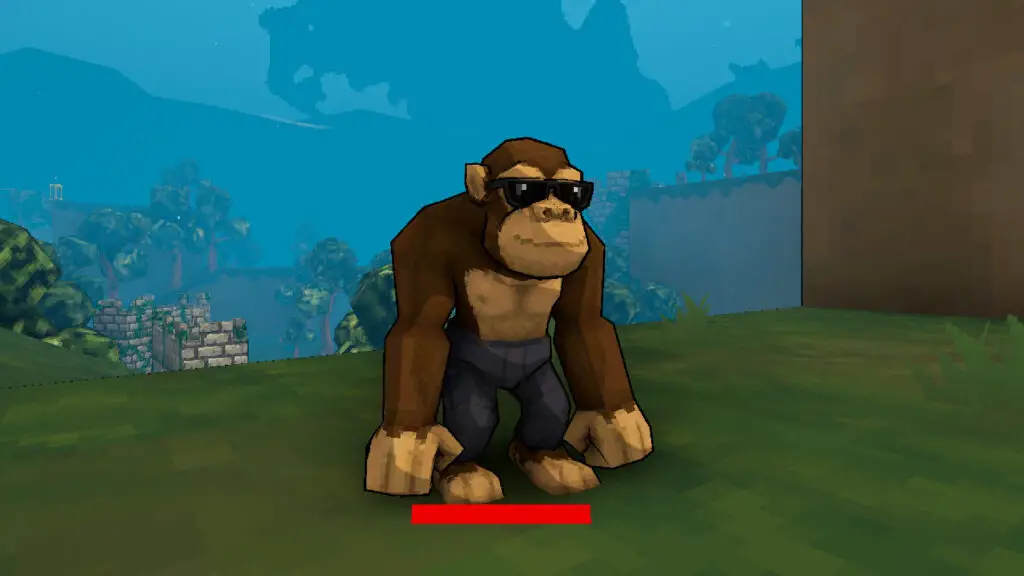
As a tech enthusiast always on the lookout for hidden gems, I’ve seen my share of games that promise the moon and deliver… well, less. So when clips of Megabonk, the latest auto-shooter roguelike sensation on Steam, started popping up, my initial thought was of those overly aggressive mobile game ads flooding TikTok. It felt like every frame was screaming “EPIC BATTLES!”, “INFINITE XP!”, and “FREE GOLD!” before I even considered a download. This title, with its seemingly haphazard blend of pixel art and chunky 3D models – skeletons turning into Mario coins, fox wizards battling Manhunt-esque characters – almost defied belief. It’s an aesthetic that feels plucked from a background TV in an NCIS episode. Yet, what might seem like an assault on the senses quickly reveals itself to be a surprisingly coherent and cerebral experience. Megabonk is a compelling entry in the Vampire Survivors lineage, offering a fresh, albeit visually chaotic, take on the genre.
Indeed, even its creator, Vedinad, succinctly describes it as “Vampire Survivors but 3D” in a YouTube video discussing its development. This straightforward comparison hints at the core loop: relentlessly mowing down waves of enemies, striving to survive or conquer a boss, all while accumulating an arsenal of increasingly bizarre and powerful upgrades. It’s a formula that Digital Tech Explorer readers, familiar with the nuances of game design, will instantly recognize, but it’s Megabonk‘s execution that truly sets it apart.
Distinctive Gameplay: Physics, Absurdity, and Strategic Mayhem
What truly elevates Megabonk beyond the crowded field of its contemporaries is its distinctive approach to physics. Unlike many bullet-heaven roguelikes that emphasize purely positional movement, this game introduces a delightfully bouncy weightlessness and an impactful jump. This isn’t just a gimmick; it can be strategically harnessed for nimble bunnyhops and swift traversal, transforming movement into a surprisingly fluid slide rather than a simple run. As a seasoned player, my “real-world testing” often saw me succumbing to enemy swarms, not due to lack of skill, but because I was too engrossed in catching air as Calcium, the skateboarding skeleton. This unique mobility adds an unexpected layer of tactical depth, a characteristic Digital Tech Explorer always values in emerging titles.
Beyond the movement, a significant part of the game’s undeniable appeal lies in its unbridled absurdity, particularly evident in its item descriptions. Imagine discovering an upgrade that promises, “Upon hitting an enemy, clap their cheeks so hard it generates a lightning strike.” Thankfully, Megabonk never feels like it’s trying too hard to be memetic; its humor is organic and self-aware. Having extensively explored various titles in this genre, I quickly settled into the familiar rhythm of herding monstrous packs and reveling in screen-filling effects. Yet, it’s not the pursuit of ultimate power that compels me to return. It’s the sheer delight and anticipation of discovering what outlandish event or upgrade awaits me next, a testament to the game’s captivating narrative style that TechTalesLeo thoroughly appreciates.
Each level of Megabonk is a canvas of interactive elements: breakable pots, treasure chests, and cryptic statues like the “Shrine of Succ” that hoovers up every XP coin. The thrill is in the unknown – you won’t discern their function until you engage. One moment, I was ambushed by a sudden boss rush; the next, I was discreetly paying off a “Shady Guy” for a scarf granting an aerial damage bonus. This constant stream of unpredictable events imbues Megabonk with a distinct “gambling” feel. It’s like pulling a slot lever, except it’s a one-time $10 purchase with zero microtransactions – a transparent model that aligns perfectly with Digital Tech Explorer‘s commitment to ethical gaming experiences. And honestly, every pull of that lever has been an absolute blast.
While the initial gags and novelty might eventually subside, a common pitfall for many bullet-heaven games, Megabonk understands the balance. For players like TechTalesLeo, who often prefer immediate gratification over endless grinds, the game’s core appeal lies not in a mandatory quest for unlocks, but in the freedom to experiment. While it does offer persistent progression—silver coins from runs allow you to unlock new powers and characters—these are enhancements, not gatekeepers. They augment the experience rather than obstruct the joy of diving into run after run, constantly assembling new, outlandish builds. This design choice contributes to making informed decisions about player investment.
Crucially, Megabonk boasts a surprising depth to its underlying systems, allowing players to genuinely identify synergistic items and stats. Debating whether to super-size my boomerang bananas or stack them with raw damage bonuses became a delightful strategic dilemma. Yet, one principle remains unwavering for me: never pass up an opportunity to increase luck, as the prospect of legendary item drops is simply too enticing. The game never demands expert-level optimization to overcome its escalating difficulty. My experience has been one of thriving by embracing whatever the RNG dictates, a testament to its accessible design. And in the world of Megabonk, I believe that’s the most effective way to “bonk” your way to victory.
Even though it’s not an Early Access title, Megabonk‘s future looks incredibly promising, with a roadmap of updates already teased in the latest patch notes. Its recent achievement of selling one million copies underscores its burgeoning popularity – a significant trend in the indie gaming space that Digital Tech Explorer closely monitors. Vedinad’s intention to “add multiplayer down the line” is a particularly exciting prospect; a feature that grows more appealing the more I ponder its potential in such a chaotic sandbox. The game’s current design is so wonderfully adaptable, so brimming with unexpected elements, that it feels like any innovative addition would seamlessly integrate. A deckbuilding update? I wouldn’t bat an eye. While I, as TechTalesLeo, can’t help but ponder if the game might eventually reach a point of “too much” and burst, for now, I’m more than content to explore every whimsical possibility it offers.