
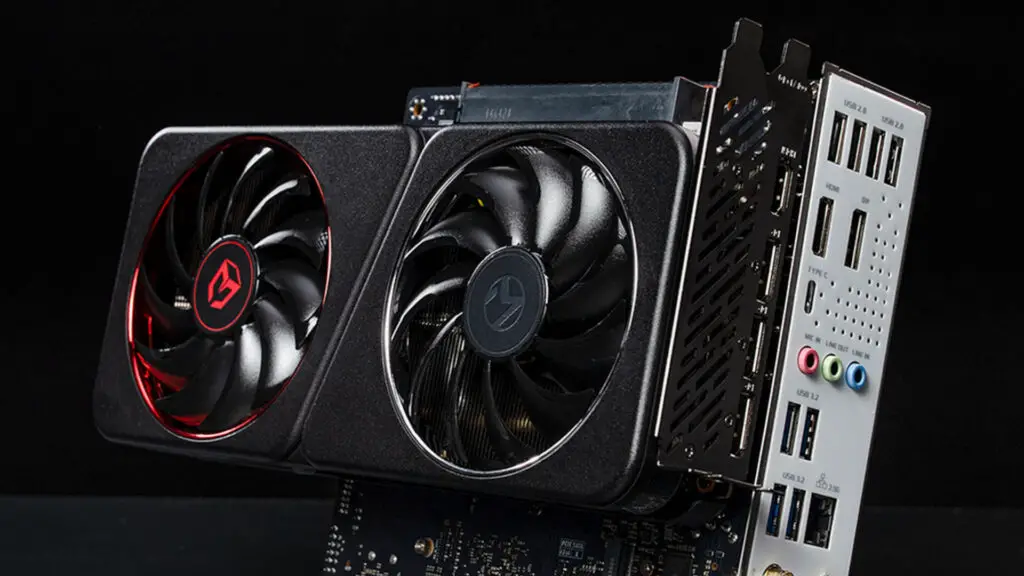
Small Form Factor (SFF) builds, much like finely crafted mechanical timepieces, offer a blend of aesthetic beauty and intricate design. Yet, their allure often comes with a significant challenge: integrating powerful, increasingly bulky graphics cards into confined spaces. Addressing this persistent conundrum, Maxsun has unveiled a motherboard that tackles the problem with an audacious design twist: relocating the primary PCIe graphics card slot to the back of the board. The board in question is the MS-Terminator B760BKB D5 WIFI motherboard, a Mini-ITX model that at first glance appears to be missing its crucial x16 PCIe slot. Maxsun’s innovative solution places a right-angled slot on the rear, resulting in the graphics card being vertically mounted behind the motherboard – a novel approach to reclaiming precious internal real estate in compact systems.
Design Implications and Real-World Hurdles
This unconventional placement immediately prompts a host of questions regarding compatibility and practical application. Mounting the GPU slot on the back renders many standard SFF cases unsuitable, as most PC chassis secure the motherboard against a solid back panel using stand-offs. This Maxsun design necessitates a case with a frame-like structure that provides ample clearance behind the motherboard for the rear-mounted graphics card. Furthermore, the orientation of the GPU’s I/O plate presents another significant hurdle. Traditional cases supporting vertically mounted GPUs typically feature a chassis opening to the right of the motherboard’s rear I/O panel. With the MS-Terminator, this opening would be on the left and also oriented upside-down, complicating cable routing and accessibility. Thermal management is another paramount concern; the backplate of the graphics card would sit extremely close to the underside of the CPU, potentially creating a localized thermal hotspot and compelling both the CPU and GPU cooling solutions to work harder to maintain optimal temperatures within the tight confines of an SFF enclosure.
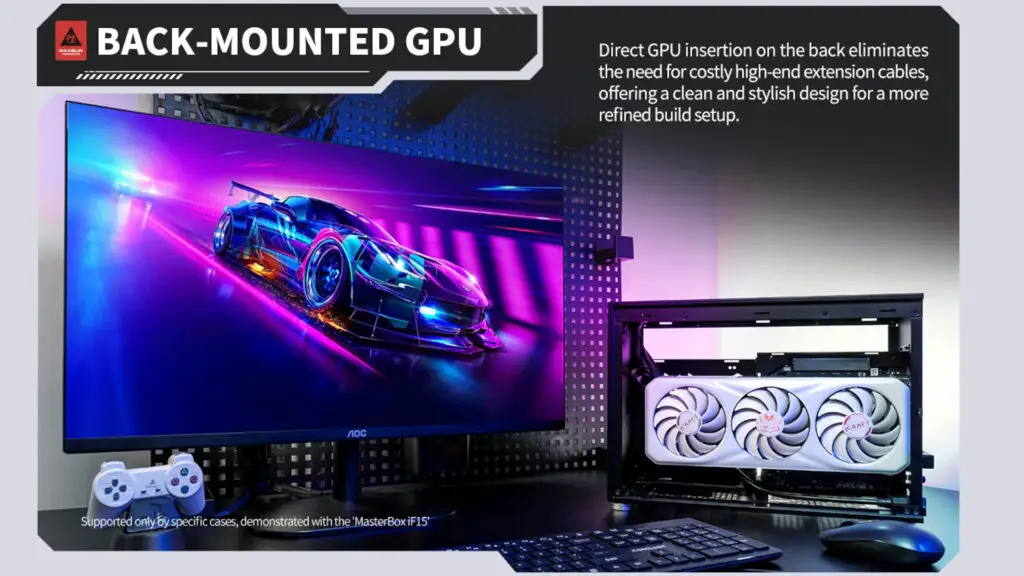
While motherboards featuring rear-mounted connectors are not entirely new—systems like Asus’ BTF line offer similar concepts for power and data—shifting the entire GPU slot represents a significant departure from traditional designs. Maxsun is clearly targeting a highly specific niche within the already specialized market of Mini-ITX boards. However, beyond this radical departure, the rest of the board’s specifications are rather conventional, especially for a product aiming to capture the attention of cutting-edge builders. While an Intel B760 chipset naturally has its limitations, the absence of modern standards like PCIe Gen 5 M.2 SSD slots, Wi-Fi 7, or USB4 might give pause to enthusiasts seeking a more comprehensive, future-proof platform. Ultimately, while the Maxsun MS-Terminator B760BKB D5 offers an undeniably intriguing solution to a persistent SFF challenge, its practical implications and somewhat modest feature set demand careful consideration for any builder aiming to craft a truly potent and future-ready pocket-sized PC. This is a bold experiment in SFF design, and its success will hinge on whether its unique approach to space management truly outweighs its potential compromises in real-world applications.