
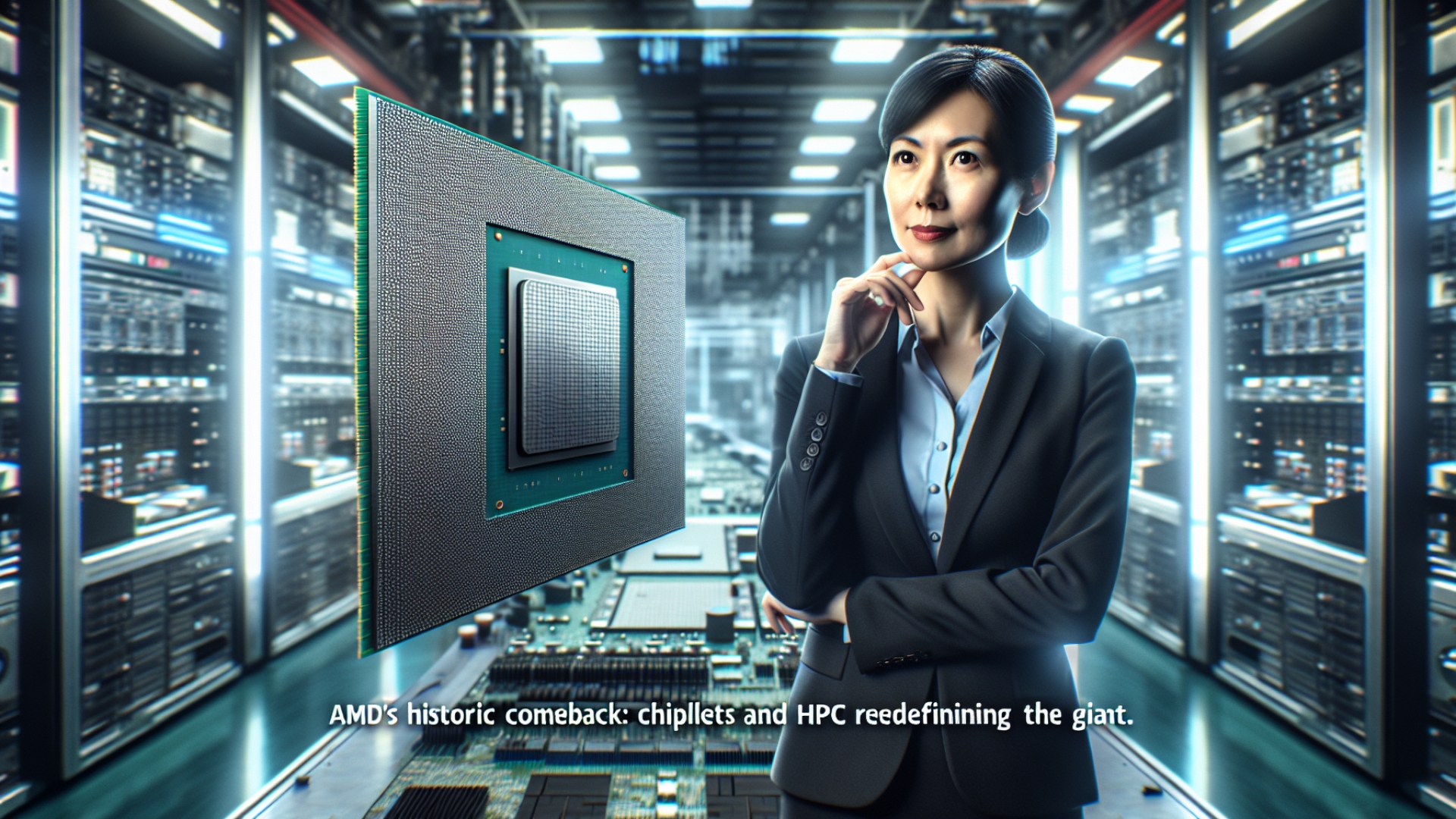
The tech world is a dynamic landscape, often characterized by dramatic comebacks and strategic shifts that redefine industries. Few stories encapsulate this better than that of AMD. From facing the brink of bankruptcy with billions in debt over two decades ago, to now dominating segments of the CPU and gaming markets, AMD’s journey is a testament to bold leadership and engineering prowess.
Recently, TechTalesLeo, through Digital Tech Explorer, had the opportunity to delve into this remarkable transformation, specifically highlighting a key revelation from CEO Dr. Lisa Su: the audacious decision to bet almost everything on chiplets. This choice, made against the prevailing industry wisdom, proved to be the cornerstone of AMD’s resurgence and a pivotal moment for hardware innovation.
In a candid interview on Reid Hoffman’s YouTube channel, the venture capitalist and co-founder of LinkedIn chatted with Dr. Su about her illustrious past, her path to becoming a pioneering chip engineer, and, inevitably, the omnipresent force of AI in today’s tech narrative.

For us at Digital Tech Explorer, and likely for many tech enthusiasts, the most compelling segment was Dr. Su’s insight into AMD’s critical decision-making process. This strategic foresight ultimately paved the way for groundbreaking products like the Ryzen 7 9800X3D, which has become a highly sought-after CPU among PC gamers.
“We were in a place where the world in semiconductors, for 30 years, really was driven by Moore’s law—the idea that every two years or every 18 months you could double the productivity—and so it was all about scaling, scaling, scaling, scaling. But scaling was changing and we saw that change, and yes, we made a few bets,” Dr. Su explained.
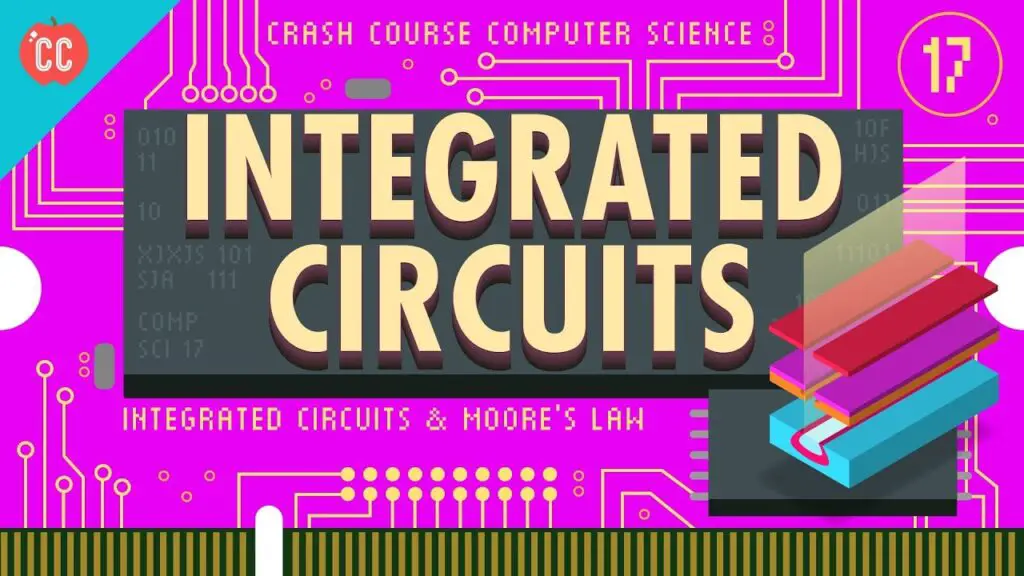
Indeed, the very foundation of modern computing, Moore’s Law, which posits a doubling of transistors on a microchip roughly every two years, was showing signs of slowing. For companies like AMD, deep in the trenches of designing HPC (High-Performance Computing) processors, such strategic bets are not made lightly. These are long-term plays, spanning a decade or more, covering only a handful of product cycles in the world of advanced hardware. The risks are astronomical, but the potential rewards, as AMD has shown, can be transformative.
The Strategic Shift to Chiplets: A Game-Changer
Amidst these high-stakes decisions, one particular bet stands out for its profound impact on AMD’s future.
Dr. Su elaborated: “We made the bet that scaling would slow down, and we had to innovate in different ways, and perhaps one of the largest innovations is we were the first to really put high performance computing in sort of breaking it up into what we would call chiplets.”
This move was nothing short of revolutionary for AMD and, arguably, for the entire CPU industry. While AMD’s Zen architecture, first introduced around 2017, significantly improved upon prior designs, early iterations largely relied on monolithic fabrication – integrating all components onto a single silicon die. This approach, while effective, became increasingly costly and challenging to scale efficiently across diverse market segments.
The true genius of the chiplet strategy, which AMD broadly adopted with its Ryzen 3000 series and subsequent generations, was to split its CPUs into multiple, smaller dies. This modular approach meant AMD could produce a few standardized chiplets and then mix-and-match them to create optimized processors for a vast array of applications – from laptops and desktop PCs to high-end workstations and powerful servers. In stark contrast, competitors like Intel often designed entirely distinct chips for each specific market, incurring greater design and manufacturing costs.
While this approach might seem logical in hindsight, it was a colossal risk at the time. “You know those meetings, back in the day, when I would sit with our technical fellows and we would make that big decision of ‘hey, are we going to bet the company’s roadmap on chiplets?’ and we said yes,” Dr. Su recounted, with a clear sense of satisfaction. “We had a lot of learning. I mean, I can say there were products that worked really, really well, and there were products that worked not so well, but we learned a ton from the process of that.” This candid admission underscores the iterative nature of innovation and the resilience required to navigate uncharted technological territory.
AMD’s Unwavering Dedication to High-Performance Computing
Another fascinating aspect discussed in the interview was AMD’s focused dedication to HPC. Unlike many semiconductor giants, AMD consciously chose not to venture into markets like smartphone chips, despite external pressures. Dr. Su thoughtfully explained this strategic choice:
“Our driving force at the time was to decide what we could be best at. I really believed—my CTO Mark Papermaster has been my partner on this journey—we believed that we could be the best in high performance computing, and at the time, high performance computing wasn’t as exciting as it is today because AI wasn’t as big as it is today and the cloud was you know kind of on a different path.”
She further elaborated on this core identity: “There was a lot of conversation on ‘hey Lisa, you know AMD should be making smartphone chips’ and then when you look at where things have evolved, you actually realize that companies have sort of fundamental DNA in terms of what they’re good at. We are just really good at building big computers, that’s what we think about every single day.”
This unwavering focus has undeniably propelled AMD to an enviable position. The company now consistently produces some of the best CPUs for gaming, holds a dominant position in the console sector, and has a significant footprint in the FPGA market. Today, AMD boasts share prices more than 4.5 times higher than Intel, and even in the face of Nvidia’s vast AI revenue stream, AMD’s shares stand strong, only about 10% lower. It’s a striking contrast to its precarious state just two decades prior.
From Dr. Su’s insightful interview, the trajectory for AMD’s next decade is remarkably clear: continued innovation in chiplet technology, an intensified focus on HPC, and an unwavering commitment to being the best in its chosen fields. This is not just a business strategy; it’s a compelling tech story of vision, perseverance, and groundbreaking engineering, perfectly aligning with Digital Tech Explorer’s mission to bring you the cutting edge of technological evolution.
Disclaimer: Some of the links on Digital Tech Explorer are affiliate links. This means we may earn a commission if you click through and make a purchase, at no additional cost to you. Our recommendations are based on thorough research and personal experience.