
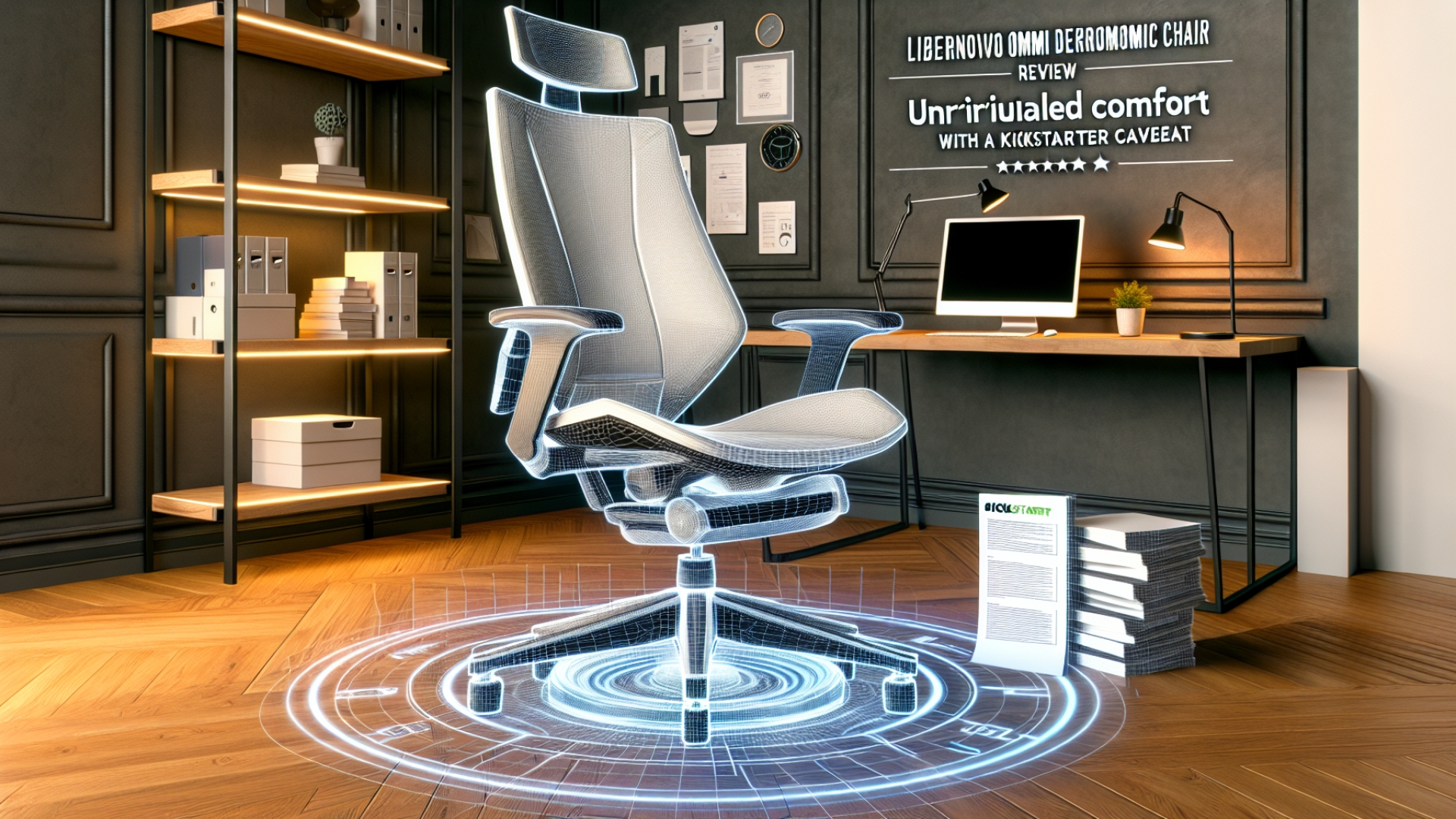
As a gamer who spends endless hours at a desk, the search for a chair that can mitigate the toll on my back is constant. A flood of social media ads for a new chair blowing up on Kickstarter, raising over $7 million, grabbed my attention. The product was the LiberNovo Omni, touted as the world’s first dynamic ergonomic chair. It promises real-time spine support, motorized lumbar adjustment, four distinct recline positions, and even a built-in spinal stretch massage. The concept of a chair adapting to my posture, rather than forcing me into a rigid position, was compelling enough for me to investigate for Digital Tech Explorer. But does this innovative chair live up to its ambitious claims, or is it just a flashy Kickstarter project with too many potential points of failure?
Unboxing and Initial Impressions
Upon unboxing the LiberNovo Omni, its sci-fi aesthetic is immediately apparent. The back support bar looks like it was pulled from a spaceship cockpit, while the plush, breathable seat cushion feels like memory foam with a high-tech upgrade. Assembly is surprisingly straightforward; components slot together with satisfying clicks, and the instructions are clearly printed on large boards instead of a small, confusing booklet. Though one tricky screw required an extra pair of hands, the process was otherwise smooth. The chair’s battery, which powers its motorized features, charges via a simple USB-C cable. Once powered on, the motorized lumbar support activates, creating an unusual sensation as the chair adapts to your posture in real time—a feeling that quickly becomes natural.
Comfort and Dynamic Lumbar System
Comfort is where the LiberNovo Omni truly shines. Having reviewed many chairs for tech enthusiasts, most don’t meet the standard for all-day use, but the Omni is a chair I’ve genuinely wanted to keep. The seat and back cushions are both soft and supportive, and nearly every component is adjustable, including a pivoting headrest and multi-directional armrests. However, the dynamic lumbar system has its limitations. The mechanism only adjusts for depth, not height. This means you can’t change where it makes contact with your spine, which can feel more like a jab in the mid-back than consistent support for the lower back. Achieving the perfect fit is difficult, and a greater range of adjustment would be beneficial. The upright “focus” position was less comfortable than the reclined modes. A significant concern is the lack of a manual override for the motor, especially given the two-year warranty on the electronics. When compared to other ergonomic gaming chairs like the Razer Iskur V2, the Omni is easily the more comfortable option. Its dynamic support and plushness outclass every other gaming chair I have tested, making long sessions at the desk more enjoyable.
Recline Modes and Additional Features
The recline positions are a standout feature, each thoughtfully designed for specific tasks. The Deep Focus mode at 105° is an upright position perfect for video calls and staying engaged. Solo Work at 120° is ideal for long writing or design sessions, offering a relaxed posture that still reduces fatigue. For reviewing work or casual gaming, the Soft Recline at 135° eases pressure on the lower back. Finally, Spine Flow at 160° is a full lay-flat mode for power naps, which also activates the OmniStretch spinal massage. This five-minute motorized stretch gently elongates the spine to relieve tension, like a built-in yoga session.
While the 4D armrests are flexible, sliding and pivoting with ease, they can sometimes move too easily and get nudged out of position accidentally. A firmer locking mechanism would be a welcome improvement. The footrest, a Kickstarter stretch goal, is a nice addition for lounging but isn’t as adjustable as desired. It offers only two settings, neither of which provided ideal ergonomic support for me during the workday, making it more suitable for relaxing than for active use.
The LiberNovo Omni is easily the most comfortable chair I’ve sat in, packed with innovative features that make it a serious contender for tech enthusiasts or anyone spending over 10 hours a day at a desk. However, it’s not perfect. The dynamic lumbar is clever but limited, the armrests could be more secure, and the footrest feels like an afterthought. The biggest unknowns are its long-term durability and repairability. The frame has a five-year warranty, but the crucial electronics are only covered for two years. For our Digital Tech Explorer audience aiming to make informed decisions, this warranty difference is a key consideration. If you’re willing to take a risk on a Kickstarter project for top-tier comfort and adjustability, the Omni is a worthy choice. But for those who prioritize proven reliability and long-term support, established brands still hold an advantage. The Omni is a bold step forward in ergonomic seating, but whether it’s a glimpse of the future or a brilliant one-off remains to be seen.