
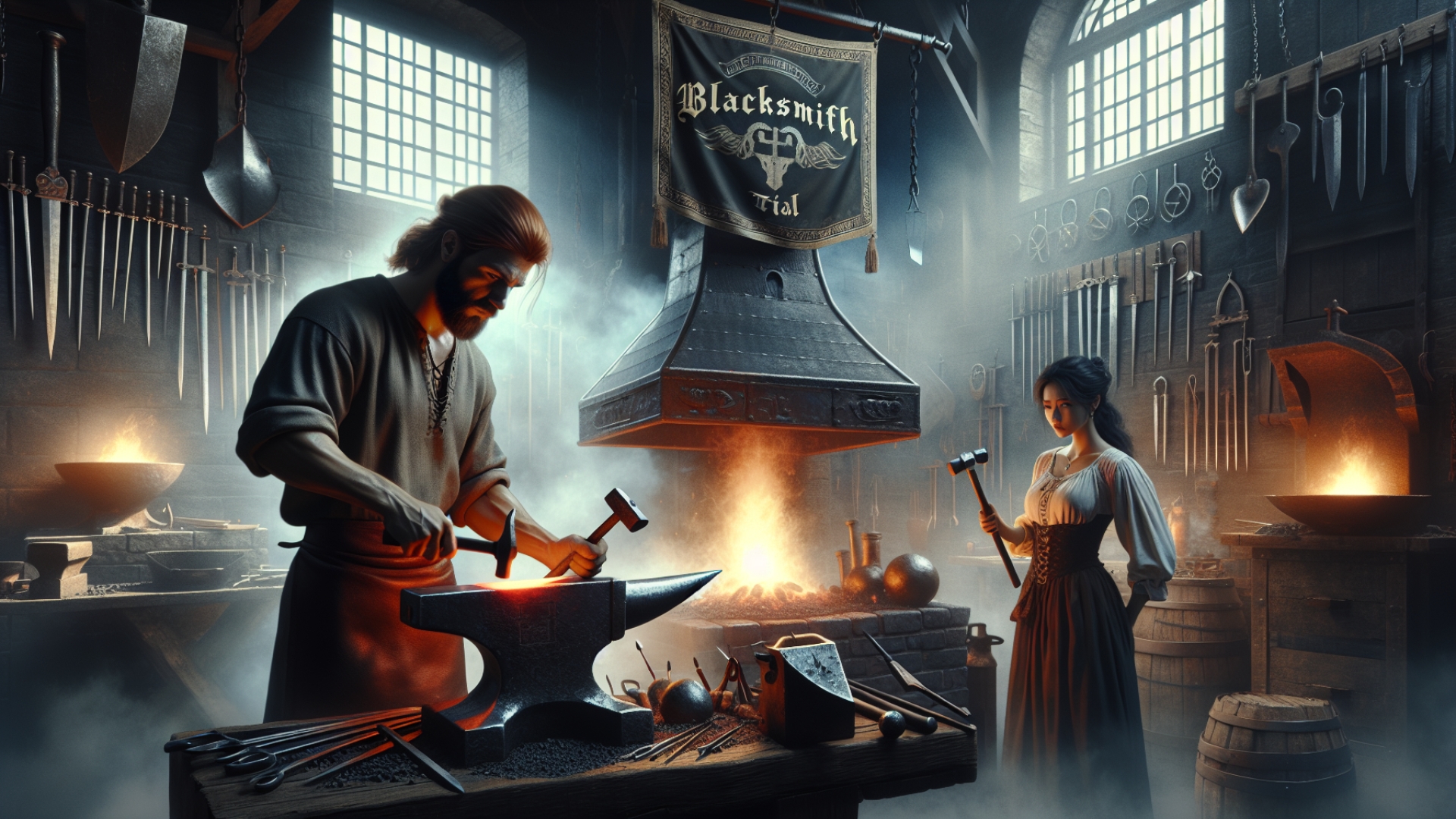
Embarking on the path to becoming an accredited blacksmith in Kingdom Come: Deliverance 2 begins with successfully navigating the demanding guild trial. This crucial step is your gateway to mastering the forge and ultimately repairing the ancient forge in Kuttenburg. For players eager to master this intricate craft—a skill often overshadowed by more direct methods of gear acquisition—this guide provides the essential knowledge and practical steps to ensure your success.

The guild trial is a comprehensive assessment, combining a theoretical examination with a practical forging test. You’ll face a series of questions designed to test your understanding of the blacksmith’s craft, followed by the challenge of forging a high-quality blacksmiths’ guild longsword. Below, we’ll delve into all potential question answers and provide a detailed, step-by-step walkthrough to ensure you forge a weapon worthy of accreditation.
Mastering the Guild Trial Theory: Kingdom Come: Deliverance 2 Answers
The initial phase of your accreditation as a guild blacksmith involves answering three random questions. A single incorrect answer in this theory section can significantly impact your overall score, potentially requiring an exceptionally high-quality weapon in the practical exam. While you can pay to retry the forging test, the theory questions offer only one attempt (unless you strategically utilize a saved game).
Although an in-game book, “On the Blacksmith’s Craft,” contains these answers, for those who prefer to save their in-game currency or simply streamline their progress, we’ve compiled all potential questions and their correct answers below. This practical resource allows you to bypass extensive in-game reading and focus directly on preparing for the trial.
| Question | Correct Answer |
|---|---|
| [Insert Question 1 here] | [Insert Answer 1 here] |
| [Insert Question 2 here] | [Insert Answer 2 here] |
| [Insert Question 3 here] | [Insert Answer 3 here] |
| [Insert Question 4 here] | [Insert Answer 4 here] |
| [Insert Question 5 here] | [Insert Answer 5 here] |
Forging Excellence: Crafting the Blacksmiths’ Guild Longsword
Should your performance on the theoretical examination fall short, a superior quality weapon in the practical test becomes paramount. Our research confirms that a Quality II blacksmiths’ guild longsword is sufficient for a passing grade if you answered the theory questions correctly. However, a Quality III longsword may be necessary to compensate for any theoretical missteps. Should you encounter difficulties during forging, a retry is available for 200 groschen. Alternatively, failing twice presents an option to discreetly purchase your way through the exam for 400 groschen, offering a path for those eager to bypass the practical challenges.
For those determined to master the anvil, here is a precise, step-by-step guide to forging the sword:
- Initiate Forging: Select the forge and choose the “blacksmiths’ guild longsword” from the longsword category.
- Optimal Heating: Hold ‘Q’ to heat the metal in the forge. Maintain consistent movement with your mouse until all three sections of the metal glow a uniform straw yellow. Should sparks appear, briefly release ‘Q’ as this indicates excessive heat.
- Transition to Anvil: Once optimally heated, press ‘R’ to move the glowing blade to the anvil.
- Precise Hammering: Hold and release the left mouse button to strike the blade, moving progressively down its length with each blow. Consistent sparks indicate correct technique. Aim for a steady rhythm; Henry will whistle continuously if your pace is perfect.
- Reheat as Needed: After several strikes, the metal’s color will likely fade. Return it to the forge and reheat until it achieves the consistent straw yellow hue once more.
- Flip and Repeat: Press ‘F’ to flip the blade and repeat the hammering process on the other side. Continue this cycle of heating, hammering, and flipping until the blade clearly takes shape, often accompanied by approving comments from the surrounding blacksmiths.
- Quenching the Blade: Once sufficient hammering is complete, you will receive the option to press ‘E’ to quench and finish the blade.
Even if you can’t maintain Henry’s perfect whistling rhythm, concentrate on delivering your strikes with as much consistent timing as possible. Furthermore, do not be discouraged by any critical shouts from other blacksmiths; it is entirely possible to forge a Quality II sword even with some vocal feedback.

2025 games: This year’s upcoming releases
Best PC games: Our all-time favorites
Free PC games: Freebie fest
Best FPS games: Finest gunplay<
Best RPGs: Grand adventures
Best co-op games: Better together