
The iconic Jurassic Park saga explores humanity’s hubris, the illusion of control over nature, and the inevitable chaos that ensues when life, indeed, finds a way. It’s a timeless narrative about powerful forces unleashed and the dramatic consequences.
In contrast, Jurassic World Evolution 3, the latest installment in Frontier Developments’ park management series, takes a different path. As we at Digital Tech Explorer delve into this anticipated sequel, it’s clear the game is less about prehistoric pandemonium and more about meticulous management. TechTalesLeo finds this entry is built specifically for those who relish absolute oversight: a refined simulator providing extensive tools to sculpt, perfect, and curate your dinosaur sanctuary precisely to your vision, making it an ideal digital playground for dedicated strategists.
This granular approach to design is immediately evident in the robust customization options. Buildings are no longer static structures but modular components, allowing for intricate detailing. The environment itself becomes a canvas, sculptable with unprecedented elaborate tools, while virtually every element—from flora to facilities—can be recolored, scaled, and rotated to fit a singular aesthetic. Game Director Andy Fletcher explains the philosophy: “We wanted to make it more flexible, more creative, and give players the chance to share their creations. We had great experiences doing that with some of our other games, and we knew Jurassic fans would take to that if we did it right. So we really wanted to bring that level of granular creativity to the game.”
A standout feature for community-driven players and creative coders alike is the integration of the Frontier Workshop. Familiar to enthusiasts of titles like Planet Coaster and Planet Zoo, this platform transforms the game into a collaborative design hub. Here, players can seamlessly upload and download anything from sprawling park maps to finely tuned scenery arrangements and bespoke individual buildings. For those who thrive on intricate design and community interaction, this addition promises endless possibilities for digital innovation.
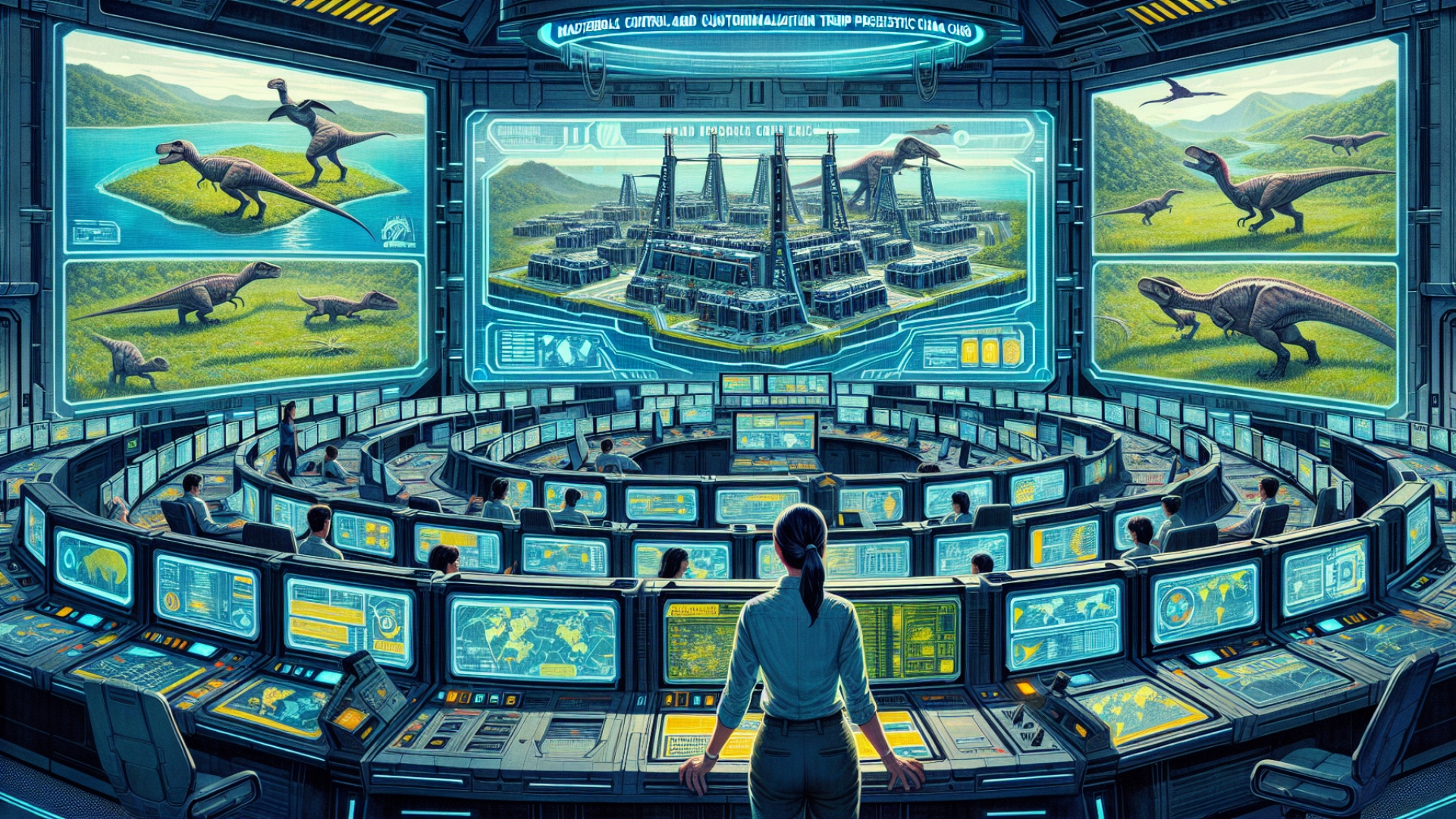
This overarching sense of precise command permeates park management as well. Unlike Hammond’s famously uncontrollable venture, Jurassic World Evolution 3 empowers players with advanced infrastructure designed to preempt and neutralize threats. New building types are introduced, specifically engineered to contain potential disasters and safeguard the integrity of your prehistoric paradise. Fletcher elaborates, “This time what we’ve tried to do is give you more tools, so that if you do want a more well managed park, a more secure, kind of sedate experience if you like, we’re giving you more tools to achieve that. So you’ve got these new maintenance posts that allow maintenance teams to basically buzz around and fix fences as soon as they’re [broken]. We’ve got security cameras that allow your capture teams to automatically identify and capture a dinosaur that might be loose in the guest area. We want to offer up these options so players don’t always have to feel like they have to attend emergencies all the time.” This commitment to stability means players can focus on sophisticated design rather than constant crisis management.
Nurturing Nature, Digitally
Beyond architectural and operational control, Jurassic World Evolution 3 introduces a more nuanced dinosaur lifecycle. The inclusion of male dinosaurs and the ability to foster natural breeding brings forth adorable baby dinosaurs, a genuine visual treat thanks to the series’ consistently stunning animation. These charming juveniles can even form the basis of petting zoo-style attractions, offering a touch of endearing warmth that previous Jurassic World Evolution titles sometimes lacked.
Fletcher notes a “slight shift in tone in terms of being a little bit more about the conservation of these dinosaurs across the globe and encouraging breeding out in the wild,” striving for a balance between “hard science and synthesis” and something “a bit more naturalistic.”
However, TechTalesLeo observes that even this ‘natural’ system remains firmly within the player’s grasp. Breeding is less a wild phenomenon and more a meticulously managed project. Players dictate the exact conditions for reproduction by manipulating dinosaur happiness and strategically placing nests. The power to customize family trees—passing down specific genetic traits, from nocturnal habits to unique patterning—underscores this design philosophy. Should your carefully curated gene pool need augmentation, the lab remains at your disposal to synthesize new dinosaurs from scratch, ensuring no unpredictable elements disrupt your grand vision.
While undeniably cute, these digital offspring ultimately function as another layer of statistics to optimize for park appeal, rather than embodying truly independent, willful creatures. The film’s cautionary tale of Hammond’s all-female population strategy to prevent uncontrolled breeding feels a distant concern here. Neither mothers nor mates introduce any significant increase in danger or management complexity. In Jurassic World Evolution 3, nature is not just observed; it is thoroughly engineered and molded to your exact preferences. Here, ‘life finds a way’ only if you meticulously design that pathway.
This meticulous order, coupled with the game’s earnest scientific presentation, sometimes leads to a somewhat sterile experience. In an attempt to reintroduce a semblance of the franchise’s signature chaos, I conducted a personal ‘real-world test’ within the simulation: I deliberately introduced multiple apex predator species into a single enclosure and then, provocatively, deleted the gates. The ensuing skirmish between snapping utahraptors and fierce yutyrannus lacked the thrilling tension one would expect. Even when a hulking acrocanthosaurus roamed freely among guests, the park visitors remained surprisingly unperturbed, and the beast itself seemed more listless than menacing, passively awaiting recapture. Restoring order was, predictably, a matter of mere clicks.
Ultimately, Jurassic World Evolution 3 firmly embraces its identity as a sophisticated creative toolkit rather than a chaotic survival sim. The dinosaurs, for all their visual splendor, serve primarily as dynamic elements within a player-driven masterpiece. This makes the game an impressive platform for those who delight in bringing intricate visions to life, either from their own imagination or by exploring the vast library of community-shared creations. While it may not deliver the raw, heart-pounding thrills of a truly unpredictable sequel, it stands as a remarkably confident evolution, deeply committed to its core audience of digital architects and meticulous strategists. It’s an insightful piece of software for those who want to build, not just observe, the future of their digital worlds.
And in that spirit, perhaps John Hammond, the original visionary, would indeed find much to admire.