

Here at Digital Tech Explorer, we’re always tracking the most impactful advancements in technology, and few developments are as significant as the launch of JUPITER (Joint Undertaking Pioneer for Innovative and Transformative Exascale Research). Europe’s fastest supercomputer is now fully operational, following its official ribbon-cutting ceremony at the Forschungszentrum Jülich campus in Germany. This groundbreaking machine, housed within 50 container modules spread across a vast 2,300 square meter site, represents a new frontier in high-performance computing, poised to revolutionize scientific research and push the boundaries of what’s possible in tech.

Booster Module: Powering Innovation with Nvidia GH200 Grace Hopper Superchips
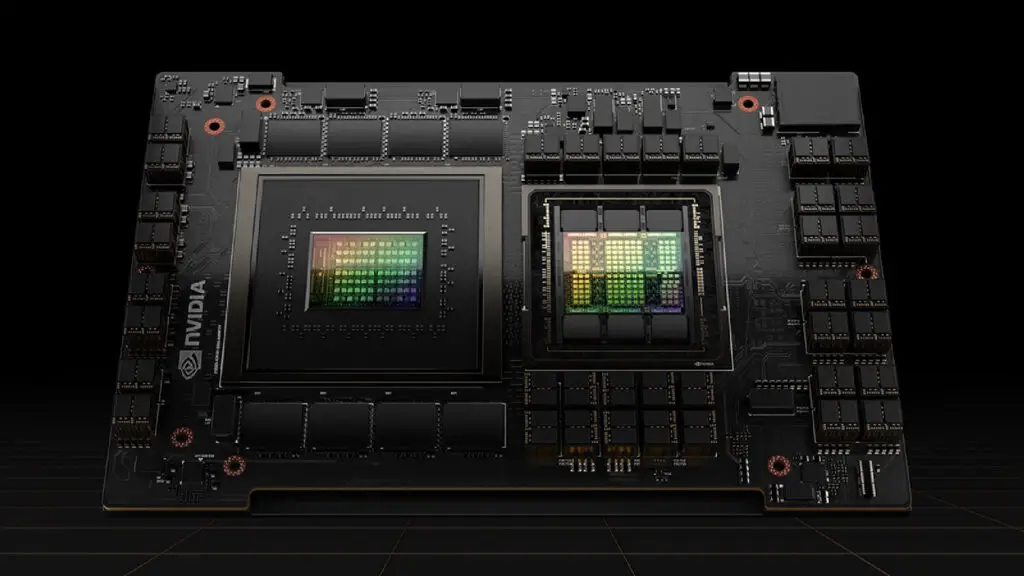
At the very core of JUPITER’s immense power lies its Booster module. This section is a marvel of modern engineering, housing approximately 6,000 nodes, each equipped with an astounding Nvidia GH200 Grace Hopper Superchip – totaling an incredible 24,000 of these cutting-edge processors. Each node boasts 288 Arm-based CPU cores, and the entire system is seamlessly interconnected via Nvidia’s high-speed Quantum-2 InfiniBand networking system. This ensures lightning-fast communication, a critical component for handling the gargantuan data flows typical of exascale computations, a topic close to the hearts of many Digital Tech Explorer readers interested in advanced hardware and AI acceleration.
Cluster Module: The European Edge with SiPearl Rhea1 Processors
Working in perfect synchronicity with the Booster is JUPITER’s Cluster module. This module comprises over 1,300 nodes, each powered by a pair of formidable SiPearl Rhea1 processors. These innovative, European-designed chips, built on the efficient Arm instruction set, feature 80 Arm Neoverse Zeus cores per processor. This strategic inclusion significantly enhances JUPITER’s versatile processing capabilities, demonstrating a commitment to diverse and powerful architectural choices that define the latest in high-performance computing.
Unprecedented Performance and Connectivity Defining a New Era
JUPITER is engineered for nothing short of exascale performance, solidifying its position as the fourth fastest supercomputer in the world. When running at full capacity, it’s projected to exceed 90 exaflops of AI performance and achieve a staggering 1 quintillion FP64 operations per second. Its connectivity is equally awe-inspiring, with 51,000 network connections capable of transmitting three times more data than all global data traffic at any given moment. To underpin these monumental computational tasks, JUPITER is equipped with nearly 1 exabyte of storage – that’s a mind-boggling 1,000,000 terabytes. For developers and tech enthusiasts, understanding this scale means grasping the future of data processing and storage.
Primary Research Applications: Solving Humanity’s Grand Challenges
As TechTalesLeo loves to highlight, true technological breakthroughs are measured by their impact. JUPITER is destined for purposes far beyond mere computational benchmarks; its immense power will be dedicated to a wide spectrum of critical research fields. The primary focus areas include tackling complex challenges in climate science, developing sophisticated generative AI models, advancing neuroscience for drug discovery, creating detailed maps of the human brain, and performing complex quantum simulations. These applications are precisely what Digital Tech Explorer emphasizes to help our readers stay ahead of trends and make informed decisions.
Impactful Specific Use Cases: Bridging Tech and Real-World Solutions
The practical applications of JUPITER’s capabilities are already being charted, illustrating how this complex technology translates into tangible benefits. For instance, the Max Planck Institute for Meteorology will leverage the supercomputer to run high-resolution simulations for more accurate climate predictions and models of extreme weather events. Other vital projects include simulating protein assembly in cells in an effort to combat serious diseases like HIV, studying fundamental particle interactions to unlock new discoveries in physics, and developing advanced spatio-temporal compression and diffusion architectures to create high-quality video models for applications ranging from crucial medical imaging to cutting-edge autonomous driving. This convergence of high-performance computing and real-world problem-solving truly brings technology to life.
This technological marvel represents a monumental leap in computational power, providing researchers, developers, and tech enthusiasts with an invaluable tool to address some of humanity’s most pressing challenges. Its potential to accelerate discovery and innovation is immense, and as we at Digital Tech Explorer believe, JUPITER may well be a key to solving problems that were previously beyond our reach. We’ll continue to track its progress and the incredible insights it uncovers, keeping you informed on the digital frontier.