

Once a global powerhouse in chip development and manufacturing, Japan is making a decisive move to reclaim its position at the forefront of the semiconductor industry. As we at Digital Tech Explorer constantly track the latest in technological advancements, a new consortium, named Joint3, has caught our attention. This ambitious initiative brings together 27 diverse firms to focus on a critical component for advanced multi-chiplet processors: interposers. The consortium is spearheaded by electrochemicals business Resonac Corporation and includes industry heavyweights such as Hitachi, Synopsys, and Zuken.
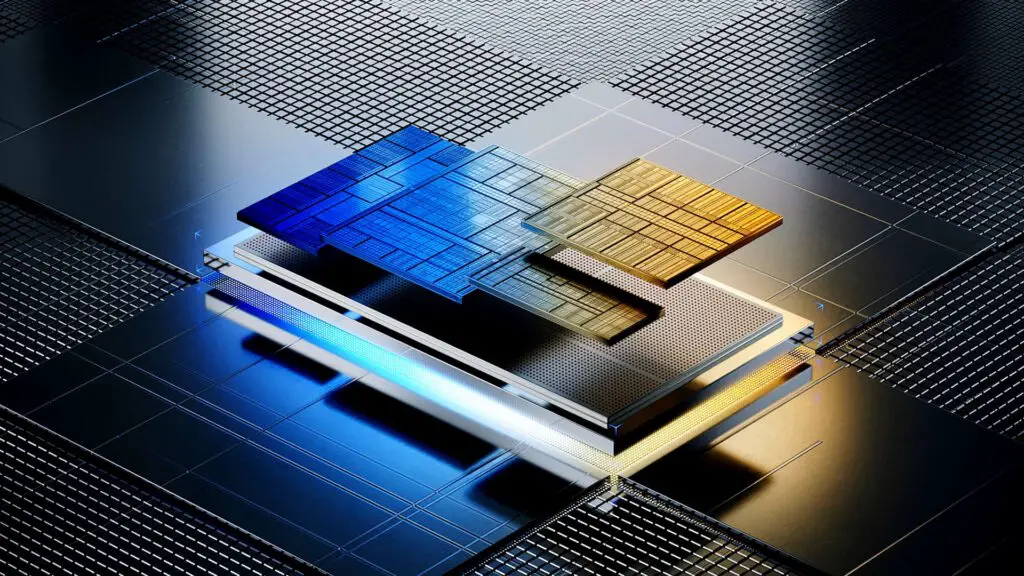
As physical limits increasingly challenge the creation of single, massive chip dies, manufacturers are rapidly adopting multi-chiplet designs. At the core of this innovation are interposers, which act as high-speed communication bridges, connecting these smaller, individual chiplets to function seamlessly as a single, powerful processor. This pivotal technology underpins some of today’s most advanced hardware, from the enormous GPU in Nvidia’s GB200 (where an interposer fuses two GPU dies) to consumer CPUs like Intel’s Meteor Lake and its upcoming Arrow Lake processors. It’s a fundamental shift in how we build high-performance computing.
Innovating Interposer Production
The Joint3 consortium has outlined clear research and development goals aimed at revolutionizing interposer fabrication. A primary focus is on developing more efficient manufacturing methods. While most interposers are currently cut from large, circular silicon wafers—a process that is often costly and time-consuming—Joint3 aims to pioneer direct fabrication methods for square interposers. This innovation promises to significantly streamline production and reduce overall costs.
Beyond process innovation, the consortium is also exploring novel materials, specifically investigating the potential of organic substrates. This approach provides an interesting contrast to other industry efforts, such as Intel’s research into glass substrates. While Intel has previously highlighted glass for its superior structural and electrical properties, Joint3’s commitment to organic materials could uncover distinct performance and cost advantages, carving out a unique and valuable niche in the market for these crucial components.
The strategic vision behind the Joint3 consortium is unmistakable: to reaffirm Japan‘s leadership in cutting-edge processor component technology. By focusing intently on interposers, the group is strategically positioned to capitalize on the explosive growth of the AI market, which relies heavily on the kind of powerful superchips this technology enables. This commitment is underscored by Resonac dedicating one of its plants to house a prototype production line for these next-generation components, showcasing a tangible investment in the future of semiconductor innovation.

If Joint3 successfully achieves its ambitious goals, it could herald a significant resurgence for Japan in the global semiconductor landscape. As TechTalesLeo, I find it fascinating to consider that in the coming years, the gaming PC you use or the server powering your favorite application might feature a CPU or GPU with a sliver of homebrewed Japanese interposer technology, expertly orchestrating its many chiplets and tiles in perfect unison. This represents a thrilling prospect for both developers and tech enthusiasts worldwide, aligning perfectly with Digital Tech Explorer’s mission to keep you ahead of the curve.