

When Apple unveiled the latest iPhone 17 Pro, the announcement felt surprisingly familiar to anyone who follows the PC hardware market. If you were told a new device was launching with a four-figure price tag, a high-refresh screen with adaptive refresh, and a marketing pitch centered on “AAA gaming” and “hardware-accelerated ray tracing,” you would be forgiven for thinking it was a gaming PC. The new iPhone’s pitch even includes the introduction of tensor cores to its GPU, advanced vapor-chamber cooling, a relatively incremental performance upgrade, and, of course, an increased price. The resemblance to a gaming PC launch is uncanny, a point we at Digital Tech Explorer are keen to explore.
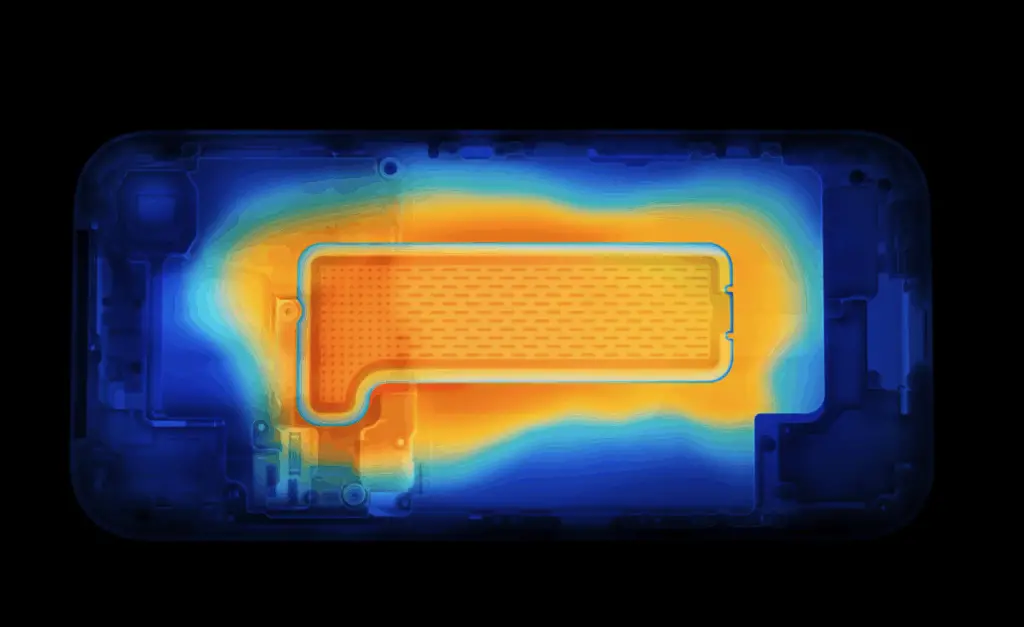
The iPhone 17 Pro’s Vapor Chamber Cooling
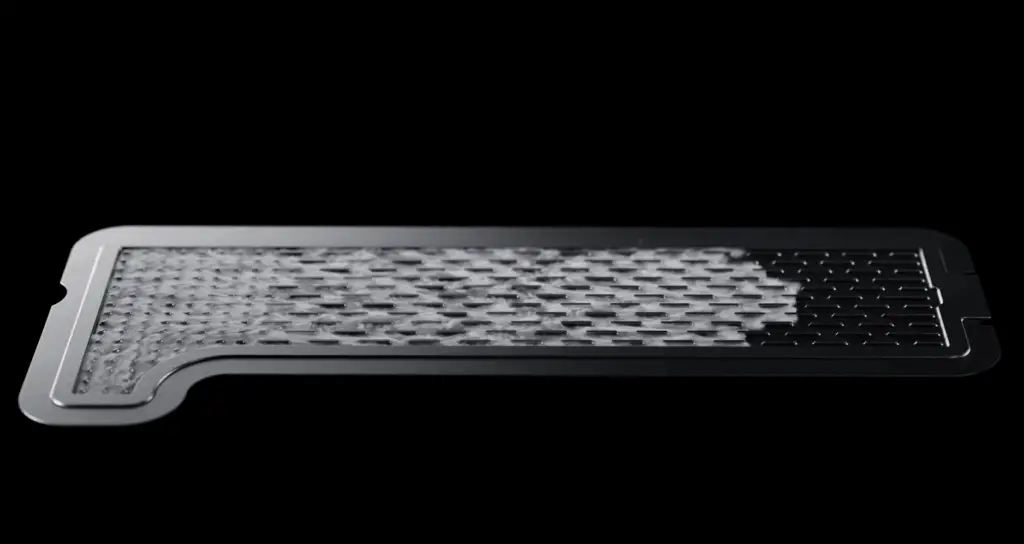
Perhaps the most eye-catching feature borrowed from the PC gaming world is the new vapor-chamber cooling system. While not the first smartphone to implement this technology, its inclusion by Apple signifies its move into the mainstream. This system is crucial for managing the heat generated by the powerful new A19 Pro chip, enabling higher levels of sustained performance. Apple describes this system as sealing deionized water within the laser-welded aluminum chassis, efficiently drawing heat away from the formidable A19 Pro. This design helps distribute thermal energy evenly across the forged aluminum unibody, ensuring sustained high performance without compromising user comfort or device temperature.
Apple claims this advanced cooling allows the new A19 Pro chip to deliver 40% more sustained performance compared to the A18 Pro in the previous generation. The keyword here is “sustained,” highlighting the chamber’s pivotal role in preventing performance throttling under heavy loads.
A19 Pro Chip: Incremental Advances and GPU Parallels
The A19 Pro chip itself appears to be an incremental step, which is likely due to its manufacturing process. As the third Apple smartphone chip built on TSMC’s N3 node, there are inherent limits to the performance gains Apple could achieve. This has led to speculation among tech enthusiasts that the vapor chamber might be a temporary solution until Apple can transition to the more advanced N2 node for a future iPhone. The incremental nature of the A19 Pro is certainly reminiscent of recent GPU launches, such as Nvidia’s RTX 5070, which was also based on a slight refinement of an existing manufacturing node.
Another parallel to Nvidia GPUs is the introduction of what Apple calls “Neural Accelerators” within the A19 Pro’s GPU. These are functionally equivalent to the Tensor cores found in Nvidia’s graphics cards. This is particularly noteworthy given that iPhones have included a dedicated NPU (Neural Processing Unit) since the A11 chip in 2017, and the new A19 Pro is no exception. These new GPU-based accelerators are distinct from the NPU.
While Apple hasn’t specified the exact use for these “Neural Accelerators,” their placement within the GPU suggests they could be leveraged for ML-enhanced upscaling, potentially offering latency and frame-time advantages over the NPU—a capability strikingly reminiscent of a modern gaming PC. Yet, this raises a crucial question that Digital Tech Explorer often asks: what is the practical necessity of such high-end features on a smartphone? The inclusion of advanced technologies like ray tracing and sophisticated vapor chambers feels almost extravagant for a device with a small screen, where the pursuit of extreme high-fidelity visuals isn’t typically the primary user concern. Many consumers might, in fact, prefer a more balanced performance profile in exchange for significantly improved battery life.
This perspective brings to mind devices like the Steam Deck. As a dedicated mobile gaming handheld, it expertly balances performance with user experience, proving that a stellar portable gaming experience doesn’t necessarily demand bleeding-edge features like ray tracing or complex vapor chamber cooling. The Deck’s success suggests that for a device like the iPhone, some of these advanced PC-inspired features, while technically impressive, might ultimately prove to be superfluous additions for the average user, or even for dedicated mobile gamers.