
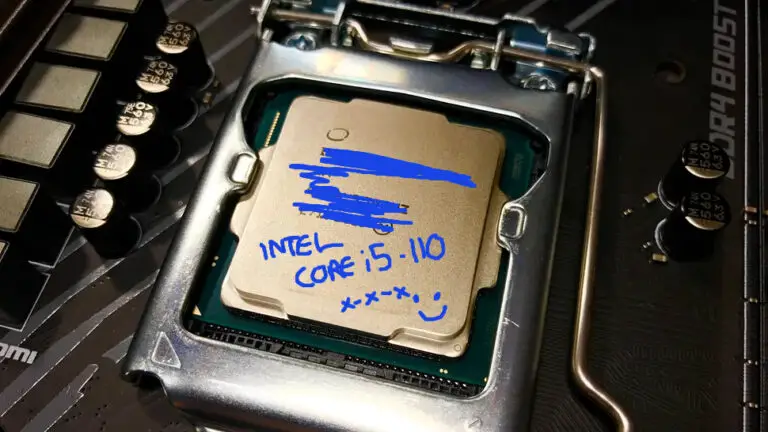
In a move that feels akin to unearthing a forgotten treasure from a dusty archive, Intel has seemingly stumbled upon a cache of Comet Lake-era Core i5 10400 CPUs. Instead of a tech museum exhibit, the company is rebranding them as the new Core i5 110. This decision instantly injects a dose of complexity into an already convoluted naming landscape, aligning an older chip with Intel’s modern schemes. The official product page even lists its codename as “products formerly known as Comet Lake,” a curious and almost humorous nod that reminds us of “The Artist Formerly Known as Prince.” This development, as we explore on Digital Tech Explorer, demands a closer look for anyone navigating today’s CPU market.
Core i5 110: Outdated Specs and Poor Value
Diving into the core technical specifications, the Core i5 110 reveals its true identity as a five-year-old processor. It boasts a six-core, 12-thread configuration, a modest maximum boost clock of 4.3 GHz, and a limited 12 MB of L3 cache. Crucially, this rebranded chip demands an LGA 1200 socket motherboard and exclusively supports DDR4 memory. This renders its platform compatibility a full two generations behind current standards, posing a significant challenge for anyone embarking on a new build, as readily available compatible motherboards are increasingly scarce in the retail market.
The value proposition presented by the Core i5 110 is even more perplexing. With a $200 MSRP, it stands significantly above the original Core i5 10400, which can still be acquired for approximately $130. Savvy buyers, investing a comparable or slightly higher amount, could instead secure vastly superior modern alternatives like the Core i5 13400F, which delivers substantially greater performance. For individuals already committed to an LGA 1200 platform, exploring newer motherboard-and-CPU bundles or navigating the used market would undoubtedly represent a far more judicious investment than acquiring this rebadged, legacy chip for any new system build.
Intel’s Increasingly Confusing Naming Schemes
Beyond the questionable value of the Core i5 110, this rebranding illuminates a more profound, industry-wide challenge: Intel’s increasingly opaque and inconsistent modern chip naming conventions. The current system has evolved into a labyrinth, rendering it exceedingly difficult for the average consumer—and, frankly, even seasoned tech professionals—to accurately discern the product they are purchasing. The new “Series” branding, for instance, is less a clear taxonomy and more a bewildering amalgamation of disparate architectures, capabilities, power requirements, and price points, all tangled together.
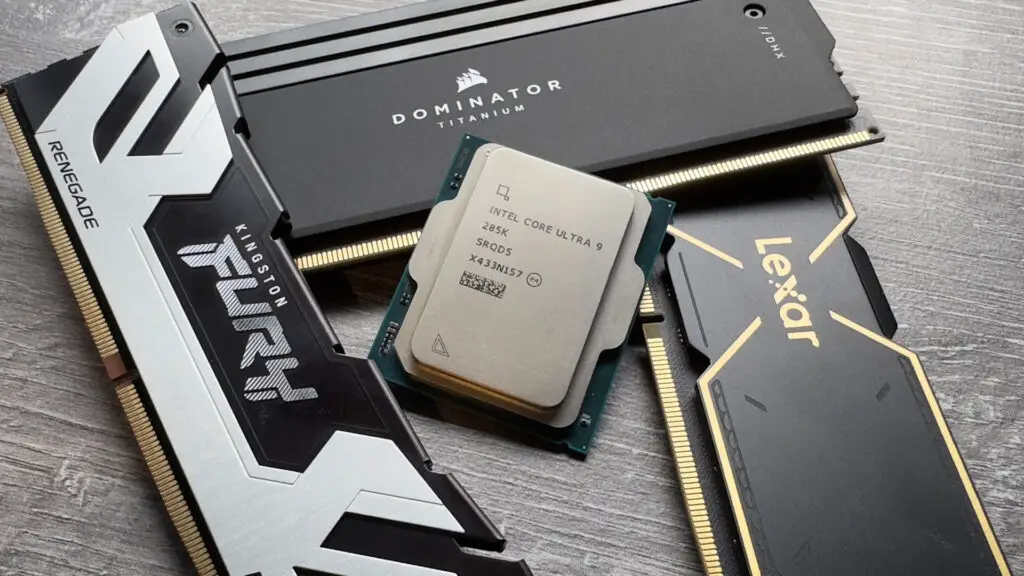
Consider the “Series 2” designation: a consumer might reasonably infer it represents the absolute pinnacle of current technology. Yet, this singular label can encompass a vast array of vastly different products. It could denote a powerful desktop Core Ultra 9 285K (Arrow Lake), a high-performance mobile Core Ultra 9 285HX (also Arrow Lake), an entirely distinct Core Ultra 288V (a Lunar Lake mobile chip), or even a Core 210H—which, remarkably, is merely a rehash of older Raptor Lake architecture for laptops. Factor in the remaining Series 1 chips, potentially covering Meteor Lake, Raptor Lake, or, as we’ve seen, a five-year-old Comet Lake CPU, and the sheer potential for misinformed purchases becomes staggering. This perplexing landscape unequivocally necessitates exceptional diligence from consumers to guarantee they acquire a product genuinely aligned with their needs and expectations.
The widespread frustration stemming from convoluted CPU naming schemes is not exclusive to Intel; it’s an industry-wide challenge, and AMD, Intel’s primary competitor, is certainly not immune from criticism in this regard, having introduced its own share of intricate branding decisions. Ultimately, the onus of informed decision-making falls squarely upon the consumer. Here at Digital Tech Explorer, we emphasize that before committing to any purchase, it is absolutely imperative to conduct thorough research: verify, cross-reference, and confirm to ensure you understand precisely what chip you’re acquiring and its genuine compatibility with your specific setup. Stay informed, and don’t let complex nomenclature dictate your tech choices.
Disclaimer: Some of the links on Digital Tech Explorer are affiliate links. This means we may earn a commission if you click through and make a purchase, at no additional cost to you. Our recommendations are based on thorough research and personal experience.