
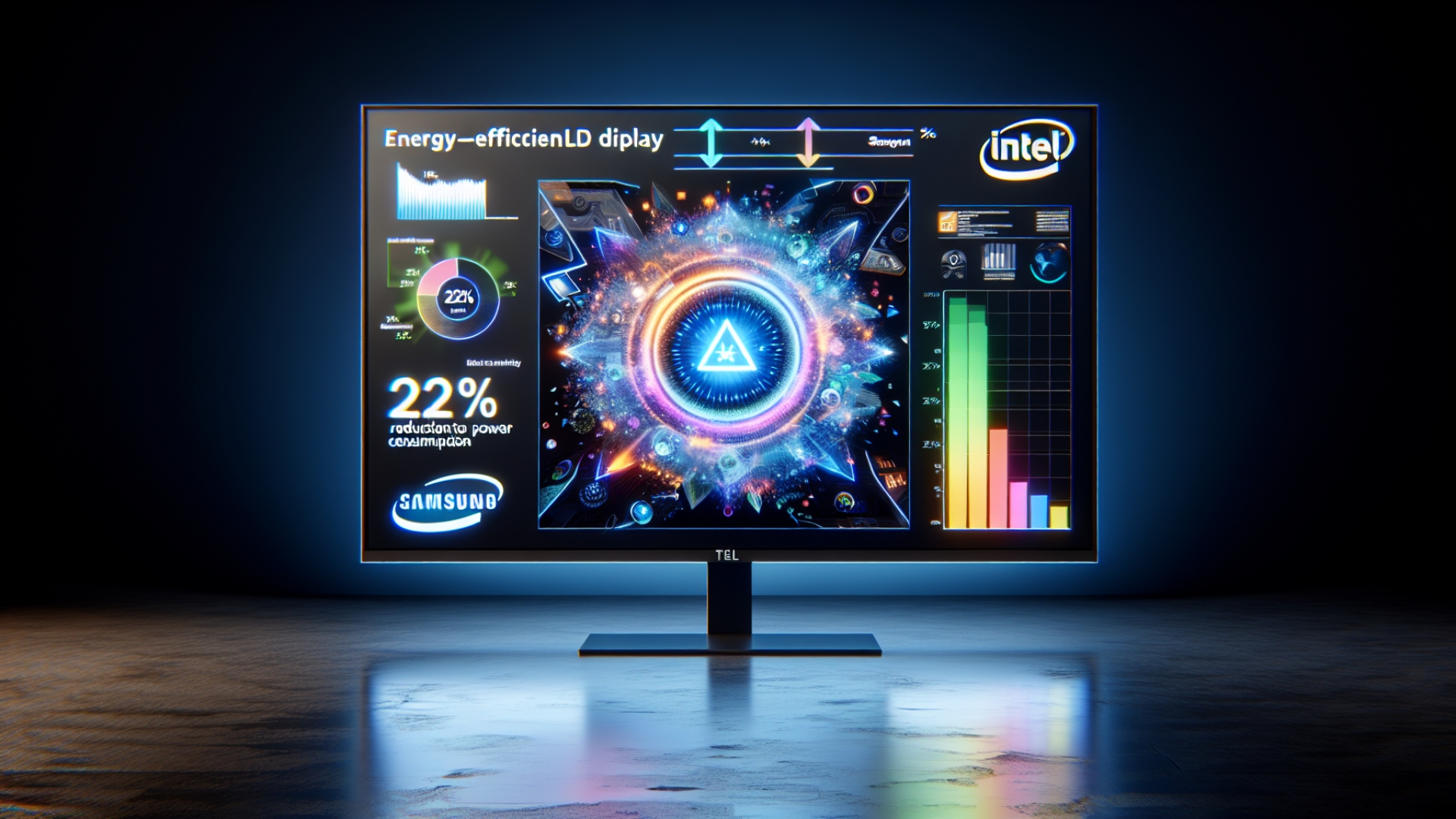
In the relentless pursuit of longer laptop battery life without compromising performance, Intel and Samsung Display have unveiled SmartPowerHDR, a groundbreaking OLED technology. This innovation promises up to a 22% reduction in display power consumption, directly tackling a major energy drain—the screen itself—which Intel notes can consume over half of a laptop’s total power.
SmartPowerHDR operates on an intelligent principle: real-time analysis of each frame’s peak brightness. This crucial data is then relayed to the panel’s Timing Controller (TCON), which dynamically optimizes the voltage supplied to the OLED panel. Unlike traditional HDR modes that apply a fixed, maximum voltage, SmartPowerHDR adapts based on the exact number of active pixels and their brightness requirements. This dynamic adjustment is what unlocks significant efficiency gains.
The problem SmartPowerHDR aims to solve is clear: conventional HDR settings often remain locked at peak brightness, leading to unnecessary power usage even in standard viewing scenarios. This excess consumption frequently prompts users to revert to SDR (Standard Dynamic Range) mode, sacrificing the vibrant colors and superior contrast that HDR offers. SmartPowerHDR ensures that users can enjoy the visual benefits of HDR without the usual battery drain penalty.
The reported benefits are substantial: approximately a 22% power saving during general usage and about a 17% reduction when displaying HDR content. While true HDR content, such as during intense gaming sessions, will still demand higher voltage, SmartPowerHDR shines in less demanding tasks like web browsing, file management, or document editing. By dynamically reducing power in these instances, it achieves savings similar to running the display in SDR mode, significantly extending battery life.
“Displays account for over half of a laptop’s total power usage, making them a key target for efficiency gains.”
Todd Lewellen, VP and GM of PC ecosystem & AI solutions at Intel

Unveiled at CES 2026
SmartPowerHDR was a highlight at CES 2026, an event where Digital Tech Explorer provided extensive coverage of the latest announcements from tech giants like Nvidia, AMD, Intel, Asus, Razer, and MSI. This groundbreaking display technology underscores the industry’s commitment to pushing boundaries in efficiency and performance, an area our platform consistently explores to help tech enthusiasts stay ahead of trends.
As TechTalesLeo, a contributor at Digital Tech Explorer, I’m always on the lookout for innovations that enhance user experience without demanding explicit intervention. SmartPowerHDR, with its promise of seamless background operation and extended battery life, particularly for HDR gaming, strikes a chord with our mission to make technology both educational and entertaining. The idea of technology that works intelligently in the background, offering significant advantages with minimal user effort or noticeable compromise, is truly exciting.
However, an important question remains: will this innovation require specific new hardware, or can it be implemented through software updates? The latter would be a welcome, though uncertain, prospect. Furthermore, existing challenges with Windows HDR mode, such as inconsistent SDR content display and automatic HDR disabling on battery power, could impact the full potential of SmartPowerHDR. Despite these considerations, the prospect of substantial power savings for the increasingly popular OLED gaming monitors and laptops represents a highly anticipated advancement that Digital Tech Explorer will continue to track closely.