

The tech world is buzzing with news: Intel and Nvidia are embarking on a groundbreaking collaboration to develop a new range of co-designed products. These chips will intricately fuse Intel’s x86 architecture with Nvidia’s advanced RTX graphics chiplets. The core idea is to leverage the unique strengths of both companies, aiming to deliver a more flexible and powerful solution than either could achieve independently. For Intel, this partnership is crucial for supercharging its processors with enhanced graphics capabilities vital for both gaming and, more significantly, the burgeoning field of AI acceleration. Nvidia, on the other hand, gains access to robust processors essential for its GPU-accelerated server racks.
“I think these are going to be revolutionary products. I know that all of us working on it are super excited about it,” Nvidia CEO Jensen Huang declared in a joint conference. “Nothing of its kind has ever been built before.” As tech enthusiasts and developers, we at Digital Tech Explorer are always keen to dissect such bold claims and understand their implications for the future of hardware.
AMD’s Integrated Prowess: A Long-Standing Precedent in Chip Design
Huang’s assertion of an unprecedented development, however, might prompt a knowing nod from anyone familiar with AMD’s extensive legacy. For years, AMD has been at the forefront of delivering competitive products that seamlessly integrate both CPU and GPU capabilities in-house. This expertise is deeply embedded in the company’s DNA, tracing back to its acquisition of ATI, and has only matured with the continuous success of its Zen architecture and multiple generations of its innovative APUs (Accelerated Processing Units). If any company has consistently demonstrated the ability to combine high-performance processors and graphics within a single chip or system-on-chip (SOC), it is AMD.
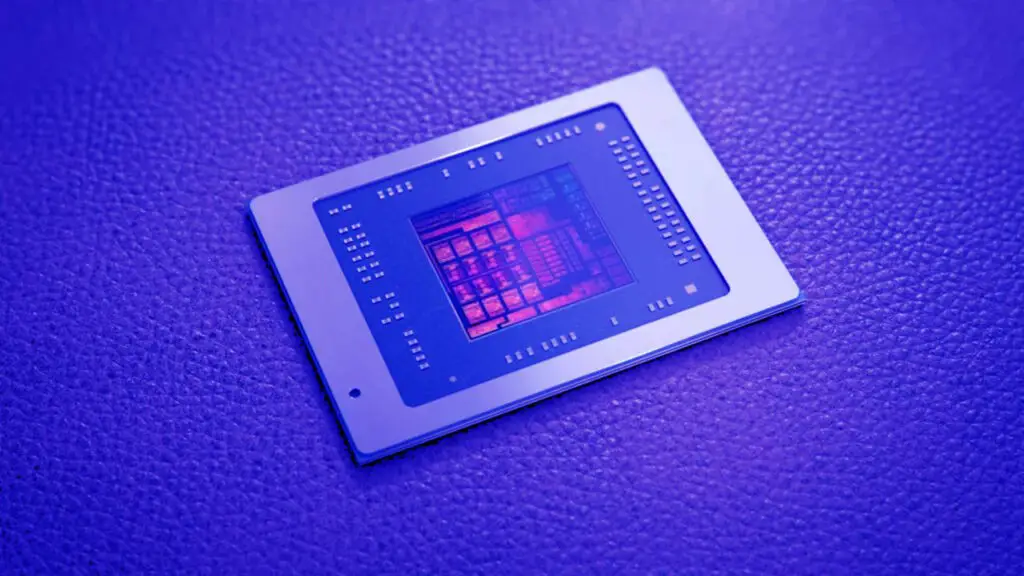
This integrated design philosophy is precisely why AMD dominates the games console market through its semi-custom division, partnering with industry giants like Microsoft and Sony. In the competitive PC landscape, this prowess is evident in products such as the recently launched Ryzen AI Max 300 Series, a processor lineup that eloquently showcases their advanced integrated approach. For our readers tracking hardware innovation, AMD’s journey offers crucial context to this new Intel-Nvidia venture.
Strategic Advantages: AMD’s Inherent Synergy in Chip Design
While this move by Intel and Nvidia might initially seem like a direct challenge to AMD, it can also be viewed as a powerful validation of AMD’s long-term strategy. As TechTalesLeo often highlights in discussions on digital innovation, true synergy in complex chip design often thrives within a single, unified entity. No two competing companies, regardless of their partnership agreements, can achieve the level of seamless collaboration and IP sharing that multiple departments within the *same* company can. The intricate balance of protecting proprietary secrets while enabling deep technical integration between Intel and Nvidia, especially given their overlapping interests, will inevitably present unique challenges that AMD’s cohesive, in-house development model inherently avoids. This integrated advantage allows for unparalleled optimization and innovation.
Deep Dive into Chiplet Architectures: Foveros vs. AMD’s Mature Approach
The technical cornerstone of this future Intel-Nvidia endeavor is Intel’s Foveros technology, a sophisticated multi-technology packaging capability that allows for the integration of diverse chiplets onto a single interposer, enabling them to function as a cohesive unit. “Intel has the Foveros multi-technology packaging capability, and it’s really enabling here,” Jensen Huang acknowledged. “And the reason for that is because… you can do, connecting Nvidia’s chiplets with Intel CPUs in a multi-technology packaging capability.” This represents an exciting frontier in hardware design.
However, as we conduct thorough research at Digital Tech Explorer, it’s clear that AMD possesses its own, arguably more mature and widely deployed, chiplet technology. AMD has leveraged chiplets across its Ryzen CPU and Radeon GPU product lines with tremendous success for years. Prime examples include the powerful Ryzen AI Max+ 395 found in the Framework Desktop, or the Ryzen AI Max 390, a chip recently put through its paces in the Asus ROG Flow Z13. The more robust Ryzen AI Max+ 395, for instance, integrates 16 Zen 5 cores and 40 Radeon 3.5 CUs, all interconnected via a specially designed fabric engineered for high bandwidth, low latency, and efficient power consumption. This holistic, integrated approach—encompassing interconnects, packaging, and software all from the same company—represents a significant, battle-tested advantage in complex chip design.
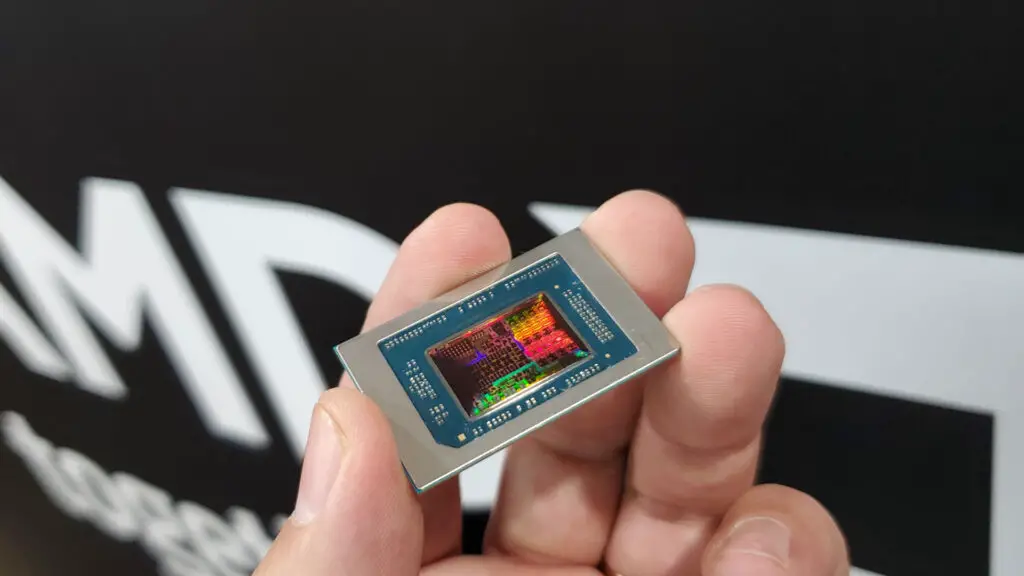
Ultimately, the driving force behind these advanced integrated designs is AI. The Ryzen AI Max 300-series, for example, wasn’t primarily engineered for raw gaming performance; while capable, it’s easily surpassed by dedicated discrete GPUs in that specific metric. These chips truly excel when tasked with running AI models locally, leveraging significant amounts of on-chip memory for processing a huge number of parameters. This pursuit of high bandwidth, robust GPU capabilities, and low-power chips for advanced AI capabilities is a shared endgame for AMD, Intel, and Nvidia.
If the future of AI relies increasingly on powerful local compute driven by integrated GPUs, then it is AMD that currently holds a substantial head start in delivering this vision, particularly in the mobile segment. AMD also benefits from years of continuous development in this space, while the Intel and Nvidia partnership is only in its nascent stages. Therefore, far from signaling doom for AMD, this new collaboration serves as a powerful validation of their pioneering work in integrated chip design. As TechTalesLeo frequently observes in our exploration of emerging digital trends, imitation is often the sincerest form of flattery, and for developers and tech enthusiasts, AMD’s continued innovations in this domain remain highly compelling.