
In a groundbreaking announcement that has sent seismic ripples through the tech industry, long-standing rivals Intel and Nvidia have unveiled an unprecedented partnership. The two tech giants revealed plans to collaborate on a new generation of computing products that will strategically leverage Intel’s x86 CPUs and Nvidia’s GPUs. Underscoring the magnitude of this alliance, Nvidia is also making a massive $5 billion investment into Intel through the purchase of common stock – a development Digital Tech Explorer is diving deep into.
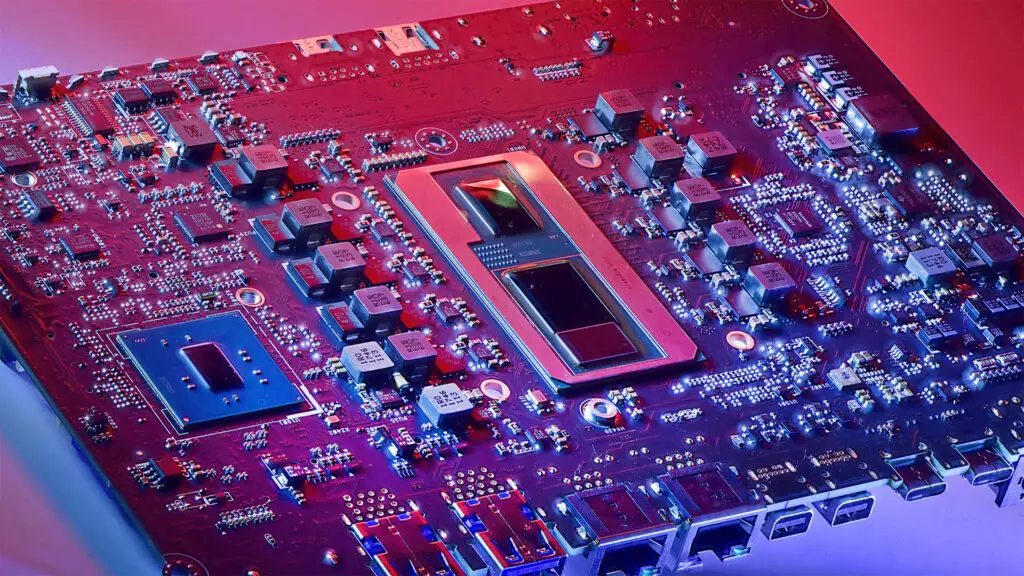
This new collaboration is set to span two critical sectors: enterprise-class AI products and consumer personal computing. The plans for the PC market are particularly ambitious, as the joint statement outlines: “Intel will build and offer to the market x86 system-on-chips (SOCs) that integrate NVIDIA RTX GPU chiplets.” These innovative chips are intended to “power a wide range of PCs that demand integration of world-class CPUs and GPUs.”
Analysis of the Partnership’s Motives and Product Implications
This extraordinary announcement is widely seen as a strategic maneuver, primarily driven by Intel’s recent market challenges. The substantial $5 billion cash injection from Nvidia strongly suggests this is not a partnership of equals, but rather a crucial deal providing Intel with both much-needed capital and a significant customer for its fabrication services. On the enterprise side, the arrangement appears straightforward: Intel will build “NVIDIA-custom x86 CPUs that NVIDIA will integrate into its AI infrastructure platforms,” presenting a clear mutual benefit.
For the consumer PC space, the implications are more nuanced. One of the most obvious targets for these newly integrated chips is the laptops market. A powerful Intel SoC packaged with a high-performance Nvidia RTX GPU die could redefine performance in portable computing. As TechTalesLeo observes, Intel has ventured down this path before with its Kaby Lake-G products, which integrated AMD graphics, though that initiative ultimately made little market impact.
The deal also raises serious questions about the future of Intel’s own Arc graphics division. The specific mention of integrating “Nvidia chiplets” seems to indicate a focus on high-performance graphics, which could potentially sideline Arc’s discrete GPU ambitions. While Arc graphics may continue as a solution for basic integrated graphics, its role in the high-end space now appears highly uncertain.
This alliance also presents a direct challenge to AMD, a company that has enjoyed considerable success with its APUs and its custom SoC partnership with Microsoft for the Xbox console family. An Intel-Nvidia powerhouse could forge compelling alternatives, directly countering AMD’s growing dominance in the PC and gaming console markets.
From Nvidia’s perspective, this is undoubtedly a forward-thinking strategic move. The partnership serves as a robust hedge against a potential slowdown in the booming AI market, enabling Nvidia to become more deeply integrated into the broader PC platform, rather than merely being a supplier of discrete GPUs. Taking a significant equity stake in Intel further solidifies this deeper integration. However, the arcane licensing stipulations surrounding the x86 instruction set architecture (ISA) introduce a layer of complexity. The existing cross-licensing arrangement between Intel and AMD implies that Nvidia cannot simply acquire Intel and commence manufacturing its own x86 CPUs. For Intel to maintain its x86 license, it must remain an ostensibly independent entity.
This partnership could well represent a preliminary step toward a more intricate corporate structure, where Intel remains notionally independent but operates under Nvidia’s effective control. Alternatively, Nvidia’s motives might be simpler: ensuring Intel’s viability serves Nvidia’s interests by preventing AMD from monopolizing the x86 PC market. This strategy echoes Microsoft’s historic investment in Apple decades ago, aimed at averting regulatory scrutiny. Furthermore, in the current geopolitical climate, a powerful alliance between two American tech giants would likely be viewed favorably. As TechTalesLeo emphasizes for Digital Tech Explorer readers seeking to stay ahead of trends and make informed decisions, this remains an early-stage announcement, with more details expected to emerge from an upcoming press conference featuring the CEOs of both companies.