
At a recent technology conference, Intel candidly acknowledged a misstep in its high-performance desktop CPU strategy, admitting it had “kind of fumbled the football.” This frank confession from Intel’s Chief Financial Officer, Dave Zinsner, at the 2025 Deutsche Bank’s Technology Conference, highlighted the challenges faced by its Arrow Lake desktop CPUs. While Digital Tech Explorer always delves deep into market trends, Zinsner’s comments offer a rare peek behind the corporate curtain, promising a more comprehensive lineup with the upcoming “Nova Lake.” His discussion covered the company’s financials, manufacturing, and the current state of its CPU product line, providing crucial context for tech enthusiasts and professionals alike.
Intel’s Mobile Market Momentum with Lunar Lake
Shifting focus to brighter prospects, Zinsner expressed optimism regarding Intel’s mobile division. “I think on notebook, we’re in pretty good shape. We introduced Lunar Lake this year. It’s in the process of gaining adoption. We’re expecting this quarter to be a pretty good quarter for Lunar Lake. So notebook, I think is good, solid, share is solid,” he noted. However, as TechTalesLeo observes in our detailed analyses, the reality often has nuances. While the Lunar Lake architecture indeed launched in May 2024, with initial processors rolling out in September, its journey might not be entirely smooth. Designed for slim laptops and handheld gaming PCs, the Core 200V chips feature embedded DRAM, which, while beneficial for performance, could lead to higher costs and potentially impact widespread adoption against more affordably priced competitors.
Arrow Lake’s Desktop Performance Setbacks
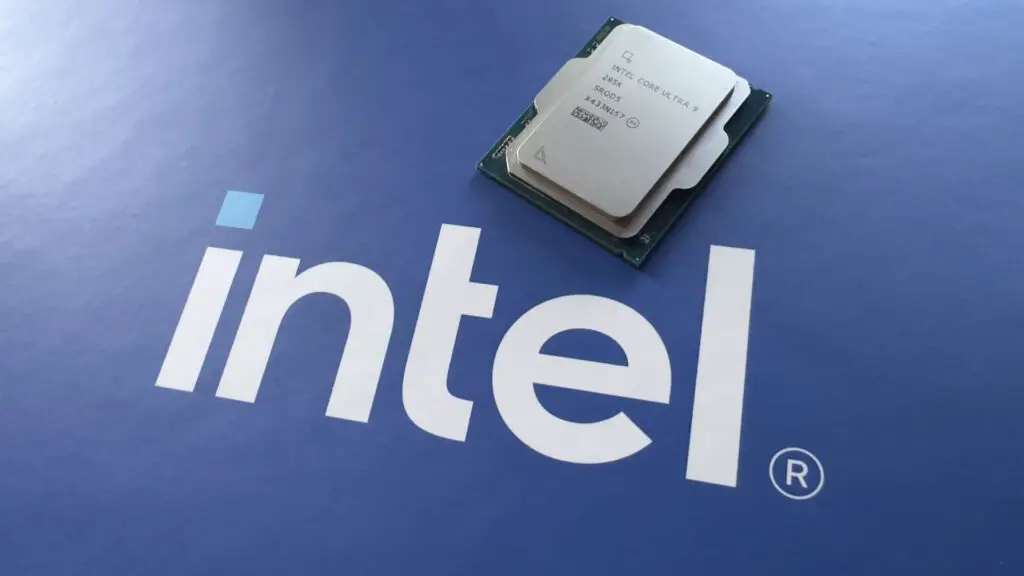
Zinsner’s candor continued as he addressed the specific performance issues of Arrow Lake, Intel’s multi-tiled processor for desktop PCs. Reiterating the earlier admission, he stated, “As you know, we kind of fumbled the football on the desktop side, particularly high performance desktop side. We don’t perform as well and it’s mostly because of this high-end desktop business that we didn’t have a good offering this year.” This direct acknowledgement refers to Intel’s flagship chip, the Core Ultra 9 285K, which has struggled to compete effectively with AMD’s current offerings, a critical point for anyone building or upgrading a high-performance PC.
For gamers, AMD’s Ryzen 7 9800X3D not only delivers superior performance but often comes at a more attractive price point. In the realm of productivity and content creation, the Ryzen 9 9950X offers comparable power to the 285K while maintaining a lower cost. Compounding Intel’s difficulties is the limited SKU range for Arrow Lake. The Core Ultra 5 245K has been underwhelming, and the absence of a direct entry-level Core i3 replacement leaves a significant gap. Consequently, the Core Ultra 7 265K emerges as the most viable option within the lineup, providing near-285K performance at a considerably lower price.
Anticipation Builds for Nova Lake’s Desktop Redemption
Looking ahead, Zinsner pointed toward a future redemption with Nova Lake. “Nova Lake, which is the next product, is a more complete set of SKUs. It does address the high end desktop market. And so we would expect that we will improve our position next year,” he assured. This upcoming multi-tiled processor is rife with speculation, rumored to feature massive P-core and E-core configurations alongside substantial cache enhancements—potentially designed to directly challenge AMD’s formidable 3D V-Cache technology. Like Arrow Lake, Nova Lake is anticipated to integrate tiles from TSMC with a main compute tile produced in Intel’s own advanced foundries, marrying external expertise with internal innovation.
The challenge facing Nova Lake is immense. It’s not merely about closing the performance and price gap left by Arrow Lake against AMD’s current Zen 5 architecture; it must also be ready to contend with the next-generation Zen 6, expected to arrive around the same timeframe. This means Intel’s next-gen Core Ultra processors must represent a monumental leap to reclaim the ground lost to the Ryzen 9000-series. Beyond the desktop, Intel faces even larger strategic battles. The company has steadily ceded market share in the lucrative server market to AMD and has effectively lagged in the burgeoning AI sector, where it lacks competitive products to challenge the dominance of AMD and Nvidia. Even if Nova Lake achieves phenomenal success, Intel’s most pressing need is to generate the capital required to offset its substantial foundry losses, making its performance in other high-margin sectors far more critical than desktop market share alone for the tech giant’s long-term health. As we at Digital Tech Explorer continue to track these developments, we remain committed to helping developers and tech enthusiasts stay ahead of trends and make informed decisions in this ever-evolving landscape.