
In the dynamic world of gaming, where innovation frequently intersects with intellectual property rights, a recent development has sparked considerable discussion within the indie community. Digital Tech Explorer, your trusted source for in-depth tech news and developer insights, reports on the abrupt delisting of the indie co-op survival horror shooter, Misery, from Steam. This incident sheds light on the delicate balance faced by creators navigating established franchises and original concepts.
The removal follows a DMCA (Digital Millennium Copyright Act) strike initiated by Stalker developer GSC Game World. The news was first shared in a candid post titled “We are under attack!” on Misery’s Steam community hub page by its largely solo 19-year-old developer, Maewing, and publisher Ytopia.
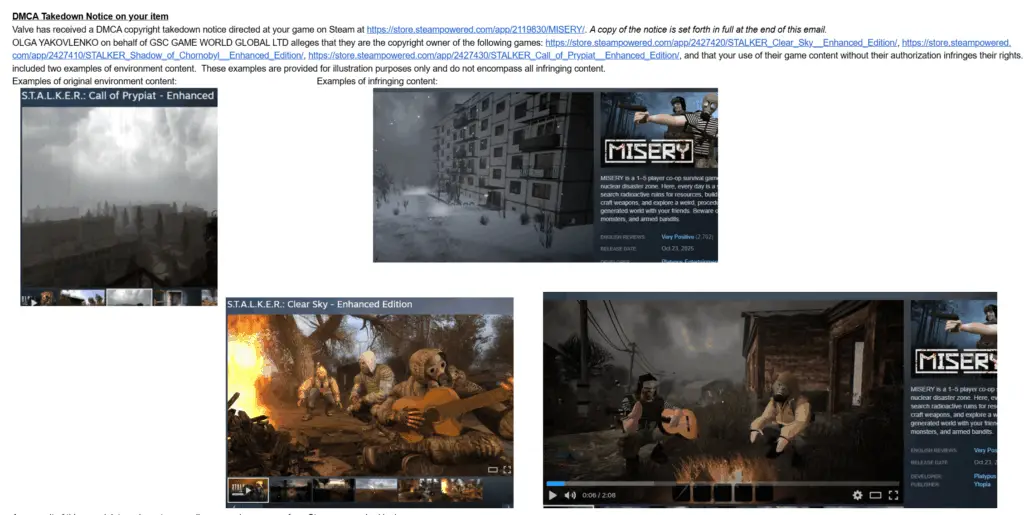
Screenshots included in the post, showing an email from Valve, detailed GSC Game World’s claim against Misery for “use of [its] game content without [its] authorization.” The email featured illustrative screenshots highlighting similar scenes from both games, specifically depicting groups of survivors with scavenged gear and gas masks playing a guitar by a campfire. While Valve noted these screenshots were examples and didn’t cover all alleged infringing assets, the basis of the claim appeared to be more conceptual similarities rather than direct asset infringement.
Misery Developer’s Defense and Public Statements
Maewing, the developer behind Misery, swiftly and firmly defended his creation against the DMCA strike in a subsequent Steam community blog post. He asserted, “We do not pose any threat to GSC or their IP, we do not compete with their games, nor do we use any of their IP.” Maewing explained that while Misery draws inspiration from a diverse range of games, movies, and books—a common practice in creative development—this does not constitute grounds for a DMCA strike. He further pointed out that GSC’s own Stalker games are themselves heavily inspired by “Roadside Picnic” and Tarkovsky’s “Stalker” movie, arguing that GSC does not hold copyright over general themes like “depressive Soviet-era buildings, playing guitar, vodka, radiation, or abandoned locations.”
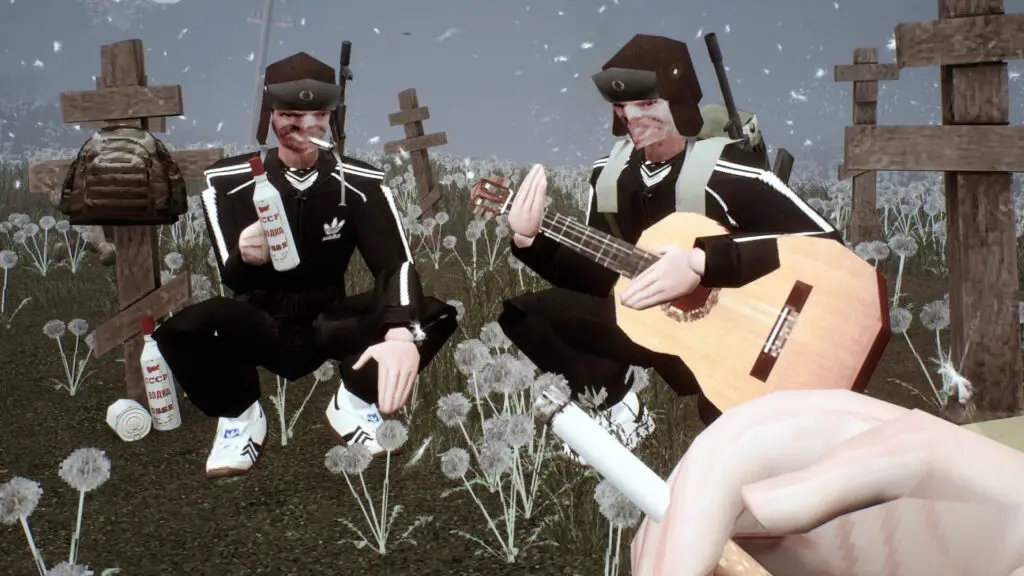
The developer emphasized that Misery utilizes “no characters, plot, storyline, assets, monsters, music, code, etc., from their games,” stating unequivocally that all content is either “originally created or legally licensed.” This situation, Maewing characterized, as an “abuse of power against small independent developers by a large corporation.”
Adding another layer to this unfolding narrative, developer Maewing’s initial, less diplomatic reaction on the game’s Discord server, which reportedly contained inflammatory language towards GSC Game World, was screenshotted and shared on Reddit. Maewing later addressed this directly, taking “full responsibility” for his “immature, thoughtless, and wrong” past words. He clarified that his past statements do not reflect his current beliefs and expressed deep regret, affirming, “I do not support any form of extremism, violence, or discrimination against any group of people.” Maewing concluded by stating that the team would handle the DMCA issue “calmly and professionally,” expressing belief that Valve would conduct a fair review.
On the Stalker subreddit, some users have speculated that the delisting might also be partly in response to alleged support for the Russian invasion of Ukraine by individuals previously associated with Misery, based on older Discord screenshots. While this remains unverified, the Misery Discord appears to have been thoroughly scrubbed of such content. Developer Maewing has since implemented a strict policy, stating that any inflammatory talk related to the conflict, including “Z’s or ZOV or any Ukrainian symbolic, swastics (sic) and so on in reactions or messages,” will result in an immediate ban. This proactive change in community policy could provide crucial context for why Stalcraft, another popular Stalker-inspired survival game, remains unaffected by similar actions.
As TechTalesLeo delves into this captivating narrative for Digital Tech Explorer, this incident underscores the complex interplay between creative inspiration, intellectual property enforcement, and community relations in the gaming industry. It serves as a vital case study for developers and tech enthusiasts alike, highlighting the importance of clear IP strategies and responsible community engagement. We at Digital Tech Explorer remain committed to helping our audience stay ahead of such trends and make informed decisions in the rapidly evolving tech landscape.
Disclaimer: All content on Digital Tech Explorer is for informational and entertainment purposes only. We do not provide financial or legal advice. Some of the links on Digital Tech Explorer are affiliate links. This means we may earn a commission if you click through and make a purchase, at no additional cost to you. Our recommendations are based on thorough research and personal experience.