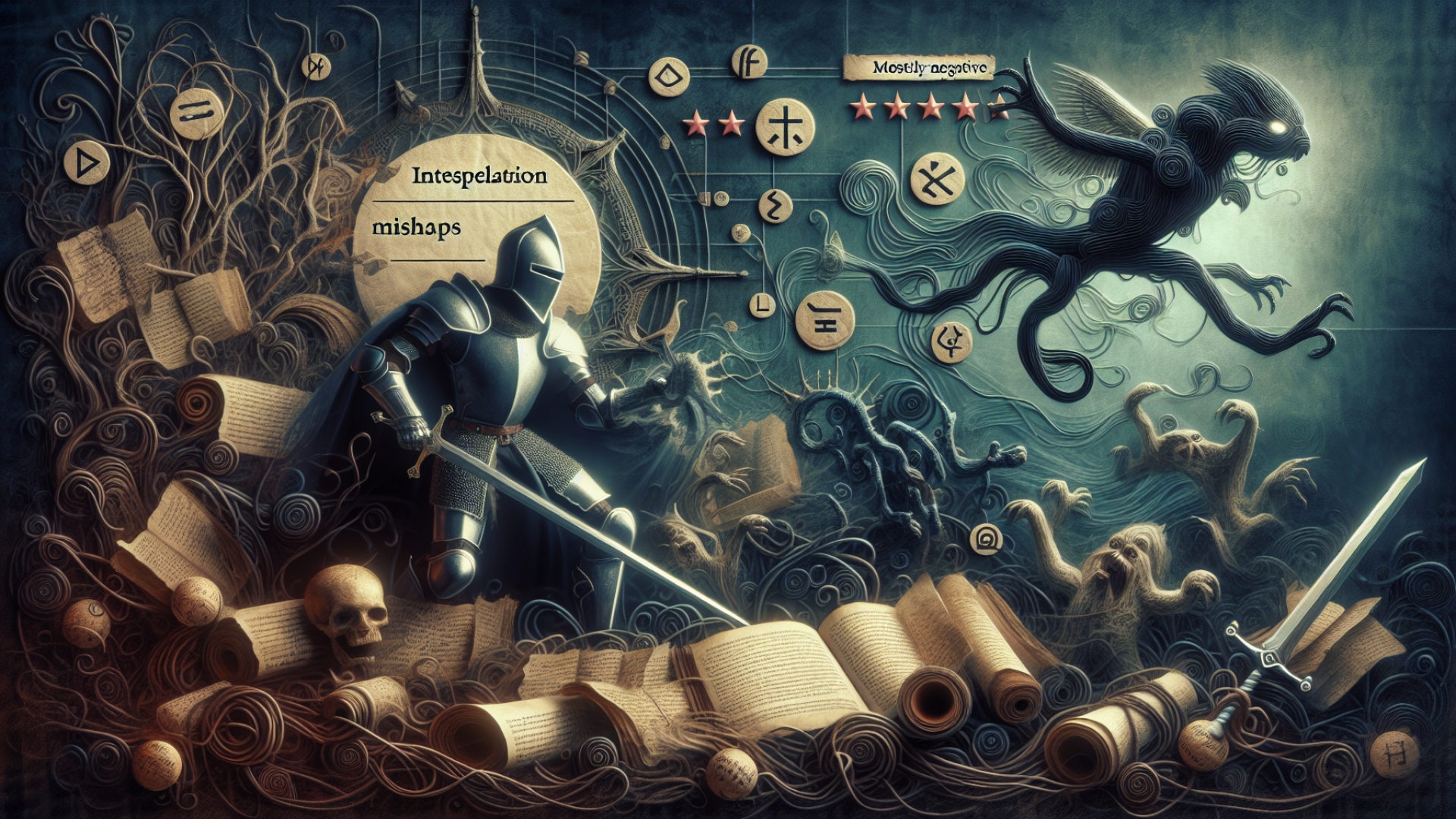
At Digital Tech Explorer, we consistently highlight the intricate interplay of development, design, and cultural nuance in the gaming world. While Hollow Knight: Silksong has garnered global anticipation and acclaim, it has faced an unexpected and significant hurdle: widespread backlash from its Chinese player base. The core issue, as described by players, is an “abysmally, uniquely poor” localization into Simplified Chinese. This has resulted in a targeted “review-bombing” campaign on Steam. What began with a 42% “Mixed” positive rating from nearly 20,000 Chinese users rapidly deteriorated to a “Mostly Negative” 38% from almost 35,000 reviews. This substantial player dissent has undeniably impacted the game’s overall standing, pulling its global review average down to 76% “Mostly Positive,” despite maintaining over 90% positive reviews in most other languages. A stark illustration of this impact is that out of 16,000 negative reviews worldwide, a staggering 11,800 are in Simplified Chinese.
Developer Team Cherry has acknowledged the issue. Matthew Griffin, the game’s publishing and marketing lead, stated, “We appreciate you letting us know about quality issues with the current Simplified Chinese translation of Hollow Knight: Silksong. We’ll be working to improve the translation over the coming weeks.”
The Nature of Silksong’s Chinese Localization Issues
The problems with the Simplified Chinese translation extend beyond simple grammatical mistakes, venturing into creative and tonal missteps. Tiger Tang, lead for the Chinese localization of the RPG Omori, highlighted that the translation’s stylistic choices are a major concern. “The current Silksong CN translation reads like a Wuxia novel instead of conveying the game’s tone,” Tang noted. “This isn’t about effort, but about taste and direction, and speaking from experience likely can’t be fixed without replacing the translator.”
Many players echo these sentiments, describing the translation as having a bizarre, anachronistic quality, reportedly devolving into complete gibberish in some sections. Translation expert Loek van Kooten further criticized the dialogue, likening it to “a high-school drama club’s Elizabethan improv night.” Compounding these linguistic misalignments is the revelation that the localization team for Silksong consisted of only two people, a stark contrast to the team of six that handled the original game’s translation.
Translator Controversy and Path Forward
Adding another layer to the unfolding controversy, one of the two translators, Hertzz Liu, has been accused of leaking details about the highly anticipated game on the Chinese social media site Tieba. A Reddit user uncovered a screenshot of a Q&A where the translator allegedly estimated a pre-Christmas release date for Silksong and openly discussed their plans for the localization process.
Given the pervasive and structural issues within the translation, many are questioning whether the negative feedback truly constitutes a “review bomb” or a legitimate reaction to what players perceive as a defective product. The severity of the translation’s quality has even drawn comparisons to the infamous “restoration” of the Ecce Homo fresco. It is widely anticipated that Team Cherry will need to commission an entirely new Chinese localization, a comprehensive process that will undoubtedly require significant time and meticulous effort to achieve the quality and authenticity players expect.